
Ecommerce SEO in Japan – help shoppers and AI find your products
Ecommerce SEO gets harder as your catalog grows. Near-identical product pages pile up, categories never appear in search and sold-out items become dead ends. This guide covers ecommerce SEO for stores selling in Japan on any platform – Shopify, BASE or WordPress – in four parts: category and product page structure, crawl issues, product content and visibility in AI answers.
- Free demo – decide after you see it
- By message, in Japanese or English
- One person from demo to launch
FREE DEMO
Get a free SEO demo of your store
Send us your store address. We build a free demo of your main category and product pages, restructured for search, and you decide after you have seen it.
- Improved category and product pages
- Check the layout on a computer and a phone
- Notes on crawl and duplicate issues we spot
Why ecommerce SEO in Japan is its own discipline
The goal of ecommerce SEO is simple: make it easy for search engines to reach and understand the products and categories people are looking for. Online stores bring their own challenges.
- Many pages: products, categories, filters and sort orders can multiply into thousands of URLs
- Many similar pages: color and size variants and copied manufacturer descriptions create duplicate content
- Pages come and go: sold-out, discontinued and seasonal items each need a decision about their URL
- Detailed search intent: Japanese shoppers often combine type and condition, like "men's leather wallet slim"
- Searches close to purchase: for product names and model numbers, price, stock and shipping decide the click
That is why store SEO starts with site structure and product data, before any blog posts. A good first check: open Google Search Console and compare the number of indexed pages with your real number of products and categories.
Category structure that ranks
On a well-built store, category pages capture the broad searches. Queries like "Japanese tea gift set" or "cast iron pan for camping" usually show category pages more often than single products.
- Keep it shallow: every product within two or three clicks of the home page
- Use shoppers' words: put the terms people actually search for in category names, headings and URLs
- Add a short intro: 2–4 sentences on how to choose, so the page offers more than a product grid
- Publish filters selectively: give their own page only to combinations people search for, such as by material or use, and tidy up the rest with canonical tags or noindex
- Breadcrumbs: show the path on screen and add BreadcrumbList structured data
Rework categories one at a time, starting with the ones that sell the most. Whenever a URL changes, set a 301 redirect so the page keeps its search history.
We rebuild it in a free demo based on your current store. Send us your store URL to start.
Find and fix crawl and index issues
If search engines cannot crawl a page, or decide not to index it, it will not appear in results however good it is. The usual suspects:
- Sort and filter parameters create endless URLs, so important pages get crawled late
- Color and size variants live on separate URLs with almost identical content
- Sold-out or discontinued products return 404, cutting off links and accumulated value
- Product grids load later via JavaScript, so links to products are hard for crawlers to follow
- The XML sitemap still lists old URLs or misses new products
- Heavy product images make pages slow on phones
The Page indexing report in Search Console is the best place to look. A high count of "Crawled – currently not indexed" or duplicate pages is a sign the structure needs work. Keep pages for items that will be restocked and show the expected date; redirect discontinued items to a successor or the parent category. Platform-specific settings are covered in Shopify SEO and SEO for BASE stores.
What the free demo gives you
- 01A working demoA demo site you can open and click through on a computer and a phone.
- 02A structure proposalWhich pages you need, what goes on each and where visitors get in touch.
- 03Plan and estimateAfter you have seen the demo you get the plan to launch and an estimate.
Why it is safe to ask
- The demo is free. If you decide not to go ahead, it costs you nothing.
- Everything happens by message, in Japanese or English.
- Your domain, hosting, ad and analytics accounts stay in your name.
- The founder handles your project from the first demo to growth after launch – one contact all the way.
Demo sites we built
 Café & roastery – KashtanMenu, events and an online bean shop
 Beauty salon – MIRTABooking form, price list and team
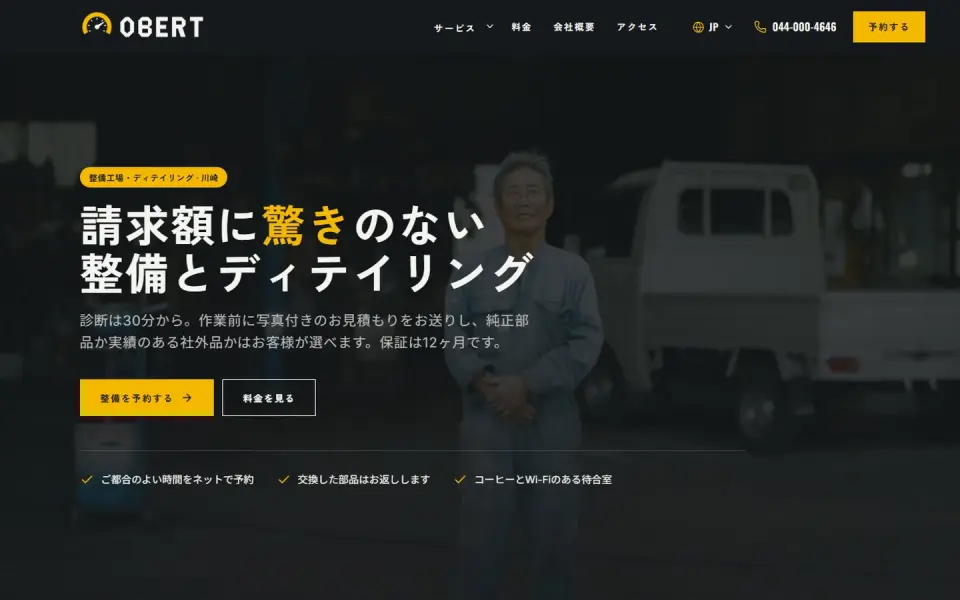 Car service – OBERTService and detailing prices, booking
Template demos with fictional brands. Yours is built with your own brand and content.
Product page SEO that helps both ranking and buying
A strong product page tells search engines and shoppers what the item is, who it suits and why it is worth choosing. Manufacturer copy used word for word appears on dozens of other stores, so write these parts in your own voice:
- Title: add the type, material, size or use people search for, for example "Nambu cast iron kettle 1.2L, induction compatible"
- Description: answer pre-purchase questions on size, material, use, care and delivery time
- Images: several photos of details and real use, with descriptive file names and alt text
- Reviews and Q&A: real buyer feedback and answers to the questions you get most
- Structured data: Product markup with price, availability and reviews, so search results can show them
- Links to related items and categories: they keep shoppers browsing and strengthen category pages
You do not have to rewrite the whole catalog at once. Pick 10–20 best sellers or the products with the most search impressions, improve them, and measure before rolling out further. See product page improvement.
Name one key product and we build a free demo of its page, structured for both search and sales.
Ecommerce LLMO: getting products into AI answers
More shoppers now start with ChatGPT or Google's AI Overviews. Optimizing a store for AI answers – often called LLMO or GEO in Japan – builds on the same foundation as SEO, with extra care for making product facts easy for AI to read and quote.
- State the specs clearly: size, weight, material, origin and compatibility in a table or list
- Answer real questions: buying guides and comparisons, like how to choose a first cast iron pan, in category intros or articles
- Keep product data consistent: the same names, prices and stock on your site, in Google Merchant Center and on social media
- Show who you are: operator details, the legally required Tokushoho page, shipping and return terms
- Structured data: Product, Organization and BreadcrumbList markup so machines understand each page
Nobody can promise an AI placement. Accurate, specific product information still helps in regular search, Google Shopping and AI answers alike. Start by checking that the specs and shipping terms on your main product pages are written out as page text, so both people and machines can read them.
How UNANOBO approaches ecommerce SEO: a free demo first
Before you commit to anything, UNANOBO reviews your category structure and main product pages and builds a free demo of the improved version. You can click through the new category intro, product page layout, breadcrumbs and related items on a computer and a phone.
We work with Shopify, BASE and WordPress (WooCommerce), whether you want to improve your current store or move to a new platform. The process is the same: free demo, feedback, launch, growth. The founder handles every project personally – from the first demo to SEO, Google Shopping and ads after launch – and everything runs by message, in Japanese or English. Search Console and Merchant Center accounts stay in your name.
How it works
- 01
Free demo
We start with a free demo built around your brand.
- 02
Feedback
Structure, tone and details are refined with you, on the demo itself.
- 03
Launch
The site goes live on a solid SEO foundation.
- 04
Growth
SEO and ads take it further, guided by the numbers.
FAQ
What does the free demo show?
An improved version of a main category page and a product page, built from your current store. You can check the copy structure, breadcrumbs, related items and the mobile view. You decide whether to continue after seeing it.
Is there any cost if I decide not to go ahead?
None. The demo is there to help you decide, and what you do next is up to you.
How long until SEO changes show results?
Typically it takes a few weeks to a few months for structural and content changes to be reflected in search. Rankings and sales depend on search engines and competitors, so no specific numbers can be promised. After launch we track impressions and clicks in Search Console and adjust.
Can you handle a store with a large catalog?
Yes. We first fix the category structure and product page template so the changes apply site-wide, then refine descriptions starting with your key products. Where the platform supports CSV bulk updates, we use them.
What do I need to prepare?
Your store URL and the products or categories that bring most of your sales are enough to start. If Search Console is set up, sharing view access gives a more accurate picture.
Can we really do everything by message?
Yes. The founder works remotely, and every step from the first question to improvements after launch runs by message, in Japanese or English. Replies come within two business days. Admin access is shared in the safest way each platform offers.
Related pages
FREE DEMO
See your store the way search can find it
Send us your store URL and we will build a free demo of improved category and product pages. Decide after you have seen it.