
How to start an online shop in Japan – from planning to launch
Opening an online shop in Japan involves more than building a store: you also need to settle how you sell, register the business, set up payments and shipping and publish the legally required notices. Taking these in the right order saves time and prevents problems after launch. This guide walks through each step from planning to opening day, and explains how UNANOBO starts with a free demo store.
- Free demo – decide after you see it
- By message, in Japanese or English
- One person from demo to launch
FREE DEMO
See your shop before you open – free
Send us what you plan to sell and the look you want, plus a logo or photos if you have them. We build a free demo store, and you plan your launch after seeing it.
- A demo store built from your products and brand
- Try the mobile shopping flow yourself
- A platform recommendation and launch plan
Four decisions to make before you open
The most common stumble is starting to build the store and only then realizing that shipping fees or the target customer are still undecided. Write these four points down first.
- What you sell: product types and count, sourced or self-made, stocked or made to order
- Who you sell to: age group and use, gift demand, Japan only or overseas as well
- Your price: does a profit remain after cost, payment fees, shipping and packaging?
- Your capacity: who handles orders, packing, shipping and customer questions, and when
Pricing deserves the most care. Once you know the profit per order including shipping and fees, decisions like a free-shipping threshold or bundle offers become much easier.
Marketplace or your own online store?
There are two main ways to open an online shop in Japan: list on a marketplace such as Rakuten Ichiba or Amazon, or run your own store. Marketplaces bring existing traffic, so first orders tend to come sooner. In return you pay listing and sales fees, and design and customer data follow the marketplace's rules.
Your own store lets you express your brand freely and build direct relationships with customers, while bringing in visitors becomes your job. The main options are:
- BASE: a plan with no setup or monthly fee and a very simple admin panel – good for testing with a small range
- Shopify: a monthly fee, with wide design and app options that scale well to more products and overseas sales
- WordPress + WooCommerce: adds a shop to an existing WordPress site, handy if articles and products live together; you manage hosting and updates yourself
The right choice depends on your product count, who updates the store and how you plan to sell later. See our e-commerce platform comparison for the details, and starting an online shop for free if you want to keep initial costs low.
Comparing is easier with a real demo store in front of you, so tell us what you want to sell.
Registration and permits
If you sell on an ongoing basis as an individual, the standard step is to file a notice of business commencement (kaigyo todoke) with the tax office, in principle within one month of starting. If you want the blue tax return system, prepare that application at the same time.
Some products also need a permit or license before you sell:
- Food: if you produce or process food, a business permit or notification at the local health center may be required
- Second-hand goods: reselling used items you bought requires a secondhand dealer permit via the police
- Alcohol: online liquor sales need a mail-order liquor retail license from the tax office
- Cosmetics and supplements: wording is regulated by the Pharmaceutical and Medical Device Act, so effects cannot be claimed as certain
- Imported goods: electrical products, food and others have their own labeling and notification rules
Requirements depend on your products and sales model, and rules are revised from time to time. When in doubt, check with the relevant health center, tax office or police station before you open.
What the free demo gives you
- 01A working demoA demo site you can open and click through on a computer and a phone.
- 02A structure proposalWhich pages you need, what goes on each and where visitors get in touch.
- 03Plan and estimateAfter you have seen the demo you get the plan to launch and an estimate.
Why it is safe to ask
- The demo is free. If you decide not to go ahead, it costs you nothing.
- Everything happens by message, in Japanese or English.
- Your domain, hosting, ad and analytics accounts stay in your name.
- The founder handles your project from the first demo to growth after launch – one contact all the way.
Demo sites we built
 Café & roastery – KashtanMenu, events and an online bean shop
 Beauty salon – MIRTABooking form, price list and team
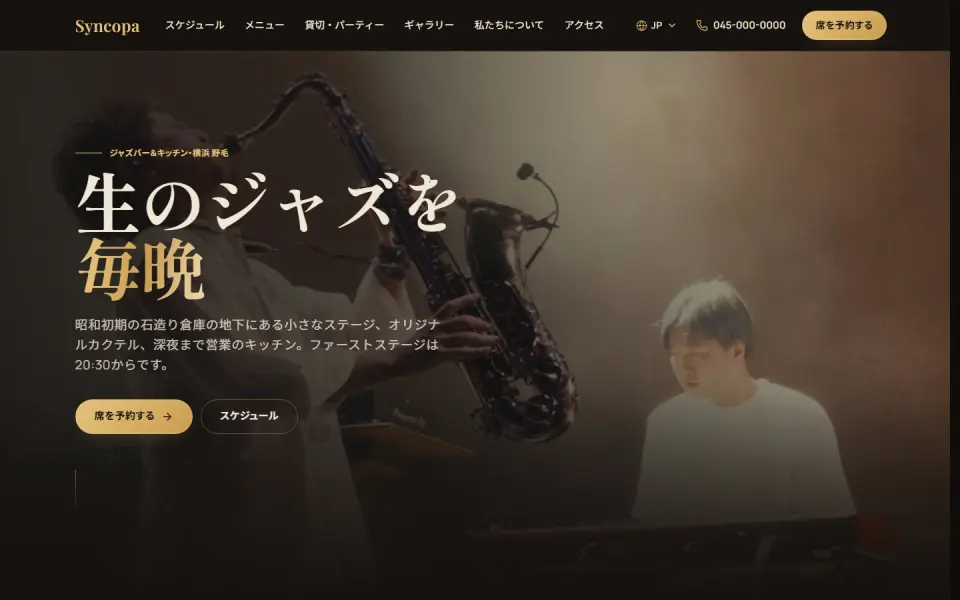 Jazz bar – SyncopaLive schedule, menu and table booking
Template demos with fictional brands. Yours is built with your own brand and content.
Payments, shipping and the legal notice page
Whether customers feel safe buying depends a lot on payment choice and clear shipping information. Shopify and BASE include built-in payments, so you can offer credit cards along with convenience store payment, bank transfer, buy-now-pay-later and ID payments. For shipping, choose courier or mailbox-size services to match your product sizes, and prepare a clear shipping fee table.
Every online shop in Japan needs a notice based on the Act on Specified Commercial Transactions. It typically lists:
- Seller name, address, phone number and the person responsible
- Prices including tax, plus shipping and any other costs
- Payment methods and timing
- Delivery timing
- Whether returns and exchanges are accepted, and on what terms
Individual sellers may, under certain conditions, state that the address and phone number will be disclosed promptly on request. Check the Consumer Affairs Agency's current guidance for the details. A privacy policy and clear shipping and returns pages also cut down on customer questions.
Even if payments and shipping are not ready yet, we can build a free demo store from your products and brand.
Pre-launch checklist
Once products and pages are in place, run through a real purchase yourself. A test order shows quickly where a customer might get stuck.
- On a phone, can you find a product, add it to the cart and pay without confusion?
- Are photos bright and do they show size and texture? Do descriptions cover materials, sizes and care notes?
- Do order confirmation and shipping emails arrive with the shop name and contact details?
- Do shipping fees, delivery times and return terms match on product pages and guide pages?
- Can visitors reach the legal notice, privacy policy and contact page from anywhere?
- Is GA4 set up so you can see where visitors come from and how many orders you get?
Start promotion at launch: posts on Instagram, product listings on Google Shopping and search-friendly product pages are the usual first steps. For the build itself, see how to build an e-commerce site.
How UNANOBO helps you open: a free demo store first
Before you commit to anything, UNANOBO builds a free demo store based on your brand and products. You check the home page and product pages on your computer and phone, and decide whether to go ahead once you like the direction. The demo is also a practical way to decide between Shopify, BASE and WooCommerce.
The process is simple: free demo, feedback, launch, growth. The founder handles every project personally, from the first demo to promotion after launch, including payment and shipping setup and the legal notice page. Everything runs by message, in Japanese or English. For more on the build itself, see online shop creation.
How it works
- 01
Free demo
We start with a free demo built around your brand.
- 02
Feedback
Structure, tone and details are refined with you, on the demo itself.
- 03
Launch
The site goes live on a solid SEO foundation.
- 04
Growth
SEO and ads take it further, guided by the numbers.
FAQ
Is the demo store really free?
Yes. We build a working demo of your home page and product pages from your logo, colors and product photos at no cost. You decide whether to continue after seeing it.
What if I decide not to go ahead after the demo?
That is completely fine, and there is no charge. Use the demo as material to think your plans through.
Can I ask before I have registered my business?
Yes. If you know what you want to sell and roughly how, we can start the demo. Registration and permits are handled by you, but we tell you which pages and notices the store itself will need.
How long does it take to open?
It depends on product count and features, but a small shop with a few dozen products typically takes one to two months. The sooner photos and descriptions are ready, the sooner you launch. After the demo you get a concrete schedule and estimate.
What should I prepare?
Your logo files, product photos and descriptions, your pricing and shipping ideas, and two or three shops you like, if any. Where something is missing we use placeholders in the demo and send you a list of what is needed.
Can we work only by message if I am outside Japan?
Yes. Everything from planning to post-launch updates runs by message, in Japanese or English, with replies within two business days. Your domain, payment and analytics accounts stay in your name.
Related pages
FREE DEMO
See your online shop first
Tell us what you sell and the feel of your brand, and we will build a free demo store. Decide after you have seen it.