
Manufacturing company website in Japan – show your technology, win new inquiries
For a manufacturer, the website is often the first technical document a new customer reads when deciding whether you can handle their job. Many Japanese factories and makers have strong capabilities, yet their sites say little more than a company profile, so new inquiries rarely arrive. This page covers what a manufacturing company website in Japan should include, how to present processes and equipment, how to design B2B inquiry forms and how to reach overseas buyers in English – and how UNANOBO starts with a free demo.
- Free demo – decide after you see it
- By message, in Japanese or English
- One person from demo to launch
FREE DEMO
Your new manufacturing website – free demo
Send us your current site address or company brochure. We build a free demo that presents your processes and equipment, and you decide after you have seen it.
- Your processes and equipment, clearly presented
- An inquiry form that accepts drawings
- A plan for English pages for overseas buyers
What a manufacturing company website needs to do
In B2B manufacturing, engineers and purchasing staff search for new suppliers, shortlist a few and only then get in touch. At that stage they compare hard facts: can you work with this material and tolerance, is your quality control reliable, what volumes do you accept. A manufacturing website usually has four jobs:
- New inquiries: show search visitors exactly what you can make and why you are a good fit
- Trust for existing customers: give buyers the company data, certifications and equipment details they need for internal approval
- Recruiting: show the skills and the shop floor to attract young and experienced staff
- Overseas reach: give foreign trading companies and manufacturers a clear way to contact you in English
These jobs can carry different weight. Decide which matters most right now – new inquiries, recruiting or overseas buyers – and the page structure and budget follow from that.
Why many manufacturer websites get no inquiries
A site can exist for years and still bring nothing. These are the usual reasons it gets skipped during supplier comparison:
- Only generic claims such as "high quality, short lead times, low cost" that every competitor also makes
- No details on materials, processes, tolerances, part sizes or lot sizes
- An outdated equipment list with no photos of the actual floor
- Inquiries by phone only, with no way to send a drawing
- Tables that break on a phone, so buyers on the move cannot read them
- English limited to a one-page company profile with no contact route
If several of these apply, rebuilding the structure usually works better than small fixes. For how search and ads bring in buyers, see web marketing for manufacturers.
Send us your current site address and we will show you a free demo rebuilt around your strengths.
A page structure that explains your technology
Specific words, photos and numbers are what make a manufacturer credible online. A typical structure looks like this:
- Processes: one page per capability – machining, sheet metal, molding, surface treatment – with materials, tolerances and maximum sizes
- Equipment: a clear table of machines, makers, quantities and working ranges, with photos
- Applications: short project summaries by industry, challenge, solution and process, written within your confidentiality limits
- Quality: ISO 9001 or other certifications, inspection equipment, traceability
- Scope: from single prototypes to mass production, rush jobs, material sourcing, assembly
- Company and access: location, factory map, history, main industries served
You do not need customer names. "Aluminum prototype parts for an automotive supplier" already tells a buyer a lot. Keep technical terms – engineers look for them – and add a short plain explanation for purchasing staff.
What the free demo gives you
- 01A working demoA demo site you can open and click through on a computer and a phone.
- 02A structure proposalWhich pages you need, what goes on each and where visitors get in touch.
- 03Plan and estimateAfter you have seen the demo you get the plan to launch and an estimate.
Why it is safe to ask
- The demo is free. If you decide not to go ahead, it costs you nothing.
- Everything happens by message, in Japanese or English.
- Your domain, hosting, ad and analytics accounts stay in your name.
- The founder handles your project from the first demo to growth after launch – one contact all the way.
Demo sites we built
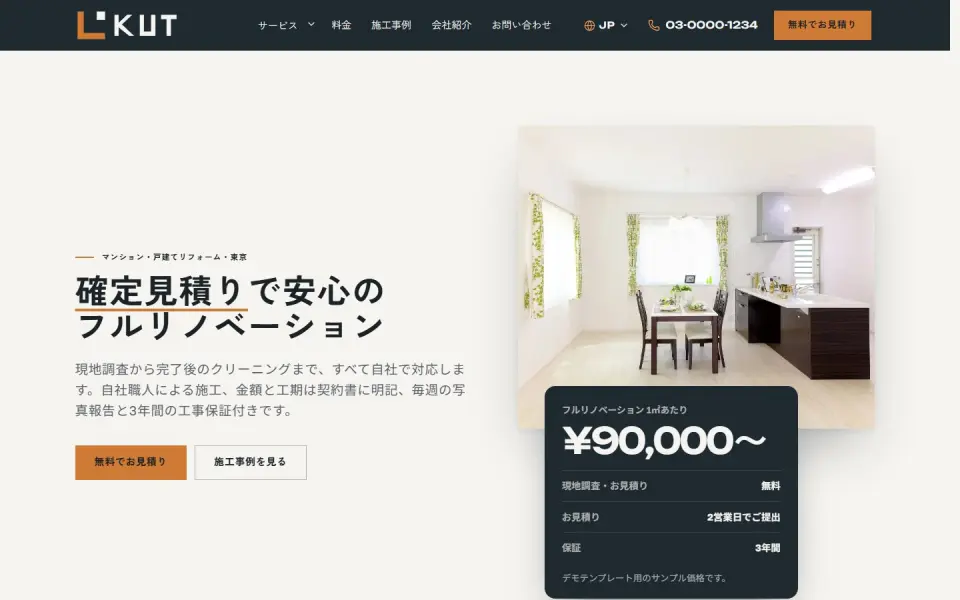 Renovation – KUTEstimate request, projects and prices
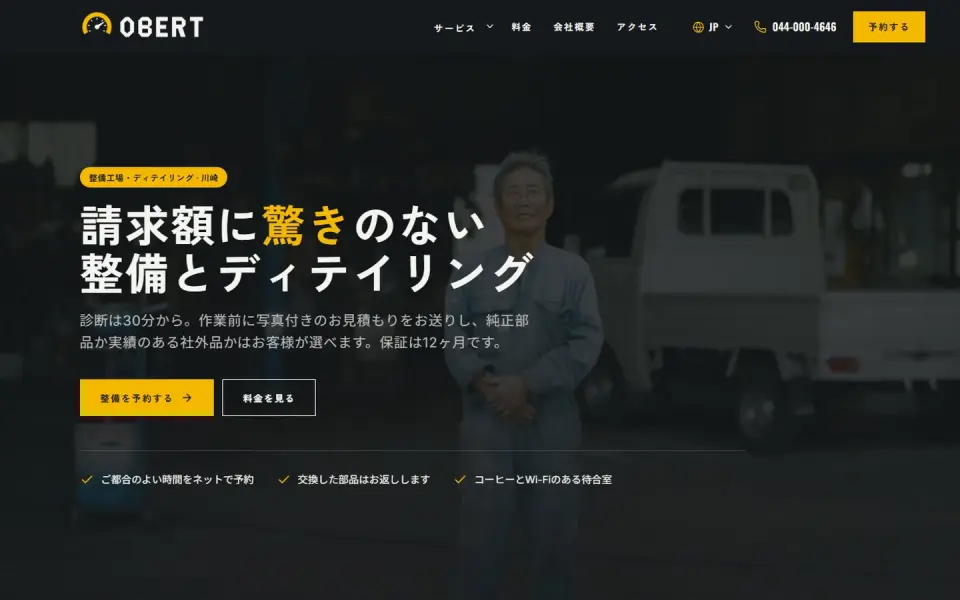 Car service – OBERTService and detailing prices, booking
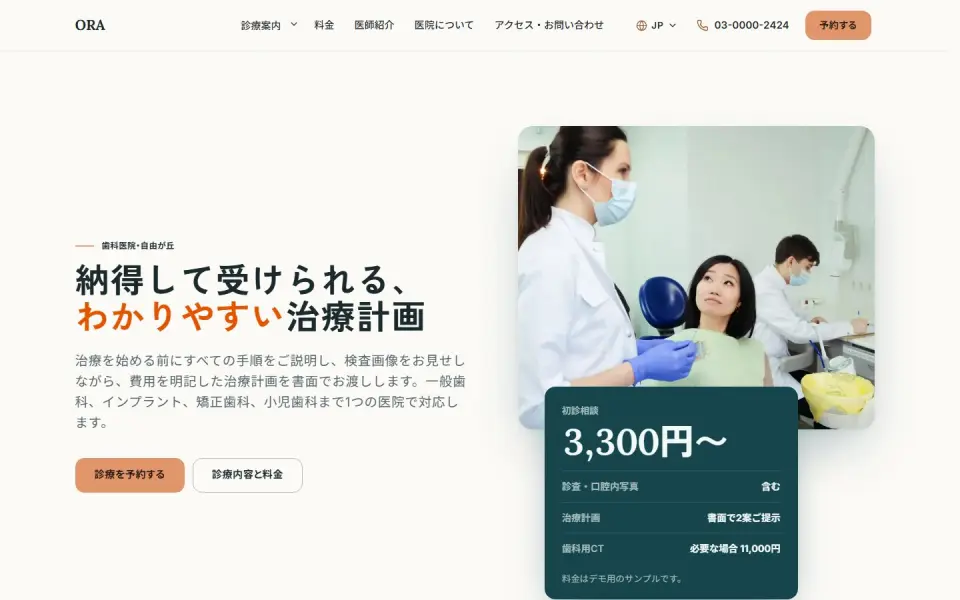 Dental clinic – ORATreatments, prices, doctors and booking
Template demos with fictional brands. Yours is built with your own brand and content.
Inquiry paths that turn visitors into B2B leads
Manufacturing inquiries usually come with a drawing or a spec. Make that easy and you get more requests, and better ones:
- A form that accepts drawings and specs (PDF, DXF, STEP and similar)
- Dropdowns for material, quantity and target delivery date to save typing
- Separate entry points for prototypes, production quotes and technical questions
- An inquiry button at the end of every process page
- Downloadable PDFs of the company brochure and equipment list for internal sharing
- A stated reply time, such as within two business days
Track form submissions in GA4 so you can see which pages bring leads and improve them after launch. For B2B site planning in general, read our guide to B2B website development.
Click through the path from process page to inquiry form in your free demo.
English pages that reach overseas buyers
Many companies abroad actively look for Japanese manufacturing partners, yet a supplier with little English information rarely makes their shortlist. An effective English section focuses on what foreign buyers need to know:
- Processes, materials, tolerances and certifications in standard industry English
- Minimum order quantities, typical lead times, export and English documentation support
- An English inquiry form that accepts drawings
- A clean language switch between Japanese and English pages that search engines also understand
Raw machine translation often gets technical terms wrong and costs trust, so start with a short glossary of your key terms. More on structure and translation in English website development for Japanese companies.
How UNANOBO builds a manufacturing website
Before you commit to anything, UNANOBO builds a free demo of your new site based on your current website, brochure and equipment list. You click through the process pages and the inquiry form on a computer and a phone, and decide whether to go ahead once you like the direction.
The process is simple: free demo, feedback, launch, growth. The founder handles every project personally, so you explain your technology once and keep one contact from the demo to marketing after launch. Everything runs by message in Japanese or English, which also makes it easy to prepare your English pages in the same place. To get started quickly, send your brochure PDF, equipment list, a few photos of the floor and products, and a list of your processes.
How it works
- 01
Free demo
We start with a free demo built around your brand.
- 02
Feedback
Structure, tone and details are refined with you, on the demo itself.
- 03
Launch
The site goes live on a solid SEO foundation.
- 04
Growth
SEO and ads take it further, guided by the numbers.
FAQ
Is the demo really free?
Yes. We build a working new design, centered on the home page, from your current site or brochure at no cost. If you decide not to continue after seeing it, you pay nothing.
We have almost no photos of the factory. Is that a problem?
No. The demo uses placeholder images to settle the layout, and you get a list of the shots worth taking. Well-lit smartphone photos of the floor are often good enough.
Our customers and products are confidential. What can we show?
This is common in manufacturing. We write project summaries by industry, process and challenge without naming customers, and only publish drawings or product photos you have cleared.
How long does a manufacturing website take?
It depends on the number of pages and how ready your materials are. Typically a small or mid-sized manufacturer site takes one to three months, a little longer if English pages are built at the same time. You get a concrete schedule after the demo.
Can we work together without meeting in person?
Yes. Everything runs by message, in Japanese or English. Files and photos can be sent whenever it suits you, and you get a reply within two business days.
Can you handle updates and marketing after launch?
Yes. Updates, maintenance, SEO, Google Ads and GA4 setup run through the same single contact. If you want to add equipment or projects yourself, you get guidance on the admin panel by message.
Related pages
FREE DEMO
See a site that explains your technology
Send us your current site address or company brochure and we will build a free demo of your new manufacturing website. Decide after you have seen it.