Launch a D2C brand in Japan – store, ads and repeat sales in one plan
Launching a D2C brand takes more than a finished product. By launch day you need a store that sells, words that explain why the product matters, a way to reach your first customers and a reason for them to buy again. Leave one out and ad spend rarely turns into steady sales. This page walks through the launch plan in order, lists what to check before you go live, and explains how UNANOBO starts with a free demo of your brand's store.
- Free demo – decide after you see it
- By message, in Japanese or English
- One person from demo to launch
FREE DEMO
Your brand's store as a free demo
Send your logo, product photos and a few lines about the brand. We build a free demo of a store that matches it and suggest how to run the launch.
- A store built around your brand, free
- Check product pages and checkout on mobile
- A plan for ads and repeat purchases
The four foundations of a D2C brand launch
A D2C (direct-to-consumer) brand sells straight to customers through its own online store. Without a marketplace bringing traffic, you design both the customer flow and the relationship yourself. At launch, four things need to be in place:
- Store: your own e-commerce site with product pages, cart, payments, shipping rules and the legally required seller information (特定商取引法に基づく表記)
- Content: your brand story, the maker's background, how to use the product, ingredients or craft, photos and short videos
- Customer acquisition: Instagram and other social channels, Meta Ads or Google Ads, and basic SEO so people can find you in search
- Repeat purchases: post-purchase emails, a LINE official account, subscriptions, package inserts and a way to collect reviews
They do not all need the same investment on day one. A solid store and content, small ad tests and a basic repeat setup is a perfectly good starting mix. For background on the model itself, see what D2C means and how direct selling works.
Five places D2C launches usually stumble
D2C launches that struggle tend to follow the same patterns. Most of them can be fixed if you spot them before going live.
- The whole budget goes into the store design, leaving nothing for ads or social after launch
- Product copy lists specs, so it never says whose problem the product solves
- Tracking is set up after ads start, so nobody knows which ad drove the sales
- Nothing reaches the customer after the first order, so repeat sales are left to chance
- Social, ads and the store sit with three different vendors, and coordination eats the time
The common thread is planning the store on its own. A better plan maps the whole journey: a customer discovers the brand, is convinced on the product page, buys, and comes back. Write those four steps down and assign a page or tool to each one – the gaps become obvious.
With your logo and product photos, we build a free demo of the path from discovery to checkout.
Choosing your store: Shopify, BASE or WordPress
Pick the platform based on your product count, whether you need subscriptions, plans to sell abroad and who on your side will update the store.
- Shopify: flexible design, with apps for subscriptions, reviews, multiple languages and currencies. A good fit for brands that plan to grow features over time
- BASE: easy to start with no upfront fee and a simple admin panel. Good for testing demand at a small scale
- WordPress + WooCommerce: suits brands that want articles and sales growing on one site. Plan for maintenance and security updates
Whichever you choose, register the domain in your company's name and launch on it from the start. That keeps your URLs and search history intact if you ever switch platforms. If you also want a place to tell the brand story in depth, consider planning a brand website alongside the store.
What the free demo gives you
- 01A working demoA demo site you can open and click through on a computer and a phone.
- 02A structure proposalWhich pages you need, what goes on each and where visitors get in touch.
- 03Plan and estimateAfter you have seen the demo you get the plan to launch and an estimate.
Why it is safe to ask
- The demo is free. If you decide not to go ahead, it costs you nothing.
- Everything happens by message, in Japanese or English.
- Your domain, hosting, ad and analytics accounts stay in your name.
- The founder handles your project from the first demo to growth after launch – one contact all the way.
Demo sites we built
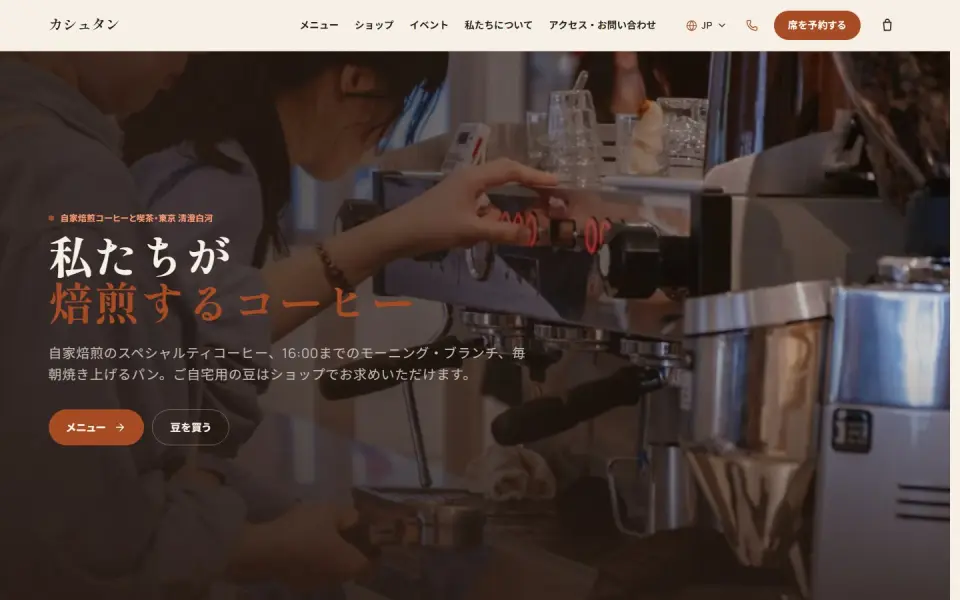 Café & roastery – KashtanMenu, events and an online bean shop
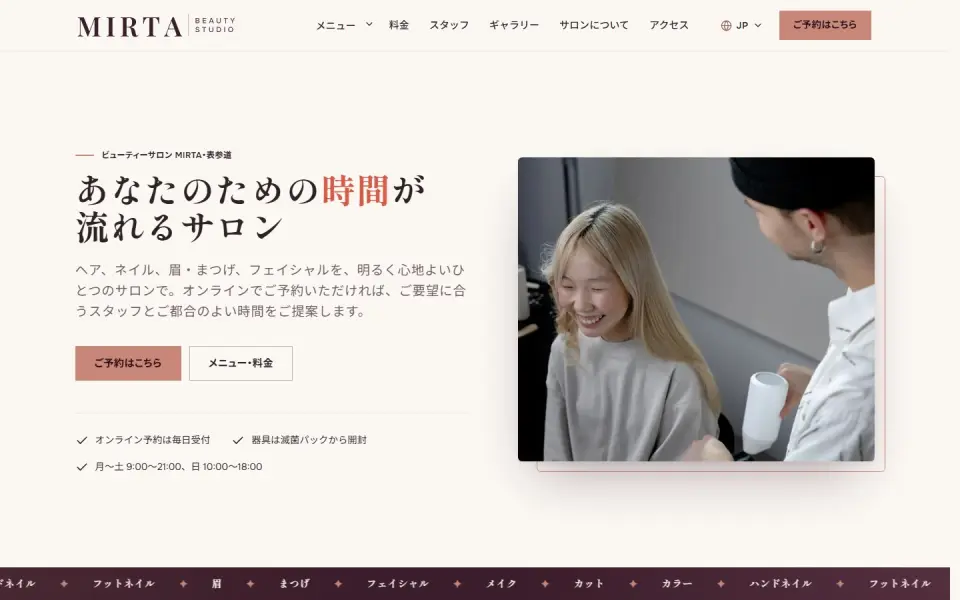 Beauty salon – MIRTABooking form, price list and team
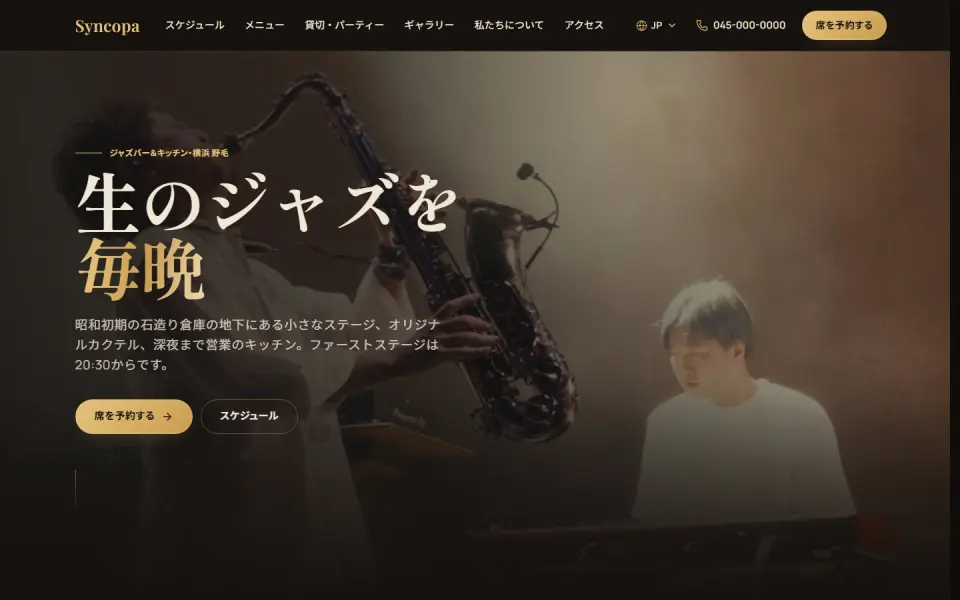 Jazz bar – SyncopaLive schedule, menu and table booking
Template demos with fictional brands. Yours is built with your own brand and content.
D2C marketing before and after launch: content first, then ads
Ads work better when the content they point to is already strong. In the launch phase, this order wastes the least budget:
- One to two months before launch: prepare the brand story, product copy and photos, and start sharing the making-of on social
- Before going live: set up GA4, the Meta Pixel with the Conversions API, and Google tags, then confirm tracking with a test order
- Right after launch: tell existing followers and contacts, and run small Meta Ads tests to find the photos and copy that get a response
- Once results show: move budget to what works, then expand into Google Shopping, search ads and SEO articles
If you sell cosmetics, health foods or supplements, check product pages and ads for claims that may conflict with Japan's Pharmaceutical and Medical Device Act (薬機法) or the Act against Unjustifiable Premiums and Misleading Representations (景品表示法). Guidelines are revised from time to time, so check the latest official information. For how we plan and run campaigns, see Meta Ads management.
Check your product pages and brand message together in a free demo before you spend on ads.
Repeat-purchase setup and a pre-launch checklist
A D2C brand lives on second and third orders. Have the path from first order to next order ready before launch:
- A thank-you email right after purchase, plus a follow-up on how to use or care for the product
- A reorder reminder timed to when the product runs out, or a subscription option
- A card or leaflet in the box with the brand story and links to social and LINE
- When to ask for a review, and how reviews appear on product pages
- Seller information under the Specified Commercial Transactions Act, a privacy policy and return terms
- Payments, shipping fees, delivery times and out-of-stock display, all checked with a test order
Email and LINE flows can start simple. Three messages – thank you, how to use, time to reorder – are a solid base for a new brand. Add more as you see how customers respond.
How UNANOBO supports a D2C launch: a free demo of your store
Before you commit to anything, UNANOBO builds a free demo of your store from your logo, colors and product photos. You click through the home page and product pages on your computer and phone, and decide whether to go ahead once you like the direction.
The process is simple: free demo, feedback, launch, growth. The founder handles every project personally – the store build, content structure, GA4 and ad tags, Meta Ads and Google Ads, and repeat-purchase improvements – so you keep one contact through every stage of the launch. Ad accounts, the domain and analytics are set up in your name. Everything runs by message, in Japanese or English.
How it works
- 01
Free demo
We start with a free demo built around your brand.
- 02
Feedback
Structure, tone and details are refined with you, on the demo itself.
- 03
Launch
The site goes live on a solid SEO foundation.
- 04
Growth
SEO and ads take it further, guided by the numbers.
FAQ
What does the free demo include?
A working store design built from your logo, colors and product photos, centered on the home page and product pages. You can check how it looks on mobile and how the path to checkout feels. You decide whether to continue after seeing it.
What if I see the demo and decide not to go ahead?
That is completely fine. The demo is free, and there is no charge if you stop. Take your time to decide on the scope and timing of your launch.
Can we start before the product is finished?
Yes. You can come to us at the prototype stage. We settle the layout with placeholder images where photos are missing, and shape the brand story and product copy in parallel. You get a clear list of needed materials early on.
How long does a D2C launch take?
It depends on the number of products and features, but a small store typically aims to go live in one to two months. Subscriptions or multiple languages add some time. You get a concrete schedule together with the demo.
What should I prepare?
Your logo files, product photos and basics (price, size, ingredients), a short note on what the brand stands for, and two or three brand sites you like. We will guide you to set up the domain and payment services in your own name.
Can we work entirely by message, even from outside Japan?
Yes. Everything from the first conversation to improvements after launch runs by message, in Japanese or English. You review the demo through a link, so there are no meetings to schedule. You get a reply within two business days.
Related pages
FREE DEMO
See your brand's store first
Send us your logo and product photos and we will build a free demo of a store that fits your brand. Decide after you have seen it.