
D2C ecommerce in Japan – what your own brand store needs and how to build it
D2C means selling directly to customers through your own online store, with no retailers or marketplaces in between. You keep the customer relationship and full control of your brand, but you also take on the store design, payments and marketing yourself. This page explains how D2C works in Japan, which features a D2C store needs, how to choose a platform and how a launch usually runs.
- Free demo – decide after you see it
- By message, in Japanese or English
- One person from demo to launch
FREE DEMO
Get a free demo of your D2C store
Send your brand name, logo, main products or a link to your social account. We build a free demo of a D2C store in your brand's style.
- A store design built around your brand
- Product pages and checkout to try on a phone
- A platform recommendation and launch plan
What D2C ecommerce means in Japan
D2C (direct to consumer) is a model where a maker or brand sells straight to shoppers through its own ecommerce site and social channels, without wholesalers, retail shops or marketplaces in between. The brand handles everything from product planning to delivery and follow-up. In Japan it has grown fastest in cosmetics, food, apparel, lifestyle goods and coffee.
Compared with selling on Rakuten Ichiba or Amazon, three things change:
- Customer data: you own buyers' email addresses and order history and can use them for follow-up and repeat sales
- Brand experience: page design, product storytelling and even the packaging insert follow your own style
- Margins: fewer middle fees leave more room for advertising and product development
The trade-off is traffic. A marketplace comes with shoppers already browsing; a D2C store needs its own plan for how people will find it, built alongside the site itself.
Which brands D2C suits – and where it gets hard
D2C works best when the maker's story is part of the product's value: unusual ingredients or methods, a product people appreciate more the longer they use it, or a close community of fans. That story is exactly what a marketplace listing struggles to tell.
These are the problems brands most often run into after launch. Planning for them early keeps expectations realistic:
- The store goes live but traffic is thin, and social posts alone do not bring steady sales
- Prices and descriptions match the marketplace, so there is no reason to buy on the brand site
- Orders, shipping and customer questions pile up on one or two people, and updates stop
- Ads run without proper tracking, so nobody can tell what works
If you are starting a new brand, our guide to launching a D2C brand walks through product planning to first sales. For running your own store next to a marketplace, see building your own ecommerce site.
We build a free demo that puts your brand's strengths front and center.
Must-have features of a D2C store
A D2C site is a shop, an introduction to the brand and the place where customers come back to buy again. Plan these elements in from the start:
- Brand story: who makes the products, why and how
- Product pages: usage, ingredients or materials, sizes, FAQs and a clear place for reviews
- Easy checkout: a cart that works smoothly on a phone, payment methods Japanese shoppers expect such as credit cards and convenience store payment, clear shipping costs and delivery dates
- Repeat purchases: accounts, email and LINE messages, subscriptions, reorder prompts in the parcel
- Required pages: the Specified Commercial Transactions Act notice, a privacy policy and return terms
- Tracking and growth: GA4 with conversion tracking, clean product data for Google Shopping, page titles and descriptions
Cosmetics and health foods must also follow Japan's Pharmaceutical and Medical Device Act and the Act against Unjustifiable Premiums and Misleading Representations, especially for claims about effects. Guidelines are revised from time to time, so check the latest official material before launch.
What the free demo gives you
- 01A working demoA demo site you can open and click through on a computer and a phone.
- 02A structure proposalWhich pages you need, what goes on each and where visitors get in touch.
- 03Plan and estimateAfter you have seen the demo you get the plan to launch and an estimate.
Why it is safe to ask
- The demo is free. If you decide not to go ahead, it costs you nothing.
- Everything happens by message, in Japanese or English.
- Your domain, hosting, ad and analytics accounts stay in your name.
- The founder handles your project from the first demo to growth after launch – one contact all the way.
Demo sites we built
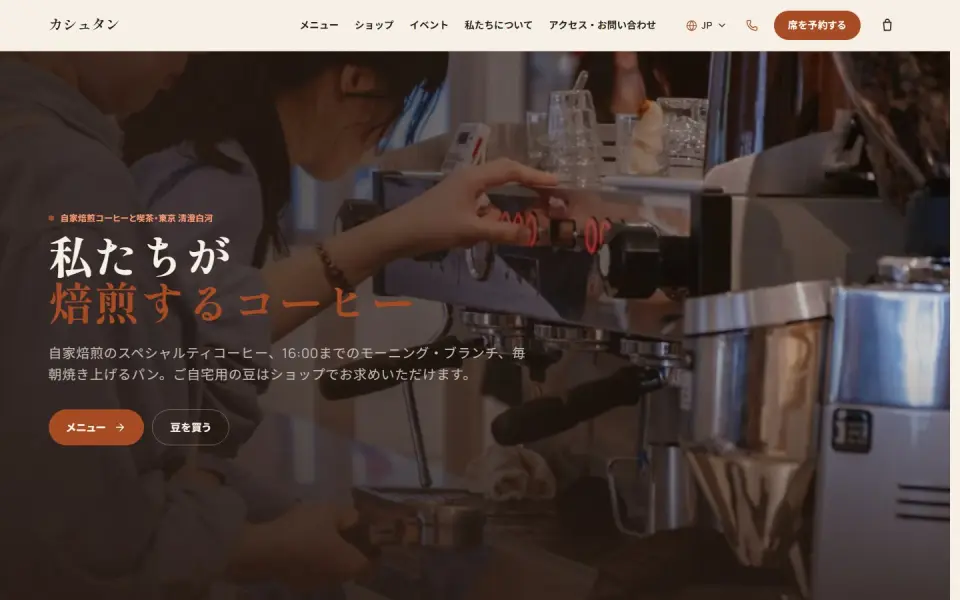 Café & roastery – KashtanMenu, events and an online bean shop
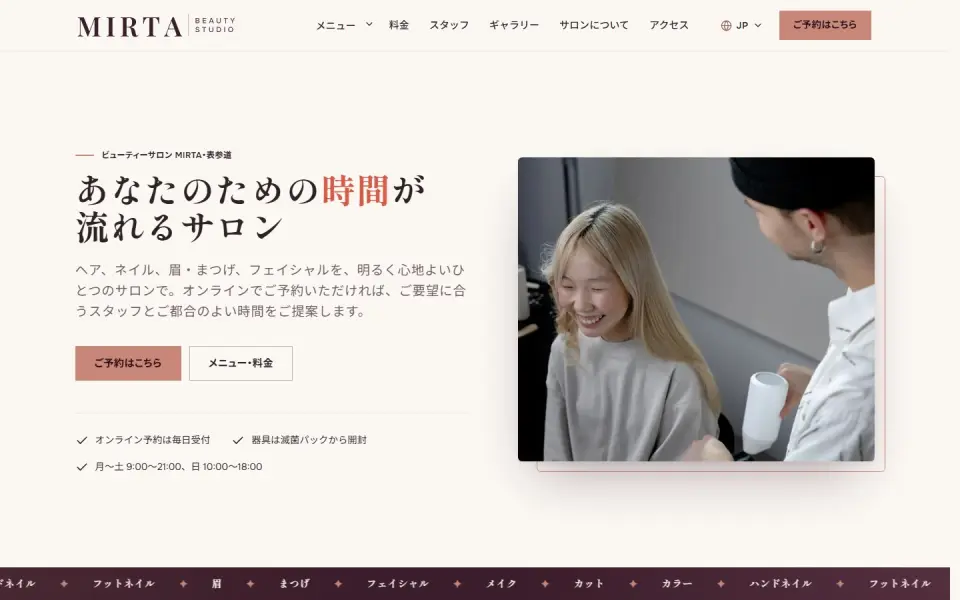 Beauty salon – MIRTABooking form, price list and team
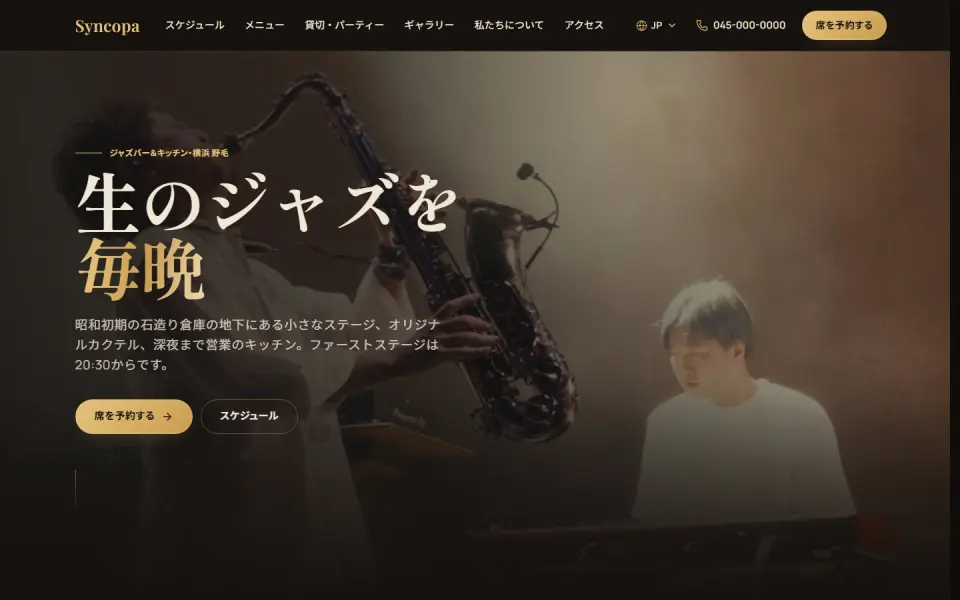 Jazz bar – SyncopaLive schedule, menu and table booking
Template demos with fictional brands. Yours is built with your own brand and content.
Choosing a platform: Shopify, BASE or WooCommerce
Pick the platform by product count, growth plans and who will run the store day to day. The three most common choices for D2C in Japan compare like this:
- Shopify: flexible design and a large app ecosystem for subscriptions, reviews and loyalty points. Strong for international sales and multiple languages – a good fit for brands planning to scale
- BASE: quick and low-cost to start, with a very simple admin panel. Good for testing demand with a small range first
- WordPress + WooCommerce: pairs well with content-led marketing and makes sense if you already run a WordPress site and want to add a shop
Monthly fees and payment rates change by plan and over time, so check each platform's current pricing page. If subscriptions will be a core revenue stream, our guide to subscription ecommerce covers the setup and the common pitfalls.
Tell us your product range and who will run the store, and we build the free demo on the platform that suits you.
How a D2C store launch runs and what to prepare
For a small D2C store, one to two months from structure to launch is a typical timeline. This order keeps rework to a minimum:
- Core message: sum up in one sentence who the product is for and why they should choose it
- Structure: home, collections, product pages, brand story, FAQ and legal pages
- Materials: product photos, descriptions, prices, shipping fees, stock and delivery options in one sheet
- Payments and shipping: choose payment methods and a carrier, then run test orders
- Tracking: set up GA4, ad tags and Search Console before launch
- First marketing: start small with the channel that fits your product – social, Google Ads, Meta Ads or Google Shopping
It helps to have ready: logo files, product photos, brand colors, a few sites you like and, if you already sell on a marketplace, links to those listings. Keep the domain, ad accounts and analytics in the brand's own name so they stay yours whoever runs the store later.
How UNANOBO builds D2C stores: a free demo first
Before you commit to anything, UNANOBO builds a free demo of a D2C store around your brand and products. You check the home page, product pages and the path to checkout on your computer and phone, then decide whether to go ahead.
The process is free demo, feedback, launch, growth. We work out together at the demo stage whether Shopify, BASE or WooCommerce fits best, and after launch the same contact handles SEO, Google Shopping, Meta Ads and GA4. The founder runs every project personally, and everything happens by message in Japanese or English.
How it works
- 01
Free demo
We start with a free demo built around your brand.
- 02
Feedback
Structure, tone and details are refined with you, on the demo itself.
- 03
Launch
The site goes live on a solid SEO foundation.
- 04
Growth
SEO and ads take it further, guided by the numbers.
FAQ
What do I need to send for the free D2C demo?
Your brand name, logo and photos with short descriptions of your main products are enough to start. If you already sell on social media or a marketplace, a link to that is fine too. We build the demo around the home page and product pages.
Is there any cost if I decide not to go ahead?
No. The demo is free, and stopping after it costs nothing. You see the plan and estimate after the demo and decide then.
I sell on a marketplace already. Can I run my own D2C store as well?
Yes. The marketplace helps new customers find you, while your own store handles repeat buyers and the full brand experience. We can discuss how to present prices and perks on each channel during the demo stage.
How long does it take to launch a D2C store?
With a small range and photos and copy ready, one to two months is typical. A large catalog or a subscription setup takes longer. After the demo you get a concrete schedule based on the materials you have.
Can we work entirely by message?
Yes. All communication runs by message in Japanese or English, and screens to review are shared as demo links you can open on your phone at any time. We reply to inquiries within two business days.
Can you handle marketing after launch?
Yes. SEO, GEO (visibility in AI answers), Google Ads, Google Shopping, Meta Ads and GA4 all run through the same contact. Ad and analytics accounts are created in your name, so the data stays with your brand.
Related pages
FREE DEMO
See your brand's D2C store first
Send us your brand name and product details and we will build a free demo of your D2C store. Decide after you have seen it.