Brand website design in Japan – tell your story and lead to your store
Your product is good, but a store listing and a few social posts rarely explain why it exists, who makes it or what makes it different – a brand website fills that gap by gathering your story and visual world in one place and guiding readers naturally to your online store. This page covers what a brand site needs, how to structure it, how the project runs and where it tends to go wrong – and why UNANOBO starts with a free demo of your brand site.
- Free demo – decide after you see it
- By message, in Japanese or English
- One person from demo to launch
FREE DEMO
Your brand site as a free demo
Send your logo, product photos and the address of your store or social accounts. We build a free demo of your brand website, and you decide after you have seen it.
- A demo in your own colors and photos
- See the path from story to store
- A page structure and plan for your brand
What a brand website is for
A brand website exists to give people a reason to choose your product. It works alongside two other kinds of site, and it helps to be clear about which job each one does before you plan any pages.
- Brand website: the origin story, the makers, materials and methods, the moments your product belongs in
- Online store: browsing, cart, checkout and shipping – getting the purchase done smoothly
- Corporate website: company profile, business areas, recruiting and information for partners
For a small brand, a set of brand pages built inside a Shopify or BASE store can do both jobs well in one site. If your focus is presenting the company itself, see corporate website design.
Five things every effective brand site has
Memorable brand sites look good, and they also say things in a deliberate order with deliberate words. Before you talk to any studio, try writing these five down for your own brand.
- A one-line concept: who the brand is for and what it gives them, in a few words
- A story: how it started, the frustration it set out to fix, the people behind it
- Proof: materials, origin, process, testing or certifications that back up your claims
- Photos and video: product shots plus the product in use and the place it is made
- A consistent tone: colors, typefaces and wording that match your packaging, social accounts and store
Photography shapes the first impression more than anything else. If you are planning a shoot, ask for wide and tall versions of key images and compositions that still read when cropped on a phone. It saves a lot of time during the build.
It is easier to find the words while looking at a demo. Send your logo and product photos to start.
Page structure for a D2C brand: from story to checkout
A D2C site has to be enjoyable to read and make it effortless to buy the moment someone is ready. For brands with a focused product range, this structure works well:
- Home: concept, hero products and a store button on the first screen
- Brand story: origin and values told in short text with strong images
- Products: features, how to use, sizes or ingredients, FAQs and a link to each store page
- Craft and materials: show the process in concrete detail so the price makes sense
- Journal: tips, seasonal ideas and guides that bring visitors in from search and social
- Contact and stockists: wholesale, press and gift inquiries
Place store buttons throughout the product content. If you are still at the starting line, our guide to launching a D2C brand covers what to prepare first, and e-commerce site design covers the store side.
What the free demo gives you
- 01A working demoA demo site you can open and click through on a computer and a phone.
- 02A structure proposalWhich pages you need, what goes on each and where visitors get in touch.
- 03Plan and estimateAfter you have seen the demo you get the plan to launch and an estimate.
Why it is safe to ask
- The demo is free. If you decide not to go ahead, it costs you nothing.
- Everything happens by message, in Japanese or English.
- Your domain, hosting, ad and analytics accounts stay in your name.
- The founder handles your project from the first demo to growth after launch – one contact all the way.
Demo sites we built
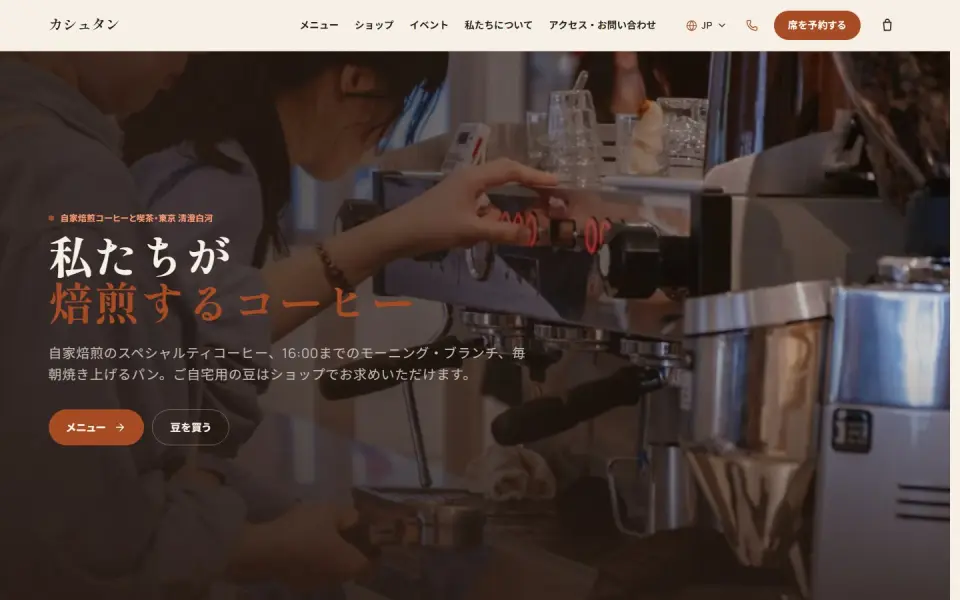 Café & roastery – KashtanMenu, events and an online bean shop
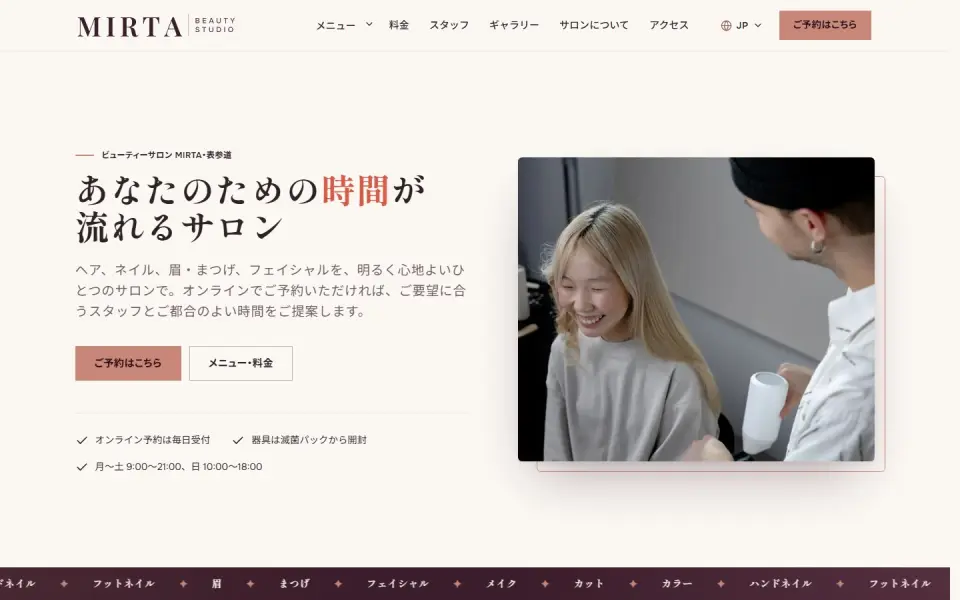 Beauty salon – MIRTABooking form, price list and team
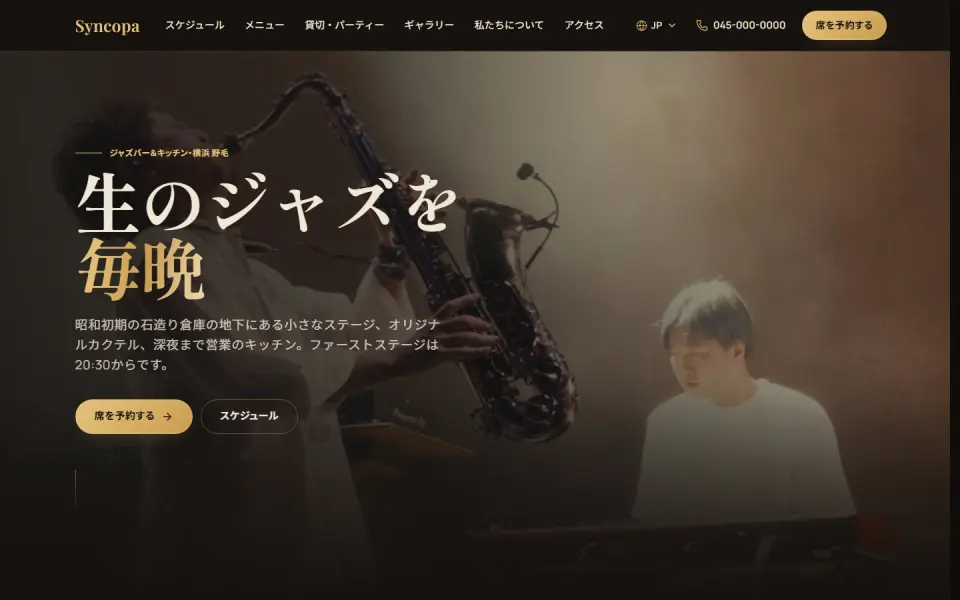 Jazz bar – SyncopaLive schedule, menu and table booking
Template demos with fictional brands. Yours is built with your own brand and content.
How a brand website project runs and what to prepare
Typically a compact brand site takes one to two months, and two to three months if photography or articles are part of the work. The steps look like this:
- Brand brief: concept, target customers, what sets you apart, words you want to use
- Structure: the pages you need, routes to the store or bookings, the direction for articles
- Design direction: settle colors, type and photo style on the home page first
- Copy and assets: story and product text, photos, video
- Build and connect: store links, GA4 and ad tags, social sharing images
- After launch: see which pages send people to the store and refine them
It helps to have ready: logo files, brand colors, product photos, the wording you use on packaging and social media, and two or three sites with a similar feel. Keep the domain, analytics and ad accounts in your brand's own name so you stay in control however your setup changes later.
No shoot or final copy yet? We build the free demo from the photos and store content you already have.
Common mistakes with brand websites
A beautiful brand site that sends few people to the store and does little for your ads is a familiar story. Most of the causes can be fixed at the planning stage.
- Heavy animation and huge images make the site slow on phones
- The story page has no store button, so readers leave right there
- The brand site and the store use different logos, colors or tone and feel like two companies
- Ad tags and tracking are missing, so sales from ads cannot be measured
- Nobody owns updates after launch, and news and articles stop
If you plan to advertise, check early that the site can serve as a landing page. A structure that lets you add campaign-specific pages makes testing Meta Ads and Google Ads much easier.
How UNANOBO builds brand websites: your brand world as a free demo
Before you commit to anything, UNANOBO builds a free demo of your brand site from your logo, colors, product photos and what is already on your store and social accounts. You click through it on a computer and a phone, and decide whether to go ahead once it feels like your brand.
The process is simple: free demo, feedback, launch, growth. The founder handles every project personally – from the first demo to SEO, Google Ads, Meta Ads and GA4 after launch – so the understanding of your brand never gets lost in a handover. Everything runs by message, in Japanese or English, and the link to your Shopify or BASE store is planned from the demo stage.
How it works
- 01
Free demo
We start with a free demo built around your brand.
- 02
Feedback
Structure, tone and details are refined with you, on the demo itself.
- 03
Launch
The site goes live on a solid SEO foundation.
- 04
Growth
SEO and ads take it further, guided by the numbers.
FAQ
Is the demo really free?
Yes. We build a working demo, centered on the home page, from your logo, photos and existing store or social content. If you decide not to continue after seeing it, there is no cost at all.
Our brand is brand new and we have few materials. Can we still start?
Yes. A logo and a handful of product photos are enough for a demo, and placeholder images can hold the layout while you prepare more. We can also shape your story together from a conversation by message.
How does the brand site connect to Shopify or BASE?
Usually the brand site links each product to its store page. With a small range, the brand story pages can live inside your Shopify or BASE store as one site. We suggest the option that fits your product count and whoever will edit the site.
How long does it take?
Demos are built in order once we have your materials, and you get a date by message. The full build depends on page count and photography, but a compact brand site typically takes one to two months. We reply to messages within two business days.
You are not in Japan. Will the nuance of our brand come across?
Everything runs by message in Japanese or English. Reference sites, photos and wording ideas sent in writing make it easy to check that we understand each other, and you give feedback directly on the demo.
Can you handle marketing and ads after launch?
Yes. SEO and GEO for AI answers, Google Ads, Google Shopping, Meta Ads and GA4 or tag setup all run through the same single contact. Ad and analytics accounts are created and kept in your brand's name.
Related pages
FREE DEMO
See your brand world take shape
Send us your logo, a few product photos and your store or social links, and we will build a free demo of your brand site. Decide after you have seen it.