
Food ecommerce website in Japan – a store built for shipping, labels and gifts
A food ecommerce website in Japan needs more than a product grid and a cart. Chilled and frozen delivery, food labeling, gift wrapping with noshi and repeat orders all have to work from day one, or launch week turns into shipping losses and customer emails. This guide covers what to decide first, the features a food store needs, the rules to check and how to choose a platform – and how UNANOBO shows you a free demo of your store before you commit.
- Free demo – decide after you see it
- By message, in Japanese or English
- One person from demo to launch
FREE DEMO
See your food online store – free
Send us your main products, how they ship (ambient, chilled or frozen) and your current site URL if you have one. We build a free demo of your food store.
- A store built with your real products
- Gift and subscription entry points shown
- A proposal for shipping rules and features
Four things to decide before building a food ecommerce website
With food, decide how products reach the customer before you think about design. Features and quotes fall into place much faster once these four points are written down.
- Temperature: ambient, chilled or frozen – and what happens when one order mixes them (separate parcels, or not allowed together)
- Shelf life: best-before or use-by dates, and how many days you need between order and dispatch, especially for made-to-order items
- Who buys: mostly for home use, or a lot of gifting for ochugen, oseibo and return gifts
- Repeat orders: products people want every month, such as coffee beans, bread or vegetable boxes
These answers decide shipping rules, delivery date options, noshi and whether you need subscriptions. Anything still open can stay open – we settle it together at the demo stage.
Feature checklist for a food online store
In a food store, a clear checkout means fewer support emails. These features keep daily operations calm.
- Shipping by temperature: cool-delivery surcharges per product, with correct totals when a cart mixes ambient and frozen items
- Delivery date and time: only dates you can actually meet, taking prep days and closing days into account
- Gift options: noshi with inscription and name, wrapping, message cards, separate sender and recipient, a packing slip without prices
- Multiple addresses: an easy way to send one order to many recipients in gift season
- Subscriptions: delivery intervals, skip and cancel options, a reminder before the next shipment
- Product information block: ingredients, allergens, volume, shelf life and storage in the same place on every product page
Subscriptions steady your revenue, but they need clear terms and an easy way to cancel. Our guide to subscription ecommerce goes into detail.
The free demo shows gifts, subscriptions and temperature-based shipping with your own products.
Labeling and permits to check when selling food online in Japan
Selling food online in Japan comes with the same duty to inform customers as a physical shop. These are the main points to review for your products.
- Food Labeling Act: name, ingredients, additives, allergens, volume, dates, storage and manufacturer on the package. Showing the same details on the product page helps buyers decide
- Specified Commercial Transactions Act: seller name, address, contact, shipping fees, payment, delivery timing and return policy must be on the site – including a clear note if perishables cannot be returned
- Advertising rules: health or slimming claims fall under the Premiums and Representations Act, the Health Promotion Act and the Pharmaceutical and Medical Device Act
- Food Sanitation Act: depending on what you make, a business permit or notification from the local health center is required
- Alcohol: selling sake or other drinks by mail order requires the right liquor retail license from the tax office, plus notices against sales to people under 20
Rules are revised from time to time, so check the latest information from the Consumer Affairs Agency, your health center and the tax office. Sake breweries may also find websites for sake breweries useful.
What the free demo gives you
- 01A working demoA demo site you can open and click through on a computer and a phone.
- 02A structure proposalWhich pages you need, what goes on each and where visitors get in touch.
- 03Plan and estimateAfter you have seen the demo you get the plan to launch and an estimate.
Why it is safe to ask
- The demo is free. If you decide not to go ahead, it costs you nothing.
- Everything happens by message, in Japanese or English.
- Your domain, hosting, ad and analytics accounts stay in your name.
- The founder handles your project from the first demo to growth after launch – one contact all the way.
Demo sites we built
 Café & roastery – KashtanMenu, events and an online bean shop
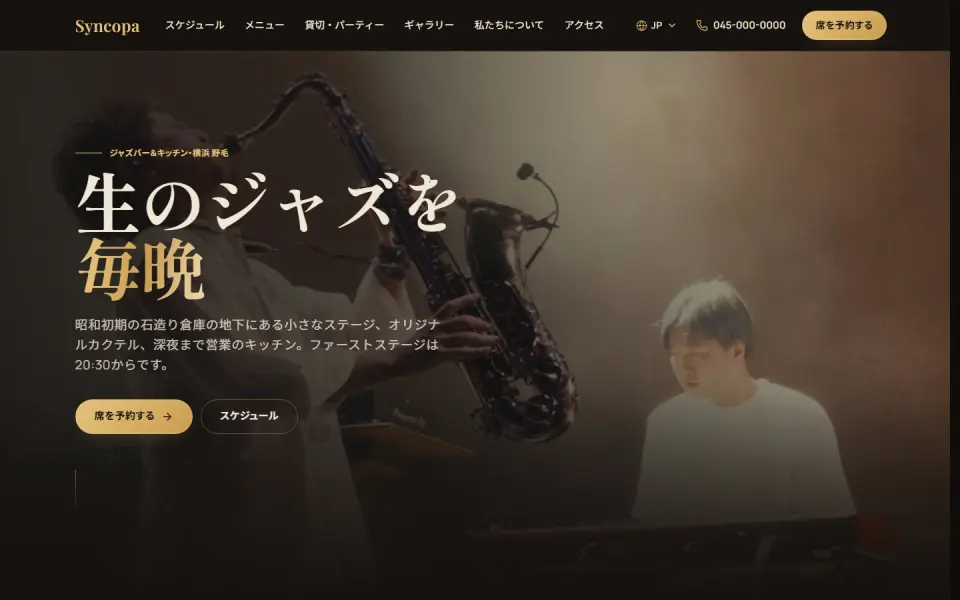 Jazz bar – SyncopaLive schedule, menu and table booking
 Beauty salon – MIRTABooking form, price list and team
Template demos with fictional brands. Yours is built with your own brand and content.
Shopify, BASE or WooCommerce for a food store
Each platform can run a food store; they simply suit different businesses. Product count, the share of gift orders and subscriptions are the deciding factors.
- Shopify: shipping profiles let you set rates per product, and subscriptions, noshi and delivery dates come through apps. A good fit if you plan to grow with ads or sell abroad later
- BASE: no upfront cost and a simple admin panel. A good fit for a small range and a first test with home-use orders
- WordPress (WooCommerce): easy to combine recipes and stories with the shop and very flexible, with server and plugin maintenance to plan for
Every app or plugin adds monthly cost and upkeep, so start with what you truly need and add more as sales show the way. For a full comparison, see ecommerce website development.
Tell us your range and how you sell, and we build the free demo on the platform that suits you.
Common mistakes and pre-launch checks
Small gaps in a food store tend to show up as shipping losses or complaints after launch. Place real test orders and check these points.
- Does a mixed ambient and frozen order charge what the carrier actually bills you?
- Can customers pick dates when you are closed or fully booked?
- Does the gift packing slip stay free of prices?
- On a phone, are ingredients and allergens easy to find?
- Do appetizing photos still match what arrives in the box?
- Is there a place to announce gift season opening and closing dates?
Adding storage tips and serving ideas to product pages helps people buy and cuts questions. Gift seasons take time to prepare, so aim to go live two to three months before orders open.
How UNANOBO builds food ecommerce websites: a free demo first
Before you commit, UNANOBO builds a free demo of your food store from your products and brand. You see how product pages look, where gifts and subscriptions start and how shipping by temperature would work – on a real screen, before you decide.
The process is free demo, feedback, launch, growth. The founder handles every project personally, from the first demo to Google Shopping and Meta Ads after launch, and all communication runs by message in Japanese or English. To start, just tell us your main products and how you ship them.
How it works
- 01
Free demo
We start with a free demo built around your brand.
- 02
Feedback
Structure, tone and details are refined with you, on the demo itself.
- 03
Launch
The site goes live on a solid SEO foundation.
- 04
Growth
SEO and ads take it further, guided by the numbers.
FAQ
What does the free demo include?
A working home page and product pages using your brand colors, logo and real product photos. If you sell gifts or subscriptions, their entry points are included too. You can check it on a computer and a phone.
What if I decide not to go ahead?
Nothing is charged. If the direction is not right for you, you can stop after the demo. If you continue, you receive a structure proposal, a plan and an estimate after the demo.
What should I prepare?
Names, photos and prices of your main products, whether they ship ambient, chilled or frozen, and how you ship today. Your current site or shop URL and package label details make the demo even more specific.
How long does it take to launch?
Typically one to two months for a small food store, depending on the product count and features. Subscriptions or multi-address gift orders add setup and testing time. If you are aiming at a gift season, get in touch early.
Can you rebuild my existing BASE or Shopify shop?
Yes. We review your product data and order flow, then look at both improving the current platform and moving to another one. Your domain and accounts stay in your name.
You are not in Japan – how does working remotely go?
Everything from the first question to post-launch work runs by message, in Japanese or English, with replies within two business days. Demos and changes are shared as links so you can review them on screen.
Related pages
FREE DEMO
See your food store first
Tell us your main products and how you ship them, and we will build a free demo of your food ecommerce website. Decide after you have seen it.