
Sake brewery website design – a bilingual site for fans in Japan and abroad
As sake wins fans around the world, importers, restaurants and travelers planning a brewery visit all start in the same place: your official website. Too often they find little English, thin product details and no clear way to get in touch, and the interest goes nowhere. This page covers what a sake brewery website should include, what to check before selling sake online, and how to present your brewery to overseas readers – and why UNANOBO starts with a free bilingual demo built around your brand.
- Free demo – decide after you see it
- By message, in Japanese or English
- One person from demo to launch
FREE DEMO
Your bilingual brewery site – free demo
Send us your current site address or a product brochure. We build a free demo of a Japanese and English site in your brewery's style, and you decide after you have seen it.
- Built from your products and brewery story
- Check both Japanese and English pages
- A plan for direct and overseas sales
Five jobs a sake brewery website does
A brewery site introduces your sake, and it also works as a shop, a trade desk and a visitor center. Deciding which job matters most before you start makes the structure and design much easier.
- Brand story: the brewery's history, its water and rice, the toji and the rhythm of the brewing season
- Direct sales: brewery-only bottles and seasonal releases such as shinshu and hiyaoroshi
- Trade inquiries: a place where retailers, restaurants and overseas importers check specs and contacts
- Visits: brewery tours, the shop on site, open-brewery days and how to book
- Where to buy: stores and restaurants in Japan and abroad that carry your sake
You can build this in stages. Many breweries launch a bilingual brand site with a stockist list first and add an online shop once the brewery is ready to handle orders.
What overseas fans and importers look for
Overseas visitors may not read the kanji on your label, so they rely on the English pages to understand each sake. Alongside the atmosphere, they need facts laid out so they can compare.
- Specs per product: grade (junmai daiginjo and so on), rice polishing ratio, rice variety, alcohol, bottle size
- Taste and serving: aroma and flavor profile, serving temperature from chilled to warm, food pairings
- Plain-language terms: short notes on ginjo, kimoto, namazake and other words that confuse newcomers
- Storage: whether it needs refrigeration and how long it keeps after opening
- Trade details: whether you export, which regions you can serve, who to contact and in which language
English pages work best when they follow the order a foreign reader thinks in. Our guide to building an English website goes deeper. A good first step: put together a bilingual spec sheet for your three to five main products.
Send materials on your main products and we will include English pages for overseas fans in the free demo.
Selling sake online: what to check first
Alcohol has more rules than most products. Before you add a shop to the site, work through these points.
- Licenses: the license you need depends on how and where you sell. Selling your own sake from the brewery and also selling other makers' products (which may need a mail-order retail license) have different requirements, so confirm with your local tax office
- Age checks: confirm buyers are 20 or older at checkout and show the legally required notices on the site and product pages
- Shipping: chilled delivery for namazake, packaging that protects bottles, and clear shipping fees
- Legal notice page: the Specified Commercial Transactions Act page with seller details, returns and payment methods
- Overseas sales: import rules for alcohol differ by country, and some do not allow direct shipping to consumers. Selling through a local importer is the usual route
Requirements can change, so check the latest guidance from the National Tax Agency or your tax office. If you plan to sell abroad with Shopify or a similar platform, see cross-border e-commerce site build for how payments, shipping and markets are usually set up.
What the free demo gives you
- 01A working demoA demo site you can open and click through on a computer and a phone.
- 02A structure proposalWhich pages you need, what goes on each and where visitors get in touch.
- 03Plan and estimateAfter you have seen the demo you get the plan to launch and an estimate.
Why it is safe to ask
- The demo is free. If you decide not to go ahead, it costs you nothing.
- Everything happens by message, in Japanese or English.
- Your domain, hosting, ad and analytics accounts stay in your name.
- The founder handles your project from the first demo to growth after launch – one contact all the way.
Demo sites we built
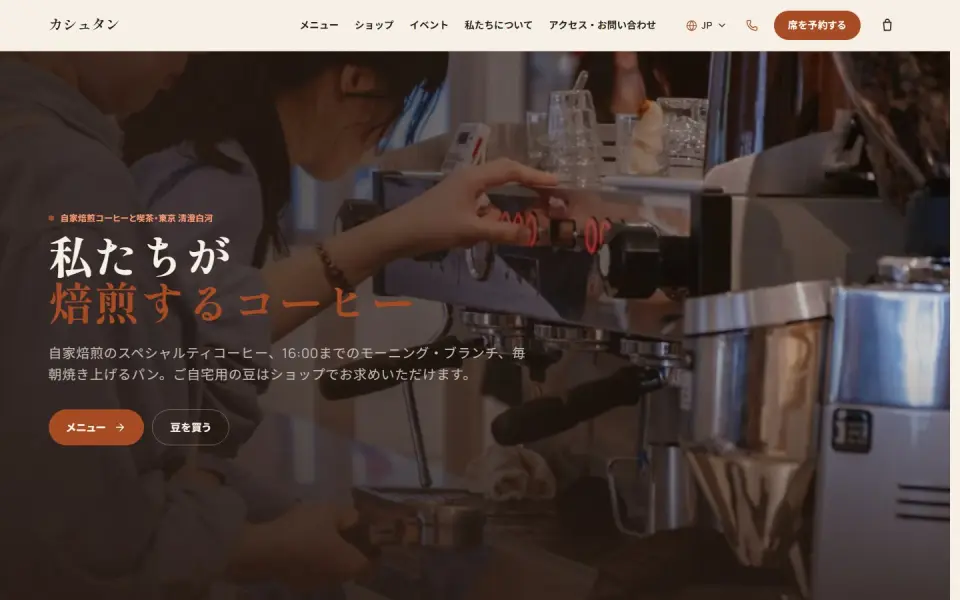 Café & roastery – KashtanMenu, events and an online bean shop
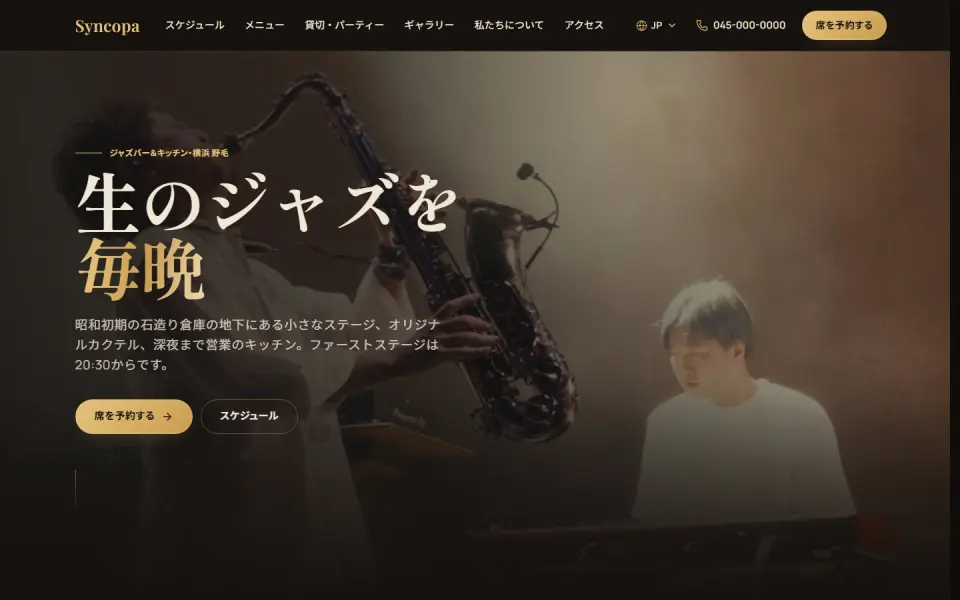 Jazz bar – SyncopaLive schedule, menu and table booking
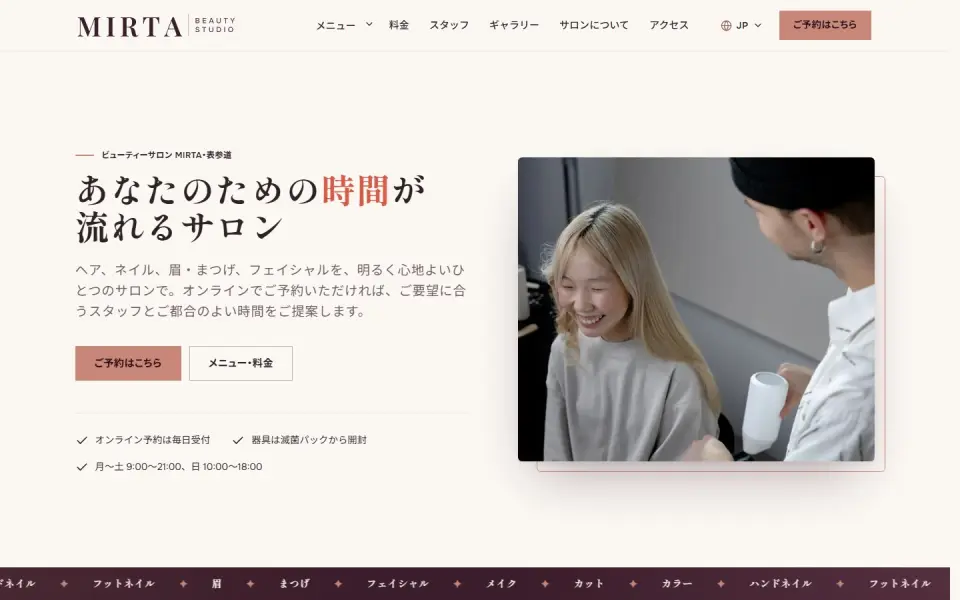 Beauty salon – MIRTABooking form, price list and team
Template demos with fictional brands. Yours is built with your own brand and content.
Site structure and what to prepare
A brewery site leaves a strong impression when the story and the products connect. Even a small brewery is well served by this structure:
- Home: the brewery, your flagship sake and a Japanese / English switch
- About the brewery: history, water and rice, a word from the toji, the brewing year
- Products: photos, specs, taste, serving ideas and links to buy or find a stockist
- Visit us: opening days, access, booking and whether tastings are offered
- Trade: inquiry paths for retailers and restaurants in Japan and importers abroad
- Online shop: added once you are ready to handle orders
Have these ready if you can: logo and label files, photos of the brewery and brewing, specs for each sake, notes on the brewery's history and a stockist list. Brewing-season photos can only be taken at certain times of year, so shoot them early. For ways to express your brewery's character, see brand website design.
Copy or photos still in progress? We build the free demo from the materials you already have.
Common mistakes on brewery websites
Sites that stall after launch tend to share the same problems, and all of them can be avoided at the planning stage.
- Mood photos come first and specs or buying options are hard to find
- The English section covers only part of the site and leaves out contacts and trade terms
- Nobody is in charge of seasonal updates, so last year's notices stay up
- Product lists and spec tables break on a phone
- Tours can only be booked by phone, which shuts out overseas visitors
Agree early on who updates the site and how often, and make seasonal releases and tour notices easy to change from the admin panel. That keeps the site fresh long after launch.
How UNANOBO builds brewery sites: a free bilingual demo first
Before you commit to anything, UNANOBO builds a free demo based on your products, logo and photos. You click through both the Japanese and English pages on your computer and phone, and decide whether to go ahead once you like the direction.
The process is simple: free demo, feedback, launch, growth. The founder handles every project personally, so you keep one contact from the first demo to improvements after launch. Everything runs by message, in Japanese or English. For direct or overseas sales, we suggest the platform that fits your brewery – Shopify, BASE or WordPress with WooCommerce.
How it works
- 01
Free demo
We start with a free demo built around your brand.
- 02
Feedback
Structure, tone and details are refined with you, on the demo itself.
- 03
Launch
The site goes live on a solid SEO foundation.
- 04
Growth
SEO and ads take it further, guided by the numbers.
FAQ
What does the free demo include?
A working design centered on the home page and product pages, built from your current site, brochures or label information. You can check both languages and the mobile view. You decide whether to continue after seeing it.
Is there any cost if we decide not to go ahead?
No. The demo is there to help you decide, so stopping after you have seen it costs nothing. We will not keep chasing you afterwards.
Do we need to provide the English text?
No – Japanese materials are enough. We shape your product descriptions and brewery story into English that reads naturally for overseas fans, and agree with you on how brewing terms are translated.
Can we build the site before we are ready to sell online?
Yes. You can launch with a brand site and stockist list, then add an online shop once you are ready to handle orders. The site is planned so a shop can be added later without a rebuild.
Our brewery is far from any city. Can this work by message only?
Yes. You send materials and photos by message or file sharing, and review the demo through a link. Nothing requires a visit, so you can reply when it suits you, even in the busy brewing season.
How long does it take to launch?
Typically one to two months for a bilingual site centered on your products, and longer when an online shop is included. It depends on how much copy and photography is ready, so you get a concrete plan after the demo.
Related pages
FREE DEMO
See your brewery's new website first
Send us your current site address or product materials and we will build a free bilingual demo. Decide after you have seen it.