
Crawled – currently not indexed: how to find the cause and fix it
When Search Console lists a page as "Crawled – currently not indexed", Google has read it and decided to leave it out of search results for now. If your service or product pages sit in that list, no amount of writing will bring visitors from search. This page explains what the status means, how it differs from "Discovered – currently not indexed", how to narrow down the cause and what to fix on each page.
- Free demo – decide after you see it
- By message, in Japanese or English
- One person from demo to launch
FREE DEMO
Get your unindexed pages checked – free
Send your site address and the pages missing from search. We sort out the causes and show you the improved page structure as a free demo.
- Causes sorted by Search Console status
- Improved pages to view on computer and phone
- A clear scope: page fixes or a rebuild
Crawled vs. discovered – currently not indexed
The "Page indexing" report in Search Console groups every URL that was not indexed by reason. Two reasons come up most often, and despite the similar names they point in different directions.
- Crawled – currently not indexed: Google fetched and evaluated the page, then chose not to index it. Page value and duplication are usually the deciding factors
- Discovered – currently not indexed: Google knows the URL exists but has not crawled it yet. Slow server responses and few internal links usually keep it low on the list
- Excluded by "noindex" tag: the page itself asks not to be indexed. You only need to confirm this is intended
- Duplicate pages: Google picked another URL as the canonical. Review canonical tags and keep one version of each URL
Start by noting how many URLs sit under each reason. If most are "crawled", look at page content first; if most are "discovered", look at site structure and the server.
Which unindexed pages matter and which can stay out
Having some unindexed URLs is normal. Google indexes the pages it considers useful to searchers, so a share of any site stays out. So before fixing anything, sort out which pages you actually want in search.
- Fine to leave out: URLs with sorting or filter parameters, tag and archive lists, internal search results, form thank-you pages, test pages
- Need attention: service, pricing, location and access, product and category pages, and guides that lead to inquiries
- Judgment calls: thin news posts, blog articles that repeat each other, products that have been out of stock for a long time
List only the pages that need attention, with the URL, the page's role and its current status. For the judgment calls, decide whether to improve each page or merge it into another one.
Send us your site address and the free demo starts with sorting pages to keep in search from pages to clean up.
How to narrow down the cause
The reason a page is not indexed is usually one of three things: the content, a technical setting or the structure of the site. Use the URL Inspection tool in Search Console and work through these checks in order.
- Inspect the URL: check the last crawl date and whether the Google-selected canonical matches the one you declared
- Test the live URL: confirm the page can be fetched and is not blocked by noindex or robots.txt
- Look at the rendered screenshot and HTML: make sure text and product details loaded by JavaScript are visible to Google
- Compare with similar pages: look for pages on your site with nearly the same title or text
- Count internal links: check whether menus and related pages actually link to the URL
- Check the sitemap: confirm the URL is in your XML sitemap and the sitemap has no errors
If nothing technical is wrong and the canonicals match, a page that stays "Crawled – currently not indexed" usually has a content or internal-linking problem. Our technical SEO page covers the wider checklist, including speed and structured data.
What the free demo gives you
- 01A working demoA demo site you can open and click through on a computer and a phone.
- 02A structure proposalWhich pages you need, what goes on each and where visitors get in touch.
- 03Plan and estimateAfter you have seen the demo you get the plan to launch and an estimate.
Why it is safe to ask
- The demo is free. If you decide not to go ahead, it costs you nothing.
- Everything happens by message, in Japanese or English.
- Your domain, hosting, ad and analytics accounts stay in your name.
- The founder handles your project from the first demo to growth after launch – one contact all the way.
Demo sites we built
 Dental clinic – ORATreatments, prices, doctors and booking
 Renovation – KUTEstimate request, projects and prices
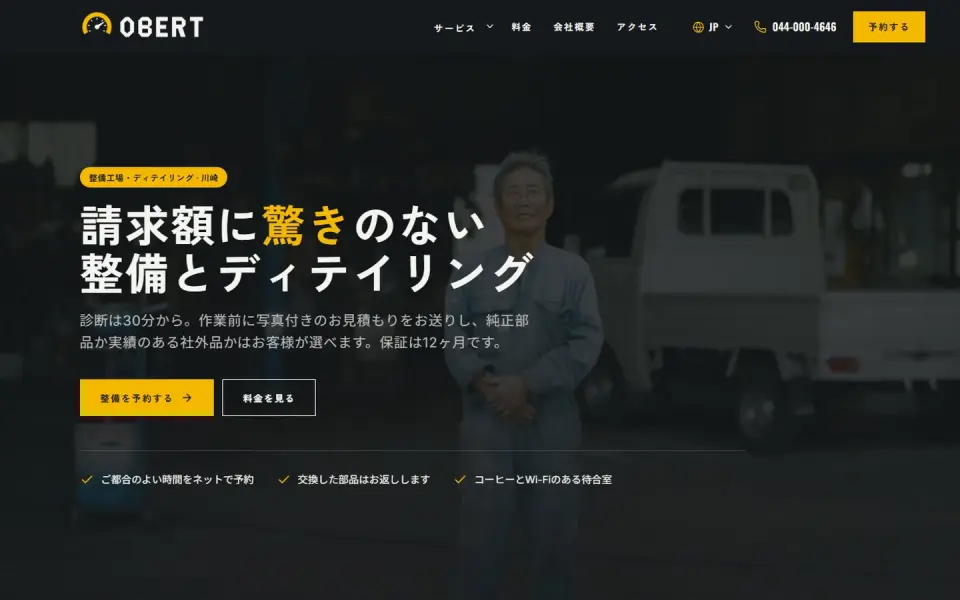 Car service – OBERTService and detailing prices, booking
Template demos with fictional brands. Yours is built with your own brand and content.
How to fix pages that are not indexed
Once you know the likely cause, work page by page. These fixes are listed roughly in order of impact.
- Add information only this page has: area served, typical prices, how the service works, FAQs, real photos – details missing elsewhere on your site and on competitors' sites
- Merge similar pages: combine overlapping articles or product variants into one page and 301-redirect the old URLs
- Use one canonical URL: align canonical tags, trailing slashes, www vs. non-www and http vs. https
- Add internal links: link from the home page, categories and related articles with clear anchor text
- Put key content in the HTML: avoid layouts where main text or product data appears only after scripts run
- Stabilize the server: slow or error-prone hosting is a common reason for "Discovered – currently not indexed"
For pages you do not need, adding noindex or removing them helps Google focus on the pages that matter. Shopify, BASE and WordPress tend to generate tag and filter URLs automatically, so check theme and plugin settings too.
We rebuild the content and layout of your unindexed pages as a free demo before you commit.
After the fix: validation and indexing requests
When the changes are live, ask Google to look again. For key pages, use "Request indexing" in URL Inspection; in the report, open the reason and click "Validate fix" to track progress.
Validation typically takes from a few days to a few weeks. Sending the same request repeatedly does not speed it up, and there is a daily limit on requests. For larger sites, update the sitemap and request indexing only for the most important pages. See how to get pages indexed by Google for the step-by-step process.
Google makes the final call on what gets indexed. If nothing changes after several weeks, it is time to look again at the content and the structure of the site as a whole.
How UNANOBO helps: start with a free demo
When pages stay unindexed for months, page-level edits are often not enough – the cause can sit in the site's structure or how it was built. Send UNANOBO your site address and the pages you are worried about. We sort out the causes based on their Search Console status and show you the improved page structure as a free demo.
After seeing the demo, you decide whether to fix the existing pages or go further and rebuild the site. The founder handles everything personally, from the first check to monitoring after launch, and all communication runs by message in Japanese or English. If your site does not show up even for your own business name, read why a website does not appear in search as well.
How it works
- 01
Free demo
We start with a free demo built around your brand.
- 02
Feedback
Structure, tone and details are refined with you, on the demo itself.
- 03
Launch
The site goes live on a solid SEO foundation.
- 04
Growth
SEO and ads take it further, guided by the numbers.
FAQ
Will "Crawled – currently not indexed" fix itself over time?
New or recently updated pages sometimes get indexed after a while. If the status stays the same for several weeks, the page itself usually has a reason – duplication or thin content, for example. Start with your most important pages and check them in URL Inspection.
Do many unindexed pages hurt the whole site?
Parameter URLs and list pages that never needed to rank are not a real problem. The risk is a large number of thin pages, which can delay crawling of the pages that matter. Cleaning up what you do not need keeps Google focused on your key pages.
Is the demo really free? What if I do not go ahead?
Yes, the demo costs nothing. You see the analysis of causes and the improved page structure, and if you decide not to continue, that is the end of it. No fee follows.
What do I need to prepare?
Your site address and the URLs of pages that should appear in search but do not. A screenshot of the Search Console report helps us find the cause faster. We may ask for view access, and the account stays in your name.
How long until fixed pages are indexed?
Recrawling and validation typically take a few days to a few weeks, depending on site size and how often it is updated. Google decides what gets indexed, so timing and results cannot be promised, but we follow progress in Search Console with you.
Can this work entirely by message from overseas?
Yes. The founder works remotely and runs every project by message, from the first question to post-launch checks, in Japanese or English. You get a reply within two business days.
Related pages
FREE DEMO
Find out why your pages are not indexed
Send us your site address and the pages that worry you. We sort out the causes and show the improved pages in a free demo.