
Technical SEO services in Japan – a foundation search engines can read
Good pages only rank if search engines can find, read and index them. Technical SEO fixes the layer underneath your content: crawling, indexing, URL canonicalization and the mobile version Google actually evaluates. This page walks through what to check, how to fix it and what to tackle first.
- Free demo – decide after you see it
- By message, in Japanese or English
- One person from demo to launch
FREE DEMO
See your site with technical SEO fixed
Send us your current site address. We build a free demo with URL structure and mobile output in order, and explain the issues and the order to fix them.
- Duplicate URLs and canonicals sorted out
- Mobile vs desktop content gaps checked
- A clear fix order and scope for your site
What technical SEO covers
Search engines discover pages through links and sitemaps (crawling), process and store them (indexing), then match them to queries. Technical SEO makes sure nothing breaks along that path. The work usually covers:
- Crawling: robots.txt, XML sitemaps and internal links that lead to the pages you care about
- Indexing: stray noindex tags and correct status codes (200, 301, 404)
- Canonicalization: one URL per piece of content and sensible canonical tags
- Mobile parity: the phone version carries the same content and structured data as the desktop version
- Speed and structured data: page weight and the markup that shapes how you appear in results
None of this is visible on the screen. The most reliable starting point is Google Search Console: verify your site and open the Page indexing report to see which pages are left out and why.
Signs of hidden technical problems
If any of these sound familiar, check the technical side before you invest in more content.
- New pages still do not appear in search weeks after publishing
- Search Console lists many pages as "Crawled – currently not indexed" or "Duplicate"
- Searching your brand shows a mix of http and https, or www and non-www URLs
- Pages that used to rank disappeared after a site renewal
- Text or images from the desktop version are missing on mobile
- Filters and sorting in your online store create thousands of near-identical URLs
Our guide to crawled but not indexed pages explains each Search Console status and what to do about it. Write down the affected URLs as you go – it makes finding the cause much faster.
Send us your site address and we will show you a free demo of the site with those issues fixed.
Finding and fixing duplicate content
Duplicate content means the same, or nearly the same, page is reachable at several URLs. It is usually a side effect of how the system works. Search engines then have to guess which URL represents the page, signals get split and the wrong URL may show up. Common sources:
- The same page opens on http and https, with and without www, with and without a trailing slash
- Links point to URLs with tracking parameters such as ?utm_source=
- Store filters, sort orders and color variants each get their own URL
- WordPress tag, category and date archives repeat the same post lists
- Shopify creates product URLs nested under collections (its default canonical points to the main product URL)
The basic fix is to pick one URL format and 301-redirect every other version to it. Where similar pages need to stay, a canonical tag names the preferred URL. Google treats canonicals as a strong hint, so keep internal links and sitemaps pointing to the same preferred URLs to make the signal clear. Thin tag pages can also be set to noindex.
What the free demo gives you
- 01A working demoA demo site you can open and click through on a computer and a phone.
- 02A structure proposalWhich pages you need, what goes on each and where visitors get in touch.
- 03Plan and estimateAfter you have seen the demo you get the plan to launch and an estimate.
Why it is safe to ask
- The demo is free. If you decide not to go ahead, it costs you nothing.
- Everything happens by message, in Japanese or English.
- Your domain, hosting, ad and analytics accounts stay in your name.
- The founder handles your project from the first demo to growth after launch – one contact all the way.
Demo sites we built
 Dental clinic – ORATreatments, prices, doctors and booking
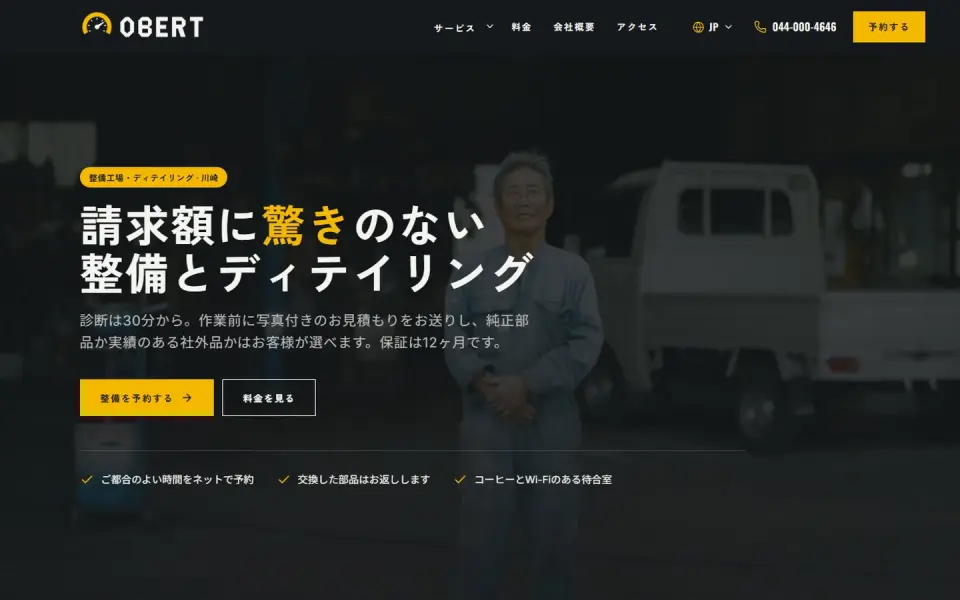 Car service – OBERTService and detailing prices, booking
 Renovation – KUTEstimate request, projects and prices
Template demos with fictional brands. Yours is built with your own brand and content.
What mobile-first indexing means for your site
Google now crawls mainly with its smartphone crawler and indexes and evaluates the mobile version of your pages. Content that exists only on desktop may simply not count. Check these points on the mobile version:
- Content parity: collapsed or hidden text and tables still exist in the mobile HTML
- Headings and images: the same heading structure and alt text as desktop
- Meta data: titles, descriptions and robots directives match
- Structured data: breadcrumb, product and FAQ markup is present on mobile too
- Lazy loading: images and text that load on scroll are still retrievable by search engines
A responsive site that serves one HTML to every device covers most of this automatically. Separate mobile sites or themes that strip content on phones deserve a closer look first. For speed metrics see improving Core Web Vitals, and for markup see structured data basics.
We compare mobile and desktop, check structured data and show the fixed version as a free demo.
How to run a technical SEO project, in priority order
Trying to fix everything at once stalls most projects. Work from the highest impact down:
- Baseline: the Search Console indexing report, sitemap status and a full URL list from a crawler
- Critical blockers: noindex on key pages, robots.txt blocks, 404s and server errors
- Canonicalization: one URL format, 301 redirects, canonical tags, no redirect chains
- Mobile content: close the gaps with desktop and align structured data
- Speed and internal links: trim heavy images and scripts, link more to important pages
- After the fixes: request recrawls and follow the reports over several weeks
To get started quickly, have ready: view access to Search Console and GA4, login details for your CMS (WordPress, Shopify, BASE or other) and a list of URLs that worry you. Indexing changes take time, so log the date of each fix to compare before and after.
How UNANOBO handles technical SEO: a free demo of the fixed site
UNANOBO starts from your current site address. We review URL structure, canonicalization, mobile output and structured data, then build a free demo showing how the site looks and works once those issues are fixed. We separate what can be solved in your CMS settings from what needs rebuilding, so you can decide how far to go.
The process is free demo, feedback, launch, growth. The founder handles every project personally, from the first review to checking Search Console after launch, and everything runs by message in Japanese or English. Search Console and analytics stay in your name; you simply grant access.
How it works
- 01
Free demo
We start with a free demo built around your brand.
- 02
Feedback
Structure, tone and details are refined with you, on the demo itself.
- 03
Launch
The site goes live on a solid SEO foundation.
- 04
Growth
SEO and ads take it further, guided by the numbers.
FAQ
What does the free demo show?
A working version of your site, built from your content and brand, with URL structure, mobile output and structured data put in order. You also get a short list of the technical issues we found and the order to fix them. You decide whether to continue after seeing it.
Will fixing technical SEO raise my rankings?
Removing technical blockers lets search engines read your pages properly so they can be judged on their content. Rankings are decided by search engines, so no position or traffic figure can be promised. After the fixes we track changes in Search Console and plan the next step.
Is there any cost if I decide not to go ahead?
No. The demo is free and exists so you can judge the direction. If you stop there, nothing is charged and nothing else is required.
Do you work with Shopify and BASE stores?
Yes. Both platforms provide canonicals and sitemaps by default, yet themes and apps can still create duplicates or slow pages. We split what the platform lets you change from what needs theme work.
Can we work entirely by message?
Yes. Findings and fixes come with screenshots and URLs, so no meetings are needed. We work in Japanese or English and reply within two business days.
How long until we see results?
The fixes themselves typically take from a few days to a few weeks, depending on the site. Recrawling and reindexing usually add several weeks to a few months. We log each change and follow the trend in Search Console.
Related pages
FREE DEMO
See your site with its foundation fixed
Send us your current site address and we will build a free demo with the technical issues resolved. Decide after you have seen it.