
Ads targeting tourists to Japan – reach visitors in English on Google and Meta
Visitors to Japan search in English on their phones, both while planning at home and after they land. Ads put your hotel, restaurant or experience in front of them at those moments and lead them to book. This page covers the concrete Google and Meta settings, how to think about budget and timing, the usual mistakes – and why UNANOBO starts with a free demo of the English page your ads will send people to.
- Free demo – decide after you see it
- By message, in Japanese or English
- One person from demo to launch
FREE DEMO
Your English booking page – free demo
Send your site address or Google Maps listing. We build a free demo of an English landing page for travelers, and you decide on ads after you have seen it.
- An English page that shows price and booking
- Checked on a phone, the way travelers see it
- A suggested plan for Google and Meta ads
Two moments when ads reach tourists to Japan
Ads targeting tourists to Japan work best when you split the traveler's journey into two moments. Each one points to a different channel and a different share of the budget.
- Before the trip: people browse Instagram and Facebook for ideas, then search Google for things like "kyoto kimono rental" or "tokyo sushi omakase" to compare options. Meta ads create interest; Google search ads help close the booking
- During the trip: people look for what is close by – "ramen near me", "izakaya shinjuku". Google search ads, Google Maps visibility and an English Google Business Profile do the work here
Hotels, ryokan and experiences that need advance booking lean toward the first moment. Restaurants and same-day activities lean toward the second. Check how many days ahead your bookings usually arrive, and start with the moment that matches.
Why ads to foreign visitors often fail to bring bookings
With tourist ads, results are usually decided on the page people land on. Check these points before you spend anything:
- The ad links to a Japanese page, so prices and booking steps are unreadable
- The page relies on machine translation, and menu names or house rules lose their meaning
- The booking button is hard to find, or the only option is calling a Japanese phone number
- The page loads slowly on mobile, and travelers on patchy roaming data give up
- Location settings only cover people physically in Japan, so travelers still planning at home never see the ad
- No tracking is set up, so nobody knows which ad produced a booking
The most important fix is a landing page that shows price, location and how to book in English at a glance. For preparing the whole site for international guests, see websites for inbound tourism.
We build a free demo of an English page from your current site, with price and booking clear at a glance.
Setting up Google Ads for visitors to Japan
Google Ads shows you at the moment a traveler is searching for a specific place or activity, so it sits close to the booking. For tourist campaigns, go through these settings:
- Location: start with Japan and the area around your business. To reach people still planning, include people showing interest in that location
- Language: target English. Ads appear to people whose device or Google language is English, so keep them apart from your Japanese campaigns
- Keywords: focus on place plus category and activity names in plain English – "osaka takoyaki class", "hakone ryokan private onsen"
- Ad copy: write in English and answer what travelers worry about – price range, duration, English support, cancellation terms
- Assets: add address, phone, sitelinks and prices, and link your Google Business Profile so you can appear on the map
On a tight budget, begin with search ads limited to English searches near your location, then widen to source countries once you see what converts. To build unpaid visibility in English search alongside your ads, read SEO for inbound tourism.
What the free demo gives you
- 01A working demoA demo site you can open and click through on a computer and a phone.
- 02A structure proposalWhich pages you need, what goes on each and where visitors get in touch.
- 03Plan and estimateAfter you have seen the demo you get the plan to launch and an estimate.
Why it is safe to ask
- The demo is free. If you decide not to go ahead, it costs you nothing.
- Everything happens by message, in Japanese or English.
- Your domain, hosting, ad and analytics accounts stay in your name.
- The founder handles your project from the first demo to growth after launch – one contact all the way.
Demo sites we built
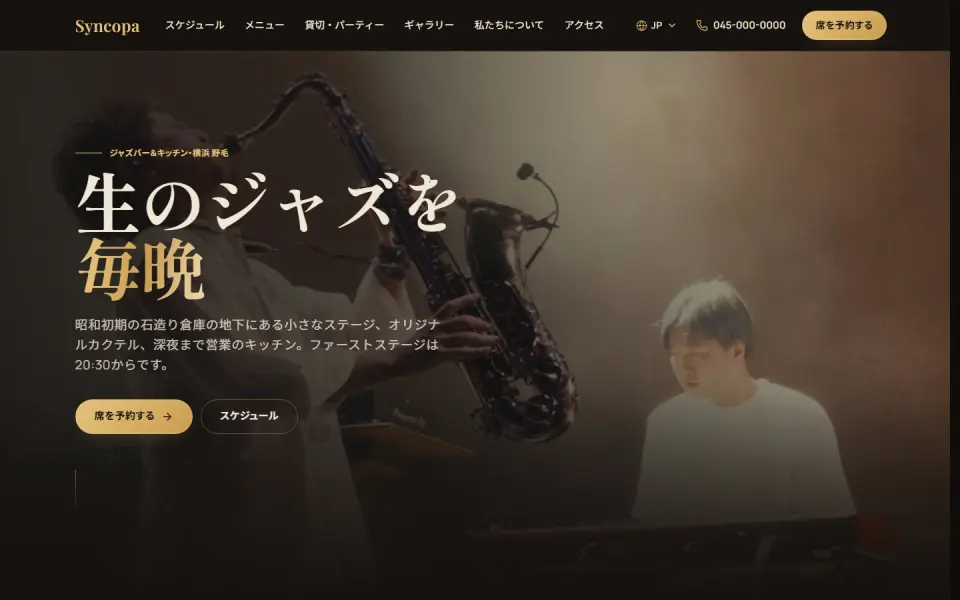 Jazz bar – SyncopaLive schedule, menu and table booking
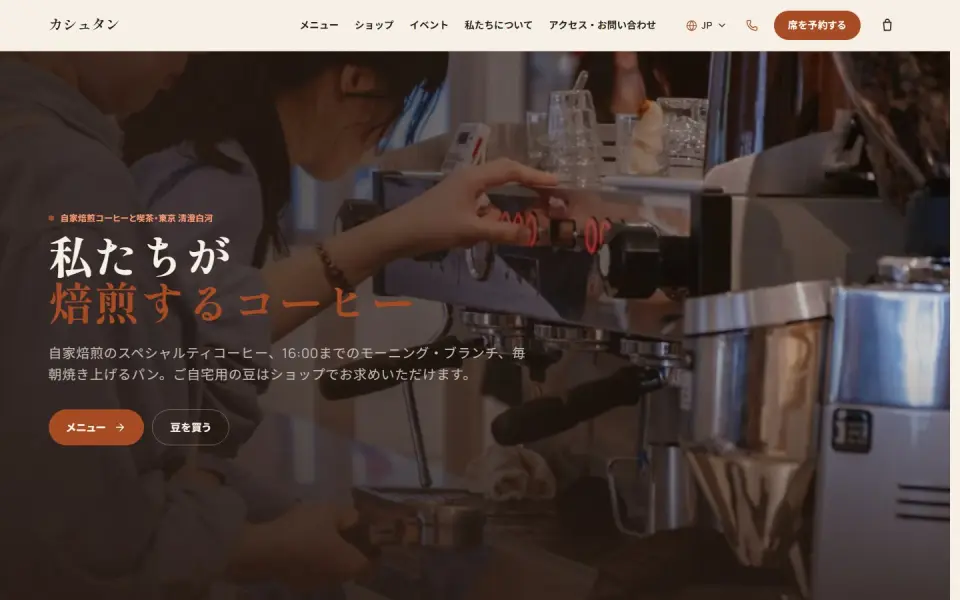 Café & roastery – KashtanMenu, events and an online bean shop
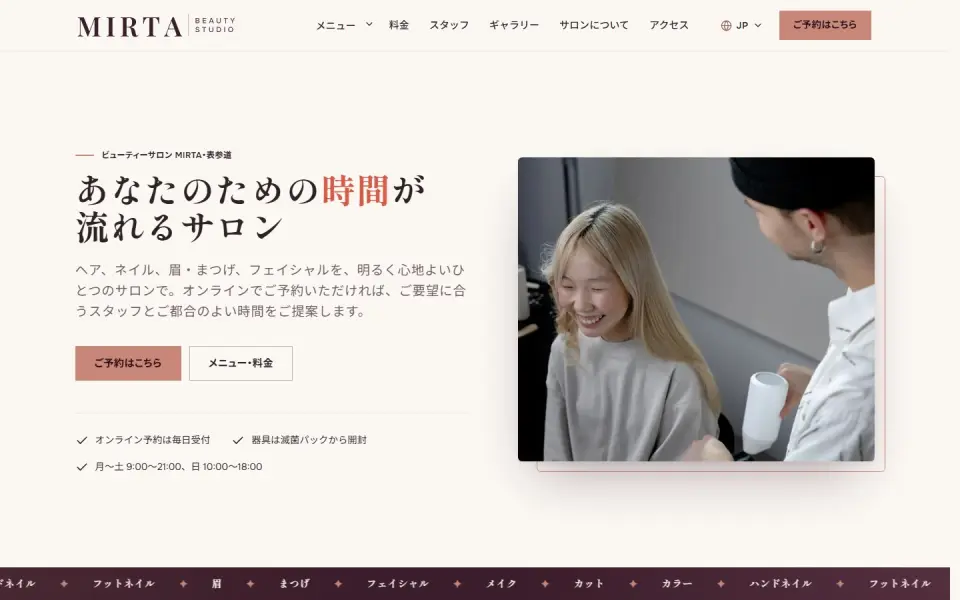 Beauty salon – MIRTABooking form, price list and team
Template demos with fictional brands. Yours is built with your own brand and content.
Using Meta ads to get noticed before the trip
Meta ads on Instagram and Facebook are strongest early, while people are still deciding where to go. Places with a strong visual story – stays, food, hands-on experiences – are a natural fit.
- Audience: target your main source countries, and use the location option for people traveling in an area to reach visitors already in Japan
- Creative: short vertical video and photos with English captions, plus a brief line on price, location and how to book
- Placements: Reels and Stories are where many travelers collect ideas, so always prepare vertical versions
- Destination: link straight to your English booking page to keep the path to booking short
With the Meta pixel and GA4 installed, you can show ads again to people who visited your site, which keeps you in mind during the weeks they compare options.
It is easier to choose once you see them on a demo of your English page.
Budget, timing and tracking
Tourist demand moves with the seasons and with holidays in each source country. Lay out these points before you launch so you know when to push and when to ease off:
- Timing: cherry blossom and autumn leaf seasons, New Year, Lunar New Year, Western summer holidays – overlay them with your own busy periods
- Budget: treat the first one or two months as a test with a modest spend, then move money to the ads and keywords that bring bookings
- Tracking: set up GA4 and ad conversions for completed bookings, inquiries, phone taps and map directions
- Booking path: map where bookings actually happen – your site, a booking system or an OTA – and send ads to a path you can measure
- Consistency: make prices, tax inclusion and what is included match between the ad and the page
Claims such as "cheapest" or "limited" fall under Japan's rules on misleading representations, and Google and Meta update their ad policies regularly, so check the current versions as you go. Open ad and analytics accounts in your own name so you stay in control if you ever change who runs them. For a wider view of filling rooms, see hotel marketing.
How UNANOBO runs inbound ads: a free demo of your English page first
Before any ad goes live, UNANOBO builds a free demo of the English landing page your ads will point to. It is based on your current site or Google Maps listing, your brand colors and your photos, and shows price, location and booking clearly on a phone. You look at it and decide whether to go ahead.
After launch, the same contact handles Google and Meta ad setup, GA4 and tag tracking, and ongoing work on English copy and creative. The process is free demo, feedback, launch, growth, and the founder handles every project personally from start to finish. Everything runs by message, in English or Japanese.
How it works
- 01
Free demo
We start with a free demo built around your brand.
- 02
Feedback
Structure, tone and details are refined with you, on the demo itself.
- 03
Launch
The site goes live on a solid SEO foundation.
- 04
Growth
SEO and ads take it further, guided by the numbers.
FAQ
What do I get in the free demo?
A working English landing page that your ads can link to, built from your current site or Google Maps listing, logo and photos. You can check it on a phone just as a traveler would.
What if I decide not to go ahead?
That is fine. The demo is free, and there is no cost if you stop after seeing it.
We do not speak much English. Can we still run tourist ads?
Yes. We write the English ad copy and page text and explain everything to you in Japanese, and our messages can stay in Japanese too.
How much ad budget do I need?
It varies a lot by business type, area and target countries, so there is no single figure. The usual approach is a short test with a modest spend, then shifting budget to what brings bookings. After the demo you get a plan and estimate matched to your goals.
What should I prepare?
Your site URL or Google Maps listing, your price list or menu, and any photos or video you want to use are enough. If you use a booking system or an OTA, send that booking page too. You do not need any English materials to start.
Is working remotely a problem?
No. Ad setup, page building and tracking all happen online, so location does not matter. You reach us by message and get a reply within two business days. Ad accounts are created in your name, and you share access with us.
Related pages
FREE DEMO
See your English page for visitors first
Send your site URL or Google Maps listing and we will build a free demo of the English landing page your ads will use.