Build an international ecommerce site from Japan – start with a free demo store
Selling abroad takes more than an English version of your Japanese shop. Overseas buyers need to understand the product, pay in a way they trust and know what delivery will cost before they reach checkout. This page walks through the requirements of a cross-border store, how to handle languages and translation, the steps, what to prepare and the usual pitfalls – and how UNANOBO starts with a free demo of your English store.
- Free demo – decide after you see it
- By message, in Japanese or English
- One person from demo to launch
FREE DEMO
See your English store – free
Send us your current site or shop URL and your main products. We build a free demo of an English store for overseas buyers, and you decide after you have seen it.
- An English store built from your products
- Check it as an overseas buyer on PC and phone
- A plan for languages, payments and shipping
What changes when you build a store for overseas buyers
Product pages and the cart work the same as in any online shop. The difference is that your customers know little about Japan or your brand, so every piece of information and every step of the purchase has to be handled on the site itself.
- Language: English first, then other languages such as Traditional or Simplified Chinese for the markets you target
- Currency and prices: show prices in yen, or in local currencies such as USD or EUR
- Payments: cards issued abroad, PayPal, Apple Pay and other methods common in the target country
- Shipping and duties: how shipping is calculated, delivery times and who pays import duties and taxes
Settle these four points before choosing a platform or theme, and you avoid rebuilding later. Start with one to three target countries and design backwards from what a buyer there needs to feel confident.
Why overseas visitors leave without buying
If you already get international traffic but few orders, the cause is usually one of the following. Fixing them during the build is the fastest way to get a cross-border store moving.
- Product descriptions are raw machine translation, so materials and usage are unclear
- Shipping costs appear only at the last step of checkout
- Sizes, volumes and ingredients use Japanese conventions that are hard to compare
- There is no English page for returns, contact details or business information
- Familiar payment methods are missing, or card authentication fails
- The site never says the order ships from Japan or how long delivery takes
All of these come from one assumption worth keeping in mind: overseas buyers do not know your shop yet. If running orders and shipping in-house is too much, you can outsource parts of the operation – see how to choose a cross-border e-commerce agency.
Clicking through an English demo quickly shows what is unclear or missing. Send us your current site URL to start.
Requirements checklist for a cross-border store
Write down your position on each item before asking for quotes. It makes proposals comparable and keeps extra costs down during the build. "Not decided yet" is a fine answer for now.
- Countries and languages: where you sell first, which languages, which markets may come later
- Pricing: local currency display, prices per country, shipping included or added
- Payments: cards, PayPal, digital wallets – which ones matter most
- Shipping: Japan Post international services, couriers such as DHL or FedEx, how rates are calculated
- Duties: paid by the customer on delivery, or built into your prices
- Restricted products: food, alcohol, cosmetics and items with batteries follow different rules per country
- Policy pages in English: returns, privacy, terms of service, business information
Food, alcohol and cosmetics in particular depend on each country's import and labeling rules. Always check the current conditions with official sources and your shipping carrier. If you plan to sell sake abroad, see also websites for sake breweries.
What the free demo gives you
- 01A working demoA demo site you can open and click through on a computer and a phone.
- 02A structure proposalWhich pages you need, what goes on each and where visitors get in touch.
- 03Plan and estimateAfter you have seen the demo you get the plan to launch and an estimate.
Why it is safe to ask
- The demo is free. If you decide not to go ahead, it costs you nothing.
- Everything happens by message, in Japanese or English.
- Your domain, hosting, ad and analytics accounts stay in your name.
- The founder handles your project from the first demo to growth after launch – one contact all the way.
Demo sites we built
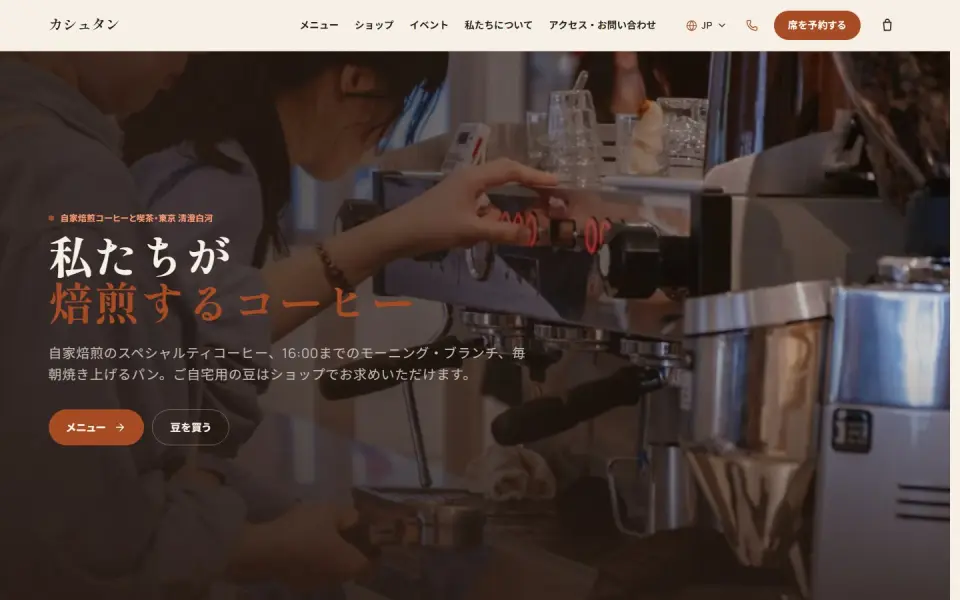 Café & roastery – KashtanMenu, events and an online bean shop
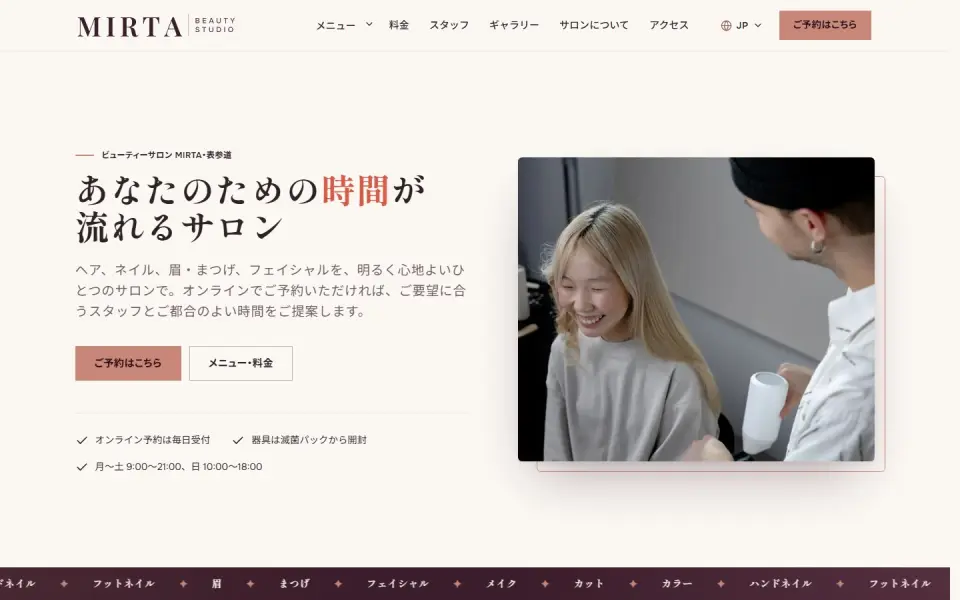 Beauty salon – MIRTABooking form, price list and team
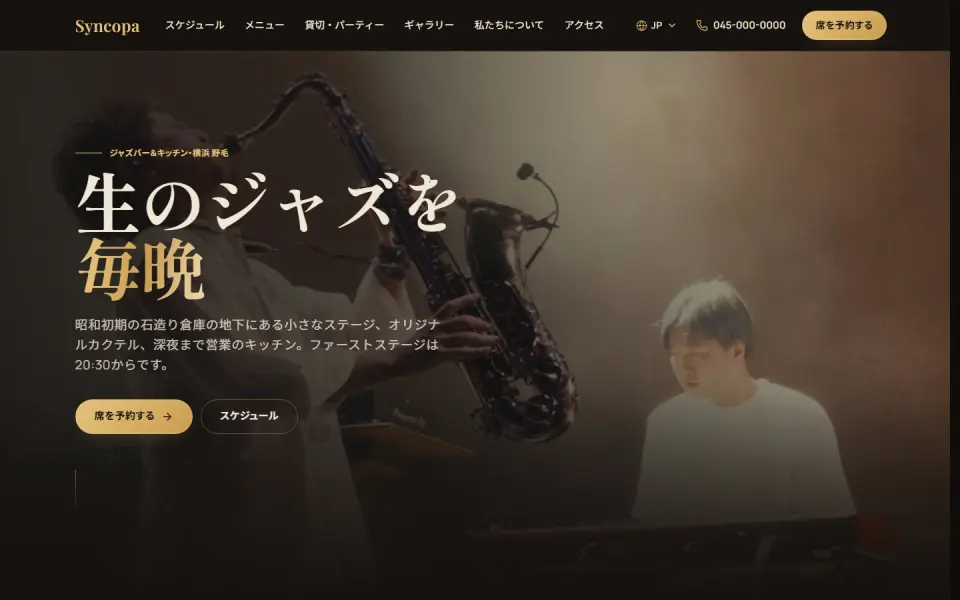 Jazz bar – SyncopaLive schedule, menu and table booking
Template demos with fictional brands. Yours is built with your own brand and content.
Building the English and multilingual version
Translation quality and URL structure decide how well a multilingual store performs. This order works well for most shops:
- List what needs translating: product names and descriptions, cart, notification emails and policy pages
- Choose how to translate: machine translation as a first draft, with product copy and brand story adapted to natural local phrasing
- Separate URLs by language: paths such as /en/, with hreflang telling search engines which pages belong together
- Use local units: cm and inches, grams and ounces, local date and address formats
- Review photos: add images that show size and use, and replace images with Japanese text in them
Shopify includes built-in tools to manage languages, currencies and country-specific settings in one place, which makes it a strong fit for cross-border selling. Our guide to cross-border e-commerce on Shopify covers the setup. With WordPress and WooCommerce you typically add a translation plugin, and BASE stores usually add English and currency display on top of the Japanese shop.
No English copy yet? We build the free demo of your overseas store from your main products.
Steps, timeline and what to prepare
Typically, a small store in one extra language takes around two to three months, depending on the number of products. Budgets in Japan range widely: from a few hundred thousand yen for a template-based store to several million yen for multilingual builds with custom features. The steps look like this:
- Requirements: use the checklist above to set countries, languages, payments and shipping
- Design and structure: settle the home page and product page for overseas buyers first
- Products and translation: add your best sellers first, with copy and photos ready
- Payments and shipping setup: run test orders to check currencies, shipping, taxes and emails
- Launch and tracking: measure visits and purchases by country in GA4 as the base for improvements
It helps to have ready: logo files, product photos, a list of your main products with prices, any existing English material and two or three overseas shops you like. Open domain, payment, ad and analytics accounts in your own name so you stay in control whoever runs the store.
How UNANOBO builds your international store: a free demo first
Before you commit to anything, UNANOBO builds a free demo of your English store, based on your brand and products. You click through it on a computer and phone the way an overseas buyer would, from product page to checkout, and decide whether to go ahead once you like the direction.
The process is simple: free demo, feedback, launch, growth. The founder handles every project personally, so you keep one contact from the first demo to marketing after launch. Everything runs by message, in Japanese or English, including help with English product copy and policy pages. After launch, the store can be connected to Google Ads, Google Shopping and Meta Ads aimed at your target countries.
How it works
- 01
Free demo
We start with a free demo built around your brand.
- 02
Feedback
Structure, tone and details are refined with you, on the demo itself.
- 03
Launch
The site goes live on a solid SEO foundation.
- 04
Growth
SEO and ads take it further, guided by the numbers.
FAQ
What does the free demo of a cross-border store include?
A working English store built from your logo, brand colors and main products, centered on the home page and product pages. You can check it on mobile too. Along with the demo you get a proposal for languages, currencies and payments.
Do I pay anything if I decide not to go ahead?
No. If the direction does not feel right after seeing the demo, you can simply stop there. If you continue, you receive a plan and an estimate after the demo.
Can I run an overseas store if my English is limited?
Yes. The English pages are prepared during the build, and the setup lets you manage the store in a Japanese admin panel. We also prepare an English FAQ and a simple flow for handling questions from overseas customers.
Can you add English to my existing Japanese online shop?
Yes. We look at your current platform and product range and recommend either adding English pages to the shop or building a separate overseas store. Send us your shop URL and the demo will show what that looks like.
What should I prepare before getting in touch?
An idea of which countries you want to sell to, plus photos and descriptions of your main products, is enough. Send your current site or shop URL if you have one. Payment and shipping details can be decided together while looking at the demo.
Can you guarantee overseas sales or search rankings?
No one can promise sales or rankings. What we do is launch with a purchase flow that removes buyer doubts and with tracking by country in place, then keep improving based on the numbers. You get clear updates by message along the way.
Related pages
FREE DEMO
See your international store first
Send us your brand name, main products and current site URL if you have one. We build a free demo of your English store, and you decide after seeing it.