
Shopify cross-border ecommerce from Japan – see your global store before you launch
Shopify lets a Japanese brand sell abroad from a single store, with languages, currencies and shipping rates adjusted for each country. The catch is the number of settings involved, and once shipping and duties enter the picture it is hard to know where to start. This page walks through what to set up in Shopify Markets, how to approach international shipping and duties, and the mistakes that cost overseas sales – and explains why UNANOBO starts by building a free demo of your international store.
- Free demo – decide after you see it
- By message, in Japanese or English
- One person from demo to launch
FREE DEMO
Your international Shopify store – free demo
Send us your current store or site URL and your target countries. We build a free demo of your international store, English pages included, and you decide after seeing it.
- English product pages you can click through
- A proposed setup for languages and currencies
- Shipping and duty display planned together
What Shopify offers for cross-border ecommerce
One Shopify store can serve several countries. Shopify Markets groups the countries you sell to into "markets" and lets you tailor each one from the same admin.
- Languages: add English, Traditional Chinese and other translations, shown according to the visitor
- Currencies: with Shopify Payments, prices appear in local currency all the way through checkout
- Pricing by market: exchange-rate conversion plus price adjustments and rounding per market
- Domains and URLs: subfolders such as /en/ or country domains, with hreflang tags generated automatically
- Shipping and tax: rates and delivery methods per country, and how duties and import taxes are shown
Products, inventory and orders all stay in one place, so overseas sales sit on top of your existing domestic store. For a wider view of selling abroad and how Shopify compares with other routes, see our guide to cross-border ecommerce.
Five things to check before you sell abroad
Confirm that your products and delivery can work internationally before touching the settings. Write down answers to these five points.
- Target countries: start with one to three countries where you already see interest, so translation, shipping and ads stay focused
- Can it ship? Lithium batteries, liquids, perfume, food and cosmetics face limits that vary by country and carrier – check product by product
- Weight and size: international rates depend heavily on both, so record packed dimensions for every item
- Local labeling: ingredient lists, sizes in inches, voltage, warranty wording – whatever buyers in that market expect
- Customer service: decide who answers English emails and handles returns or exchanges
This is often where you discover a product that cannot be shipped, or a country where postage costs more than the item. Finding that early lets you adjust the product range or target markets before the store is built.
Tell us your target countries and main products, and we will flag shipping issues alongside your free demo.
Setting up Shopify Markets: languages, currencies, domains
The setup goes smoothly in this order. If you already run a Japanese store, you add the international layer on top of it the same way.
- Create markets: choose countries and group them, for example North America or Europe
- Add languages: use Shopify's Translate & Adapt app or similar, then have a person polish product names and descriptions
- Set currencies and prices: enable local currencies and agree on conversion and rounding, such as $19.99
- Assign URLs: subfolders like /en/ are a sensible start because they build on your existing domain
- Check payments: make sure Shopify Payments, PayPal and the methods common in each market appear at checkout
- Prepare policies: English refund, privacy and shipping policies, alongside your Japanese tokushoho (Specified Commercial Transactions Act) page
Machine translation alone leaves awkward phrasing, and the details that persuade a buyer get lost. Prioritize product descriptions, size charts and shipping information, and make them read naturally to native speakers. Available features vary by plan and country, so check Shopify's current help pages as well.
What the free demo gives you
- 01A working demoA demo site you can open and click through on a computer and a phone.
- 02A structure proposalWhich pages you need, what goes on each and where visitors get in touch.
- 03Plan and estimateAfter you have seen the demo you get the plan to launch and an estimate.
Why it is safe to ask
- The demo is free. If you decide not to go ahead, it costs you nothing.
- Everything happens by message, in Japanese or English.
- Your domain, hosting, ad and analytics accounts stay in your name.
- The founder handles your project from the first demo to growth after launch – one contact all the way.
Demo sites we built
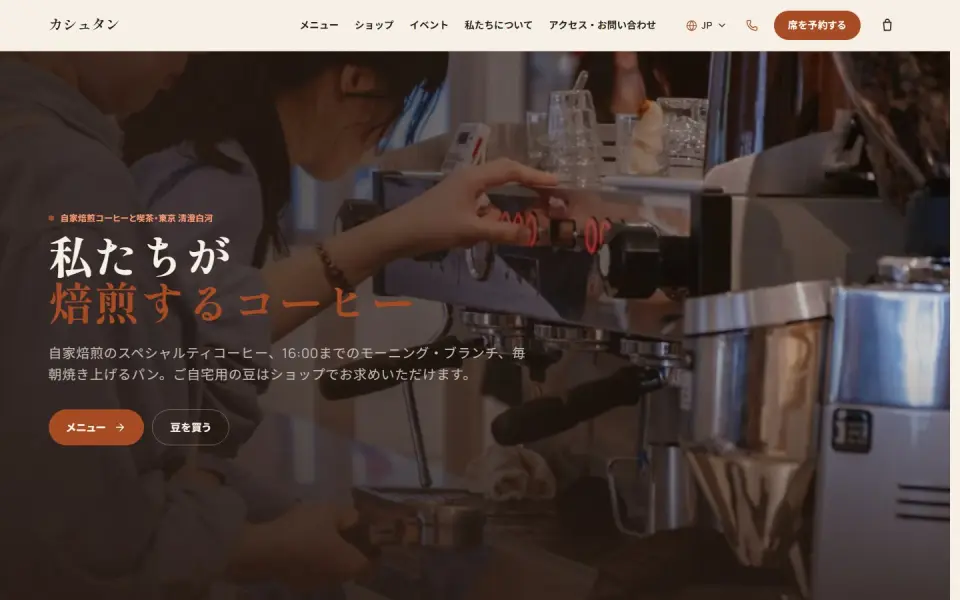 Café & roastery – KashtanMenu, events and an online bean shop
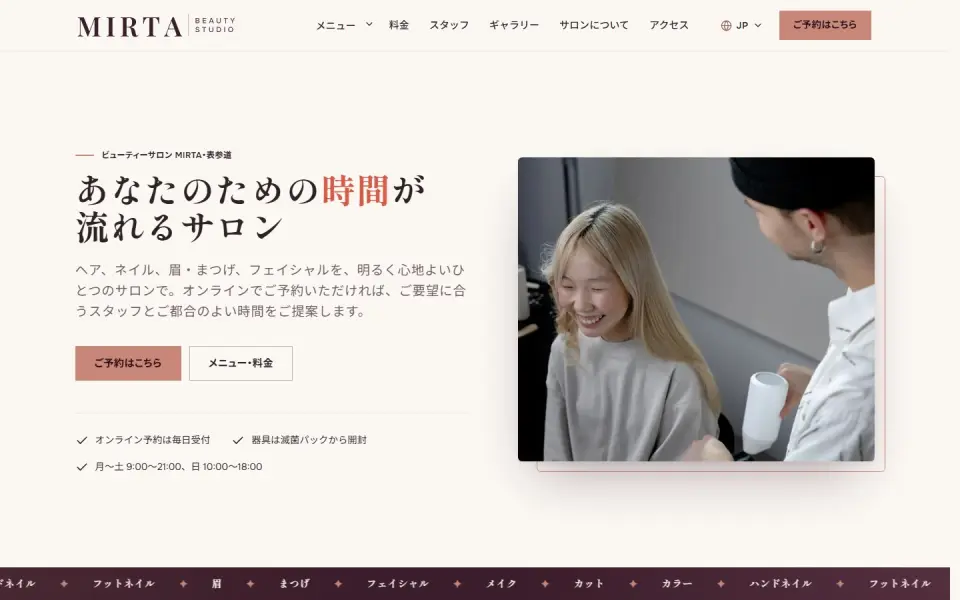 Beauty salon – MIRTABooking form, price list and team
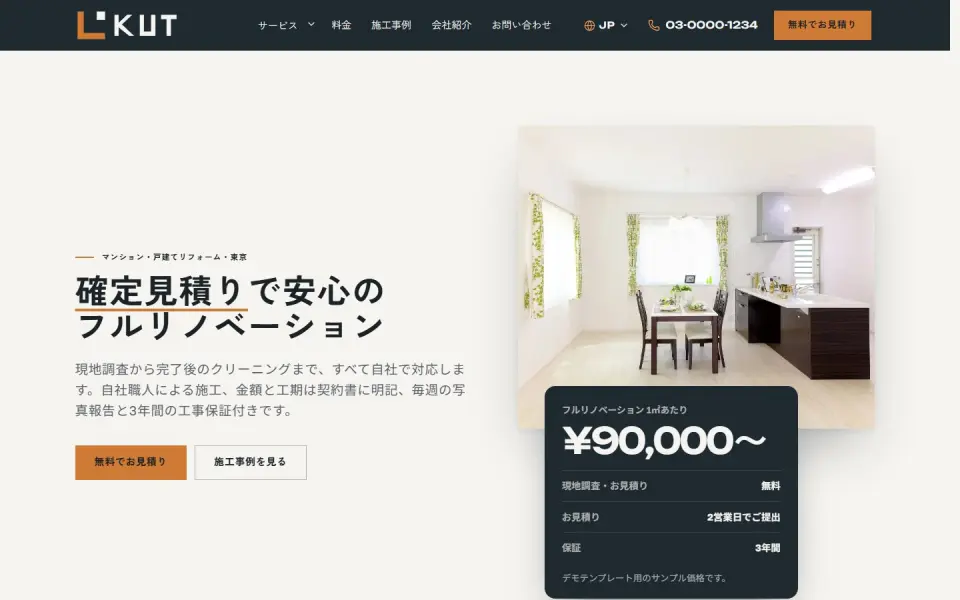 Renovation – KUTEstimate request, projects and prices
Template demos with fictional brands. Yours is built with your own brand and content.
International shipping and duties on Shopify
Unexpected shipping costs and duty bills on delivery are two of the most common reasons overseas shoppers abandon a cart or refuse a parcel. Design delivery and tax display together.
- Carriers: Japan Post EMS or ePacket, or couriers like DHL and FedEx, chosen by weight and delivery time
- Rate structure: actual cost by weight, a flat rate or free shipping over a threshold – set per market to suit your price points
- HS codes and origin: add them to each product so customs paperwork and duty calculations are accurate
- Who pays duties: collect them at checkout (DDP) or leave them to the buyer on delivery (DDU), and say so clearly on product pages and in the cart
- Returns: decide who covers return postage from abroad and whether you offer exchanges instead
Duty rates and de minimis thresholds differ by country and change from time to time, so check current rules for each market. Japanese consumption tax treatment of exports has its own requirements; confirm the details with your tax accountant.
The free demo shows product pages and a checkout flow that overseas buyers can follow with confidence.
Common mistakes in Shopify cross-border stores
When an international store launches and orders stay quiet, the cause is usually a gap in the buyer's experience. Review these before you go live.
- English pages published straight from auto-translation, so the product story does not land
- Shipping costs hidden until the last checkout step
- No explanation of duties, leading to refused deliveries and returns
- Prices still in yen, or sizes and units still in Japanese formats
- The store goes live with no plan to bring overseas visitors to it
For that last point, see overseas ad management on running Google and Meta ads in your target countries. If you want the store structure planned from scratch, read about cross-border ecommerce site builds.
How UNANOBO builds your Shopify store for overseas buyers
Before you commit, UNANOBO builds a free demo of your international Shopify store based on your brand and products. You check the English structure and product pages on a computer and a phone, and decide whether to go ahead once you like the direction.
The process is free demo, feedback, launch, growth. The founder works in both Japanese and English and personally handles everything from the demo to Shopify Markets setup and marketing after launch, so you keep one contact throughout. Communication runs by message in either language, and your store and ad accounts stay in your own name.
How it works
- 01
Free demo
We start with a free demo built around your brand.
- 02
Feedback
Structure, tone and details are refined with you, on the demo itself.
- 03
Launch
The site goes live on a solid SEO foundation.
- 04
Growth
SEO and ads take it further, guided by the numbers.
FAQ
Does the free demo cost anything?
No. The demo is free. It is a working version of your international store, centered on the home page and product pages, built from your brand colors, logo and product information. If you decide not to continue, there is no charge.
Can you add international selling to my existing Shopify store?
Usually, yes. In most cases Shopify Markets is added to your current store, and products, inventory and customer data carry over as they are, so a rebuild is normally unnecessary. If you are moving from BASE or another platform, we plan the migration too.
We do not speak English. Can we still sell abroad?
Yes. The founder turns your store's English pages into natural copy for native readers, so you can explain your products in Japanese. Reply templates for common customer questions in English can be prepared as well.
How long does it take to launch an international store?
Adding English and local currencies to an existing Shopify store typically takes one to two months. The number of countries and products, and the amount of text to translate, move that up or down. You get a concrete schedule after reviewing the demo.
What should I prepare before getting in touch?
Your current store or site URL, the countries you want to sell to and a list of main products are enough. Packed weights and sizes and your current carrier help us discuss shipping rates in detail. Anything missing can be sorted out while the demo is built.
You work remotely. Is communication difficult?
Everything runs by message, in Japanese or English, and you get a reply within two business days. The demo is shared as a link, so you can review it and leave comments whenever it suits you.
Related pages
FREE DEMO
See your international store first
Send us your current store URL and the countries you want to reach, and we will build a free demo of your international Shopify store. Decide after you have seen it.