
Ecommerce marketing in Japan – what to start with on a small budget
A new online store does not get found on its own – orders come from the channels that bring people to it. In Japan the options are many: SEO, Google Shopping, Instagram, LINE, Meta Ads and more, and running all of them at once rarely makes sense in the first months. This page sorts the channels by role, sets out a practical order for a small budget, and lists what your store needs in place before you spend on traffic.
- Free demo – decide after you see it
- By message, in Japanese or English
- One person from demo to launch
FREE DEMO
A free demo of a store built to attract buyers
Send your current store URL, or details of the products you plan to sell. We build a free demo of product pages and store structure designed with marketing in mind.
- Product pages structured for search and ads
- A suggested order of traffic channels
- Check the mobile path to purchase
Get the store ready before you buy traffic
Marketplaces like Rakuten and Amazon come with shoppers already inside. Your own store starts with none, so ecommerce marketing begins with making sure that the people who arrive can actually buy. Fixing the basics after the ad budget is running means paying for visits that leak away.
- Product pages: photos from several angles, materials, sizes, how to use it and a short FAQ on one page
- Shipping: the fee, the free-shipping threshold and delivery time, visible on the product page and in the cart
- Trust: the legally required seller information (特定商取引法に基づく表記), return terms, contact details and who runs the shop
- Mobile checkout: guest checkout, a choice of payment methods and as few form fields as possible
- Tracking: GA4 with purchase tracking, ad conversion tags and Search Console
- Product data: names, prices, stock, identifiers such as JAN codes and clean images – Shopify and BASE let you manage this in the admin panel
Run through these six points on your own store. When they are solid, every channel you add later converts better.
The main traffic channels and what each one does
Each channel has a job. It helps to group them into three: getting discovered, building interest, and bringing customers back.
- SEO: product, category and content pages found through search. It takes months, and it keeps working without ad spend once it builds up
- Google Shopping: products uploaded to Merchant Center appear in search and the Shopping tab with an image and price. There are free listings and paid Shopping ads, and both catch people who are ready to buy
- Google Search ads: reliable visibility for your brand name and high-intent searches such as a product name plus "online"
- Instagram: photos and video that show your world and grow a following, with shopping tags and profile links into the store
- Meta Ads: Facebook and Instagram ads targeted by interest or past visits – good at reaching people who do not know you yet
- LINE Official Account: the messaging app most people in Japan use daily, ideal for telling past customers about new arrivals and restocks. You can start on the free plan and move up as your message volume grows
For the details of search, see ecommerce SEO.
Tell us your products and budget – we suggest a first channel alongside your free demo store.
How to prioritize on a small budget
A workable order for a new store: start with what is free and lasts, add small ads aimed at people already searching, then expand to reaching new audiences.
- Stage 1 – no ad spend: Merchant Center free listings, better product titles and descriptions, Instagram linked to the store, and a LINE sign-up prompt after purchase
- Stage 2 – small paid tests: Google Shopping ads plus search ads on your brand and hero products. These reach people who are already looking, so even a modest budget gives readable results
- Stage 3 – new audiences: once you have photo and video material and some purchase data, start Meta Ads to similar interests and retargeting to site visitors
- Ongoing: articles answering what people search for, asking buyers for reviews, LINE messages for restocks and new items
Start ads small and shift budget every few weeks based on results by product. How to set up Shopping campaigns and product feeds is covered in Google Shopping ads.
What the free demo gives you
- 01A working demoA demo site you can open and click through on a computer and a phone.
- 02A structure proposalWhich pages you need, what goes on each and where visitors get in touch.
- 03Plan and estimateAfter you have seen the demo you get the plan to launch and an estimate.
Why it is safe to ask
- The demo is free. If you decide not to go ahead, it costs you nothing.
- Everything happens by message, in Japanese or English.
- Your domain, hosting, ad and analytics accounts stay in your name.
- The founder handles your project from the first demo to growth after launch – one contact all the way.
Demo sites we built
 Café & roastery – KashtanMenu, events and an online bean shop
 Beauty salon – MIRTABooking form, price list and team
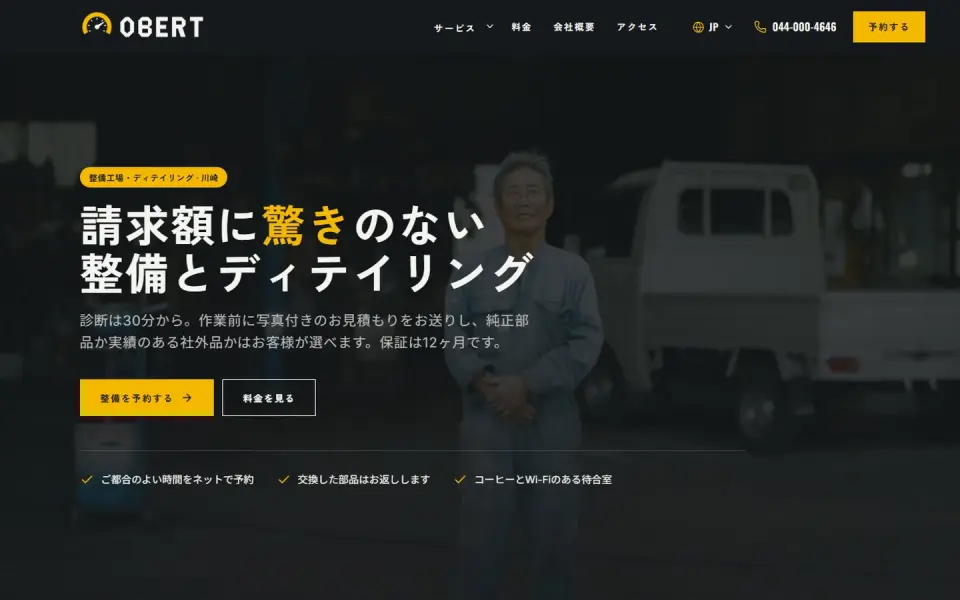 Car service – OBERTService and detailing prices, booking
Template demos with fictional brands. Yours is built with your own brand and content.
The numbers that matter in ecommerce marketing
Store revenue is visits × conversion rate × average order value. When you judge a channel, look past total traffic and ask which sources bring people who buy.
- Purchases and conversion rate by channel: compare search, social and ads in GA4's acquisition reports
- Ad cost per order: check it stays below the gross margin of the product
- Average order value: see whether a free-shipping threshold or bundles can lift it
- Cart abandonment: the share of people who reach the cart and leave. Shipping display and payment options often fix a lot of it
- Repeat rate: whether first-time buyers come back – the measure for LINE and email work
Writing these five numbers into one sheet once a week is enough to start. For reading ad results and running campaigns, see ecommerce ad management.
Your free demo is designed with purchase tracking in mind from the start.
Where new stores usually get stuck
When marketing stalls, the cause is usually the way it is run. Check whether any of these apply.
- SEO, social and ads all start at once, so nobody can tell what worked
- Product data issues keep Merchant Center from approving products, so nothing shows in Shopping
- Instagram focuses on follower counts and has no clear path into the store
- Ads get paused or scaled without purchase tracking in place
- Ad and analytics accounts sit in an agency's name, and the data cannot move with you
- Discounts carry the sales, and full-price customers never build up
Create your ad accounts, Merchant Center and GA4 in your own name from day one, so the data stays yours whoever runs them later.
How UNANOBO handles it: a store built for traffic, shown first as a free demo
Before you commit, UNANOBO builds a free demo of your store around your products and brand: product page structure, how shipping is shown, and the paths to LINE and social, all ready to check on a computer and a phone. If you already have a store, we show an improved version based on its URL.
After the demo you get a channel plan and estimate that fit your products and budget. The process is free demo, feedback, launch, growth. The founder handles everything personally – building on Shopify, BASE or WordPress (WooCommerce), SEO, Google Shopping, Meta Ads and GA4 – so you keep one contact throughout. Communication is by message, in Japanese or English.
How it works
- 01
Free demo
We start with a free demo built around your brand.
- 02
Feedback
Structure, tone and details are refined with you, on the demo itself.
- 03
Launch
The site goes live on a solid SEO foundation.
- 04
Growth
SEO and ads take it further, guided by the numbers.
FAQ
What does the free demo include?
A working demo of your store, centered on the home page and product pages. We use your photos and copy or the content of your current store, and placeholder images where material is missing. You decide whether to continue after seeing it.
Is there any cost if I decide not to go ahead?
No. The demo is there to help you decide. If you do not want to continue, a short message is all it takes.
How soon will marketing show results?
It depends on the channel. Shopping and search ads bring visits as soon as they run, while SEO usually builds over several months. Sales and rankings cannot be promised, and we set priorities together based on the numbers.
How much ad budget do I need?
There is no fixed amount – you can test with a small budget and adjust as results come in. Setting up free listings, SEO basics and LINE first, then starting with Shopping ads close to the purchase, makes even a modest budget easy to judge.
What should I prepare?
Your current store URL, or a product list with photos if you are just starting. It also helps to share your key products, your target customers, the social accounts you use and a rough monthly ad budget.
Does working remotely by message work well?
Yes. Everything runs by message, in Japanese or English, with replies within two business days. Ad and analytics accounts are created in your name, and you share only the access needed.
Related pages
FREE DEMO
See a store built for traffic first
Send your current store URL or details of your products, and we will build a free demo with a suggested channel plan.