
Cross-border ecommerce from Japan – how to sell overseas, with a free bilingual demo
Cross-border ecommerce means selling online directly to customers outside Japan. A weak yen and interest from visitors to Japan make it attractive, and it brings new tasks: a sales model, foreign payments, international shipping, duties and a second language. This guide covers the models, benefits and risks, the setup and the first steps – and how UNANOBO starts with a free Japanese–English demo of your store.
- Free demo – decide after you see it
- By message, in Japanese or English
- One person from demo to launch
FREE DEMO
Your bilingual cross-border store – free demo
Send us your current shop URL or a few product details. We build a free Japanese–English demo of your store for overseas buyers, and you decide after you have seen it.
- A Japanese and English demo, free
- Check it on a computer and a phone
- A plan for payments and shipping
Three ways to do cross-border ecommerce from Japan
There are three common ways to start selling abroad from Japan. Each one shapes your costs, your workload and how much of your brand customers actually see.
- Your own cross-border store: build a site on Shopify or WooCommerce and take orders from abroad directly. You set prices and presentation, and customer data stays with you. Bringing in traffic is your job
- Overseas marketplaces: list on Amazon (US and other country sites), eBay or Etsy, where buyers already shop. You work within each marketplace's fees and rules
- Proxy purchase services: connect your Japanese shop to a proxy buying service that handles foreign payment and international shipping. An easy way to test demand; pricing and customer contact follow the service's setup
Many brands test with a marketplace or proxy service first, then invest in their own store once they know which countries and products sell. If you want repeat customers and a clear brand story, an early own store gives your ads and social posts one place to send people.
Benefits of selling overseas – and what to watch
The main benefit is reach beyond the size of the Japanese market. Listing upsides and risks side by side helps you pick a realistic scale.
- A bigger market: reach buyers abroad who value Japanese quality and design, with no local shop
- Currency effects: when the yen is weak, your prices look more affordable to foreign customers
- Repeat orders from visitors: serve people who discovered your product in Japan and want it again at home
- Low-risk testing: check demand by country and product without a local company or store
Watch three things: shipping and duties raise the final price, each country has its own import rules (food, cosmetics, blades and battery products need extra checks), and returns and questions arrive in another language. Settle these early to avoid most losses and delivery problems. To see what you can hand off, read about cross-border ecommerce agencies.
Tell us your products and target countries, and we will show you a free demo built for overseas buyers.
Choosing a platform for your cross-border store
If you run your own store, these options work well from Japan. Compare multi-language and multi-currency support and how easily you can accept foreign payments.
- Shopify: a global ecommerce platform. Shopify Markets lets one store handle currencies, languages, prices and shipping per country, and there are many apps for international selling
- WordPress + WooCommerce: adds a shop to an existing WordPress site. Languages and payments come from plugins, so setup and upkeep need more care
- BASE: a quick way to open a Japanese shop; with an app that connects a proxy buying service, it can also accept orders from abroad. A good fit if your Japanese shop stays the core and you want to test foreign demand
The right choice depends on whether you extend a Japanese shop or build a dedicated store for overseas buyers. For several countries, one Shopify store with Japanese and English versions is usually easiest to run. See Shopify for cross-border ecommerce for the setup.
What the free demo gives you
- 01A working demoA demo site you can open and click through on a computer and a phone.
- 02A structure proposalWhich pages you need, what goes on each and where visitors get in touch.
- 03Plan and estimateAfter you have seen the demo you get the plan to launch and an estimate.
Why it is safe to ask
- The demo is free. If you decide not to go ahead, it costs you nothing.
- Everything happens by message, in Japanese or English.
- Your domain, hosting, ad and analytics accounts stay in your name.
- The founder handles your project from the first demo to growth after launch – one contact all the way.
Demo sites we built
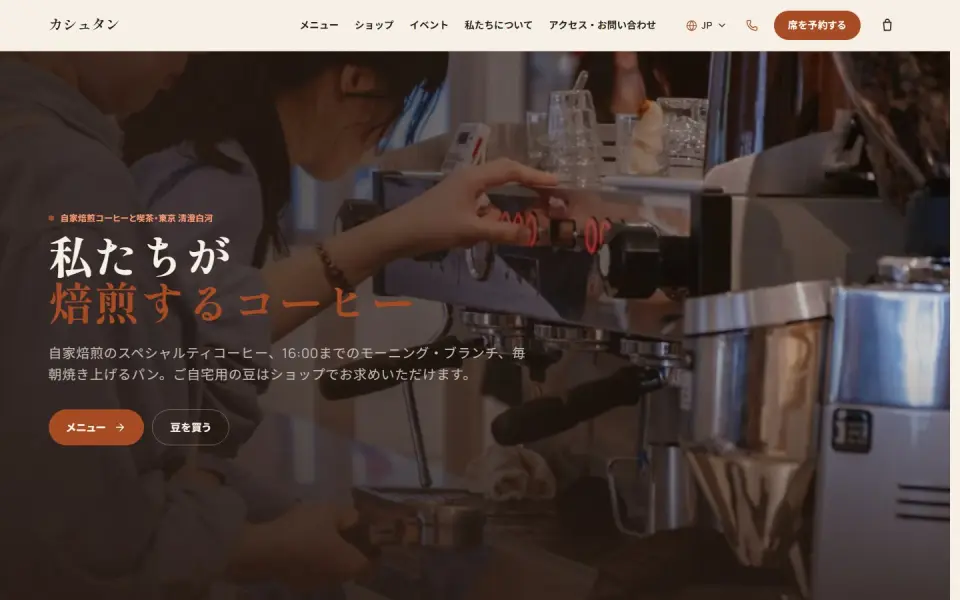 Café & roastery – KashtanMenu, events and an online bean shop
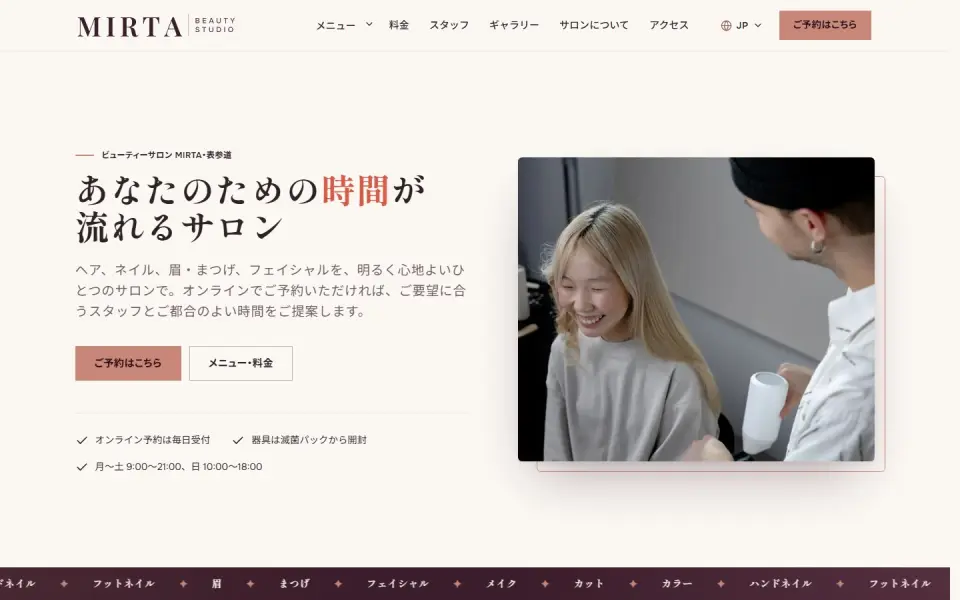 Beauty salon – MIRTABooking form, price list and team
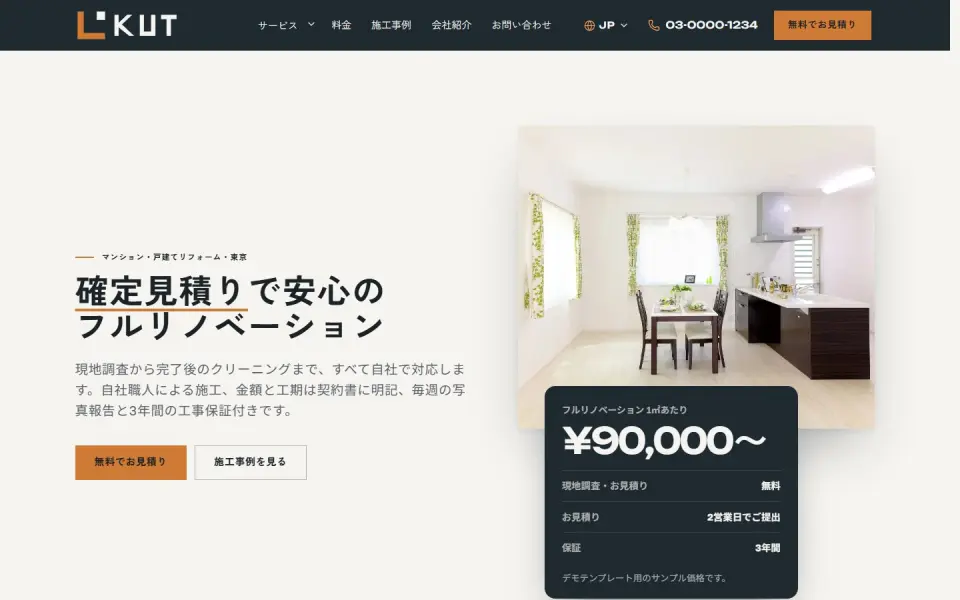 Renovation – KUTEstimate request, projects and prices
Template demos with fictional brands. Yours is built with your own brand and content.
Payments, shipping and duties: what to decide
Most of the work sits between the order and the parcel arriving. Go through this list before you launch.
- Payments: accept the cards, PayPal, Apple Pay and Google Pay that foreign buyers expect. Check which methods and fees apply with Shopify Payments, Stripe or your provider
- Currency and pricing: decide whether to show local currency, how to handle exchange rate swings and whether shipping is included
- Shipping: compare Japan Post EMS and international parcels with couriers such as DHL and FedEx on weight, region, tracking and delivery time
- Duties and import tax: decide whether the customer pays on delivery or at checkout, and say so on product pages and in order emails. Confirm the HS code for each product
- Rules and disclosures: check the destination's import and labeling rules, the disclosure required under Japan's Act on Specified Commercial Transactions and data protection (GDPR for the EU)
- Returns and support: set return terms, a plan for damaged parcels and an English support contact
Carriers revise international rates regularly, so check their official sites for current details. JETRO consultations and national or local subsidies can sometimes support overseas expansion; eligible costs, caps and rates change with each call for applications, so read the latest official guidelines.
While you review the bilingual demo, we list the payment, shipping and duty decisions together.
How to start: seven steps, small first
This order keeps the start manageable, and proving demand in one or two countries first keeps stock and shipping under control.
- Pick countries and products: use social media reactions, visitor feedback and foreign inquiries to choose your lead products and markets
- Check rules and shipping costs: confirm you can ship there and that the price still appeals with shipping and duties added
- Choose a sales model: your own store, a marketplace or a proxy service
- Build the store and product pages: in English or the local language, with sizes, materials, usage, delivery time and return terms
- Set up payments and shipping: place test orders and check the flow from payment to the shipping email
- Start bringing in buyers: Google Ads, Google Shopping, Meta Ads, social media and international SEO
- Measure and improve: use GA4 to see visits and sales by country, then adjust pages and shipping settings
In product pages, add what foreign buyers look for – sizes in inches or ounces, gift wrapping, delivery time. For paid traffic abroad, see overseas ad management.
How UNANOBO builds your cross-border store: a free bilingual demo
Before you commit, UNANOBO builds a free demo of your cross-border store from your own products and brand. You open the Japanese and English versions on your computer and phone, see how they look to overseas customers, and then decide whether to go ahead.
The process is simple: free demo, feedback, launch, growth. The founder handles every project personally, so platform choice (Shopify, BASE or WooCommerce), payment and shipping setup, overseas ads and SEO go through one contact. Everything runs by message, in Japanese or English. See our cross-border ecommerce site build page for details.
How it works
- 01
Free demo
We start with a free demo built around your brand.
- 02
Feedback
Structure, tone and details are refined with you, on the demo itself.
- 03
Launch
The site goes live on a solid SEO foundation.
- 04
Growth
SEO and ads take it further, guided by the numbers.
FAQ
What does the free demo include?
A working Japanese and English design, centered on the home page and product pages, built from your product details, logo and colors. You can check it on a phone too. You decide whether to continue after seeing it.
Is there any cost if we decide not to go ahead?
No. The demo is free, and there is no charge if you stop after seeing it.
Our English is limited. Can we still sell overseas?
Yes. You can work with us entirely in Japanese, and we can help with English copy, product descriptions and order emails. An FAQ on the store for common foreign questions keeps support manageable.
What should we prepare?
Product photos, product details such as size, material and weight, your logo files and the countries you have in mind. If you already run a Japanese shop, send us its URL. Anything missing is listed for you after the demo.
How long until the store goes live?
It depends on products and countries; a smaller cross-border store typically takes one to two months. English copy and payment and shipping setup take the most time, so we propose a schedule at the demo stage.
Can you guarantee overseas sales?
No one can honestly promise sales or rankings. After launch we review visits and purchases by country in GA4 with you and keep improving pages, shipping settings and ads, putting more into the countries that respond.
Related pages
FREE DEMO
See how your store looks to overseas buyers
Tell us about your products and target countries, and we will build a free Japanese–English demo of your cross-border store. Decide after you have seen it.