
Build your own ecommerce site – rely less on marketplaces, own your brand store
Your products sell on Rakuten or Amazon, yet fees and ad costs keep rising and every rule change shakes your sales. That is why many brands in Japan decide to build their own ecommerce site. This page covers why an own-brand store matters, how it works alongside marketplaces, build options with typical costs, the steps and the usual pitfalls – and how UNANOBO shows you a free demo of your store first.
- Free demo – decide after you see it
- By message, in Japanese or English
- One person from demo to launch
FREE DEMO
See your own ecommerce store – free
Send us your marketplace product pages or current site. We build a free demo of your own store with your products and brand, and you decide after you have seen it.
- A working store built from your products
- Click through it on computer and phone
- A platform recommendation and clear plan
Why build your own ecommerce site: five risks of marketplace dependence
Marketplaces bring traffic and are a great place to start. When most of your revenue depends on them, though, these risks build up over time.
- Thin margins: store fees, referral fees, payment fees, point programs and in-marketplace ads add up, and less of each sale stays with you
- Someone else sets the rules: when fees, search ranking logic or policies change, your sales feel it directly
- Limited customer relationships: you have restricted ways to use buyer contact details for your own newsletters or repeat offers
- Price comparison: competitors sit on the same screen, so shoppers often pick by price or point rate
- Little room for your brand: page layouts are fixed, leaving little space for your story and style
Your own store is where you decide all of this. A useful first step: put last year's marketplace sales next to everything you paid the marketplace. Seeing your real margin shows how much to invest in your own site.
Keep the marketplace: how the two channels work together
Starting your own store does not mean leaving Rakuten or Amazon overnight. Most brands run both and give each one a clear job.
- Marketplace: reaching new shoppers who search by product name, and volume during big sale events
- Your own site: repeat orders from people who know your brand, subscriptions, bundles, limited items, gifts and brand stories
- Social media and shops: where people discover you. Point those links to your own store so customers build up with you
Own stores grow fastest for repeat-purchase goods such as food and consumables, products with a strong maker story, and brands that already have fans on social media or in a shop. Products compared by model number, like electronics, usually do better on marketplaces. For the brand-led approach, see how to start a D2C brand.
Send us a marketplace product page and we will show it in a free demo of your own site.
Build options and typical costs
There are four main ways to build your own ecommerce site. Costs vary widely with the partner and the level of customization, so treat the figures below as typical ranges in Japan.
- BASE and similar free-to-start services: low or no monthly fee, with a fee per sale. Good for a small range or for testing demand
- Shopify: monthly plans plus apps for subscriptions, multiple languages and international sales. An agency build on an existing theme typically starts from a few hundred thousand yen; a fully custom design often goes past one million yen
- WordPress + WooCommerce: flexible and easy to combine with a blog or editorial content. You are responsible for hosting, plugin updates and security over time
- Ecommerce packages or a full custom build: for special needs such as links to internal systems. Typically several million yen or more, aimed at larger businesses
Plan for running costs too: monthly plan fees, payment processing, paid apps, hosting and advertising. Put what you pay the marketplace and what you would pay for your own store in one table – the right option becomes much clearer. Our page on ecommerce site development explains how to choose a partner and read a quote.
What the free demo gives you
- 01A working demoA demo site you can open and click through on a computer and a phone.
- 02A structure proposalWhich pages you need, what goes on each and where visitors get in touch.
- 03Plan and estimateAfter you have seen the demo you get the plan to launch and an estimate.
Why it is safe to ask
- The demo is free. If you decide not to go ahead, it costs you nothing.
- Everything happens by message, in Japanese or English.
- Your domain, hosting, ad and analytics accounts stay in your name.
- The founder handles your project from the first demo to growth after launch – one contact all the way.
Demo sites we built
 Café & roastery – KashtanMenu, events and an online bean shop
 Beauty salon – MIRTABooking form, price list and team
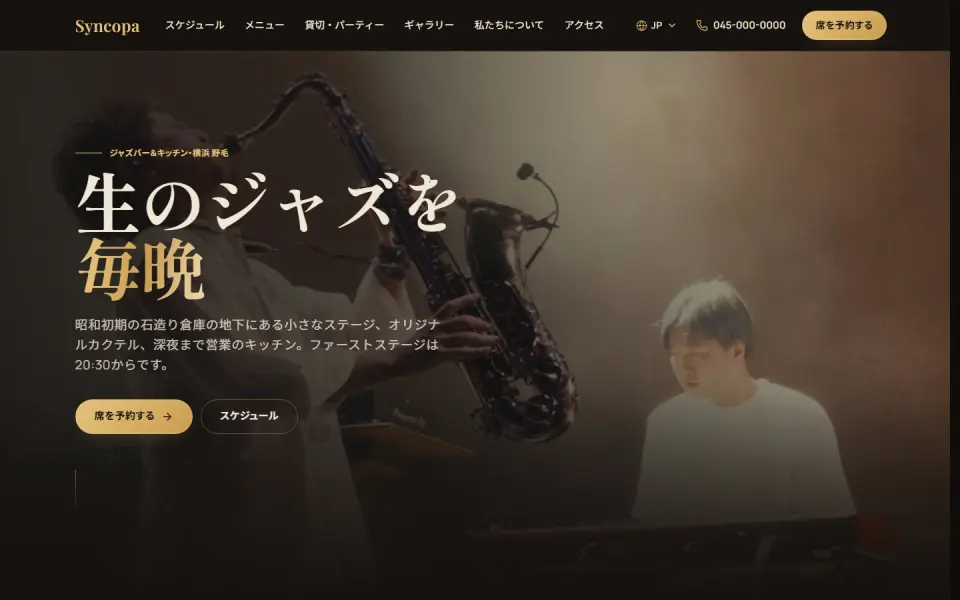 Jazz bar – SyncopaLive schedule, menu and table booking
Template demos with fictional brands. Yours is built with your own brand and content.
How to build your own store: steps and what to prepare
The process usually looks like this. For a store with a few dozen products and materials ready, one to two months is a common timeline.
- Goals and range: decide which products lead on your own site and how pricing and range differ from the marketplace
- Platform: choose based on product count, who will update the store and plans for subscriptions or overseas sales
- Product data and photos: names, descriptions, prices, variants, stock and images in one sheet
- Payments and shipping: cards, convenience store payment, pay-later options, shipping rates, carriers and gift wrapping
- Required pages: the legal notice under Japan's Act on Specified Commercial Transactions, a privacy policy and return terms
- Design and pre-launch checks: a test purchase on a phone, order email wording and GA4 tracking
Have ready: logo files, product photos, your marketplace product page URLs, your shipping table and common customer questions. Register the domain, payment and analytics accounts in your own name so the store stays yours. Legal notice rules are updated from time to time, so check the latest Consumer Affairs Agency guidance before launch.
Product data or photos still in progress? We build the free demo from what you already have.
Moving from marketplaces: pitfalls to avoid
An own store does not bring visitors by itself. Know the common traps in advance.
- Expecting marketplace-level traffic with no budget or time set aside for marketing
- Promoting your own site to marketplace buyers through package inserts or emails in a way the marketplace prohibits – rules differ, so check the current terms
- Managing stock separately for each channel, leading to overselling or stockouts
- Charging more or higher shipping than on the marketplace, without a clear reason to buy direct
- Copying marketplace product descriptions as they are, so the brand story never comes through
The most sustainable reasons to buy direct are limited items, subscriptions, gift service, the maker's story and member news. For building traffic after launch – SEO, social media and Google Shopping ads – see ecommerce marketing.
How UNANOBO builds your own store: a free demo first
Before you commit, UNANOBO builds a free demo of your own ecommerce site from your current products and brand. Send us your marketplace product pages or current website, and you get a working store to click through. Looking at the demo, we decide together whether Shopify, BASE or WooCommerce suits you best.
The process is simple: free demo, feedback, launch, growth. The founder handles every project personally, so you keep one contact from the first demo to marketing after launch. Everything runs by message, in Japanese or English. After launch, SEO, Google Shopping and Meta Ads gradually grow the share of sales on your own site.
How it works
- 01
Free demo
We start with a free demo built around your brand.
- 02
Feedback
Structure, tone and details are refined with you, on the demo itself.
- 03
Launch
The site goes live on a solid SEO foundation.
- 04
Growth
SEO and ads take it further, guided by the numbers.
FAQ
What does the free demo include?
A working store built from your product information, logo and colors, centered on the home page and product pages. You can check it on a computer and a phone. You decide whether to continue after seeing it.
Is there any cost if I decide not to go ahead?
No. The free demo is there so you can see the result first. If you continue, you receive a structure proposal, plan and estimate after the demo.
Can I keep selling on Rakuten and Amazon?
Yes, and in most cases we recommend it. Marketplaces bring new shoppers, while your own store handles repeat orders and brand building. We suggest stock sync and pricing that fit your range.
Can my marketplace product data be moved to my own store?
Most marketplaces let you export product data as CSV, which is usually the starting point for importing into Shopify or BASE. Field formats differ, so descriptions, photos and variants need some cleanup. We tell you how much can be reused once we have seen the data.
How long does it take, and can we work remotely?
With a few dozen products and photos and data ready, one to two months is a common timeline. Payment provider reviews can take time, so applications start early. Everything runs by message in Japanese or English, and you get replies within two business days.
Can you handle marketing and operations after launch?
Yes. Product updates, SEO, Google Shopping, Meta Ads and GA4 setup all run through the same single contact. Ad accounts and the domain stay in your name.
Related pages
FREE DEMO
See your own store first
Send us your marketplace product pages or current website, and we will build a free demo of your own ecommerce site. Decide after you have seen it.