
Restaurant website design in Japan – menus and bookings, starting with a free demo
A listing on a gourmet portal brings people in, yet it rarely tells your story, shows the current menu or makes booking simple. A good restaurant website answers the questions guests have when they find you on Google Maps or search, and makes reserving a table effortless. This page covers what to include, how to choose a booking system, multilingual pages, typical costs and what to prepare – and how UNANOBO starts with a free demo of your restaurant's site.
- Free demo – decide after you see it
- By message, in Japanese or English
- One person from demo to launch
FREE DEMO
Your restaurant's own site – free demo
Send your restaurant name and a link to your portal listing or Instagram. We build a free demo of your official site with menu and booking path, and you decide after seeing it.
- Built from your existing listing and photos
- Check the menu and booking button on a phone
- Ideas for English pages and booking setup
What every restaurant website in Japan should show
Most people who open a restaurant website are already close to deciding. If they find answers fast, they book or walk in. Put these on the page, easy to reach on a phone:
- Hours and closed days: last orders for lunch and dinner, holiday closures
- Menu and prices: photos of signature dishes, course contents and prices, drinks, tax-inclusive pricing
- Access: address, walking route from the station, a map, parking
- Seating: number of seats, private rooms, counter or terrace, private hire, smoking rules
- How to book: phone number, an online booking button, minimum party size, cancellation policy
- Payment: credit cards, e-money and QR payments you accept
Hours and menus change, so make sure they are easy to edit. Outdated information disappoints guests who made the trip. If the owner or manager will post seasonal menus and news, check how simple the admin panel is before the build starts.
Portal listings and your own site: who does what
Gourmet portals are still a useful way for new guests to discover you. Their pages follow a fixed format, though, and some plans charge a fee per booking. Think of your own website as home base – it complements the listings.
- Your story: the chef, where ingredients come from, what makes the food yours – told freely with photos
- Direct bookings: regulars and returning guests can book through your site with no portal fee
- One source of truth: Google Business Profile, Instagram and portal listings can all point to the same official page
- Search visibility: people searching your name or "area + dish" find official information
A practical setup: portals bring first-time guests, your site and Google Maps give the details and take bookings, and repeat guests book with you directly. For the wider picture, including maps and social media, see restaurant marketing.
Send us your listing link and we build a free demo of your restaurant's official site.
Choosing a restaurant booking system
Pick the booking path that fits your size and how you take reservations. Whatever you choose, keep a booking button visible on mobile and make the phone number tap-to-call.
- Mainly phone: show the number and the hours you answer, and mention busy times. For a small place this can be enough
- Booking form: guests send date, time, party size and contact details, and you confirm. Low setup cost, but it means back-and-forth
- Reservation management service: live availability and instant confirmation, with phone and online bookings in one ledger. Usually a monthly fee
- Reserve with Google and LINE: connected booking services can also take reservations from Google Maps or your LINE account
Check whether it connects to the ledger you already use, how it handles no-shows (prepayment, reminder emails) and whether it has an English interface. If you already pay for a service, embedding its booking page in your site is the easiest route.
What the free demo gives you
- 01A working demoA demo site you can open and click through on a computer and a phone.
- 02A structure proposalWhich pages you need, what goes on each and where visitors get in touch.
- 03Plan and estimateAfter you have seen the demo you get the plan to launch and an estimate.
Why it is safe to ask
- The demo is free. If you decide not to go ahead, it costs you nothing.
- Everything happens by message, in Japanese or English.
- Your domain, hosting, ad and analytics accounts stay in your name.
- The founder handles your project from the first demo to growth after launch – one contact all the way.
Demo sites we built
 Café & roastery – KashtanMenu, events and an online bean shop
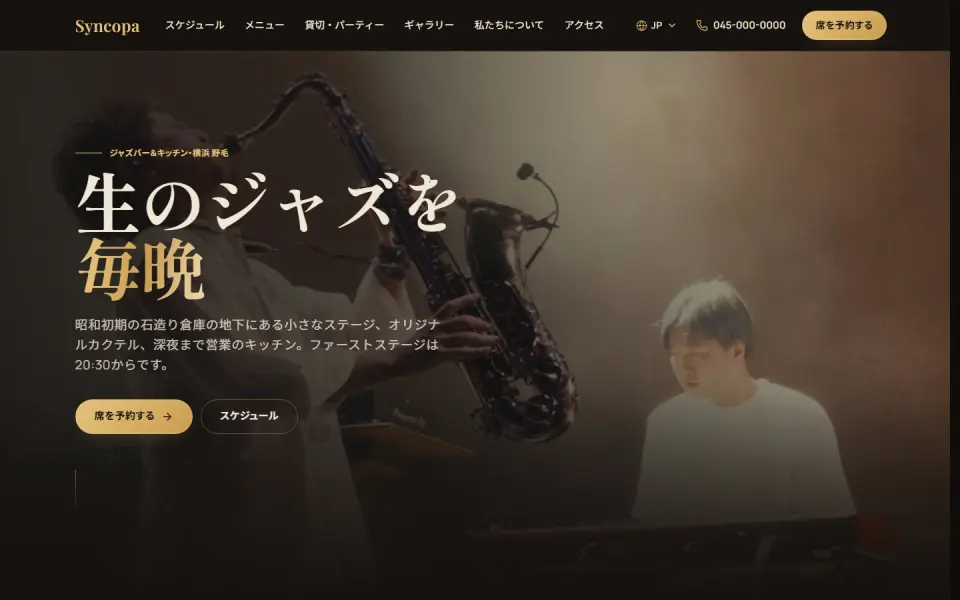 Jazz bar – SyncopaLive schedule, menu and table booking
 Beauty salon – MIRTABooking form, price list and team
Template demos with fictional brands. Yours is built with your own brand and content.
Multilingual pages that work for overseas visitors
Near stations and tourist areas, more overseas visitors open restaurant sites from map apps. Start with the information they need to visit; full translation of every page can come later.
- English menu: a short description of ingredients and cooking method next to each dish name, ideally with a photo
- Ingredients and allergens: pork, beef, seafood, alcohol, vegetarian options – shown with icons or a table
- House rules: otoshi or cover charges, walk-ins, time limits on tables
- Booking and payment: a booking method that works in English, accepted cards
- Finding you: station exit number, floor, a photo of the sign
Explaining local customs like otoshi in advance prevents most misunderstandings at the bill. Have machine translations edited so dishes sound appetizing. For choosing languages and target markets, see inbound tourism marketing.
In the demo we also suggest a layout for visitor-friendly menus and booking pages.
Typical restaurant website costs and what to prepare
Costs depend on how the site is built. As a general guide in Japan, template services start from tens of thousands of yen up front, a custom site of a few pages from an agency typically runs around 300,000 to 800,000 yen, and multilingual pages or booking integration usually add to that. Domain, hosting and booking service fees are on top.
When comparing quotes, ask who updates what after launch and what monthly maintenance includes. It speeds things up to have these ready:
- Your logo and photos of the exterior, interior and dishes (phone photos are fine for planning the layout)
- The current menu, course contents and prices
- Hours, closed days, seats and payment methods
- Your booking service, portal listings, Instagram and Google Business Profile
- Two or three restaurant sites whose feel you like
Food photos shape the whole impression, so professional shots of your signature dishes are worth considering. If ambience is your main draw, our page on cafe websites has more ideas. Keep the domain and analytics accounts in the restaurant's name.
How UNANOBO builds restaurant websites: a free demo first
Before you commit, UNANOBO builds a free demo of your official site from your logo, photos, menu and the information already on your portal listings and Instagram. You try the menu layout and booking button on your own phone, then decide whether to go ahead.
The process: free demo, feedback, launch, growth. The founder handles every project personally, from the first demo to MEO and Google Ads after launch, so you never have to explain your restaurant twice. Everything runs by message in Japanese or English – reply between prep and service, whenever suits you.
How it works
- 01
Free demo
We start with a free demo built around your brand.
- 02
Feedback
Structure, tone and details are refined with you, on the demo itself.
- 03
Launch
The site goes live on a solid SEO foundation.
- 04
Growth
SEO and ads take it further, guided by the numbers.
FAQ
Does the free demo cost anything?
No. We build a working version of your site, centered on the home page, from your restaurant's information at no charge. If you decide not to continue after seeing it, you pay nothing.
Should we stop using gourmet portals?
We usually recommend keeping them as a way for new guests to find you. Your site complements them with full details and direct bookings. During the demo we suggest how to link the two and keep information consistent.
Can we keep our current booking system?
Most booking services can be linked or embedded in your site. Tell us which one you use and we show the booking button placement in the demo. If you have no system yet, we suggest one that fits your size.
How long until the site goes live?
For a restaurant site of a few pages, about one to two months once materials are ready is a typical guide. Multilingual pages or booking integration add review time. We reply to your first message within two business days with the next steps.
We have no finished photos or menu text. Can we still start?
Yes. We can use the photos and menu from your portal listings and Instagram to settle structure and design first. You get a list of photos worth retaking and any extra information we need.
We are too busy for meetings. Is that a problem?
Not at all. Everything runs by message, so no visits or calls are needed. Reply after closing or between prep, in Japanese or English.
Related pages
FREE DEMO
See your restaurant's website first
Send us your restaurant name and a portal or Instagram link, and we will build a free demo of your official site. Decide after you have seen it.