
International SEO for Japanese companies – start with a free demo
International SEO is how a Japanese brand gets found by people searching in other countries and languages. Translating your Japanese site is only the starting point: search engines also need clear language signals, and your pages need the words local buyers actually type. This page covers how to choose markets, set up URL structure and hreflang, research local keywords and avoid the usual mistakes – and why UNANOBO starts with a free demo of your foreign-language pages.
- Free demo – decide after you see it
- By message, in Japanese or English
- One person from demo to launch
FREE DEMO
See your international pages – free
Send us your current site address and the countries you want to reach. We build a free demo of your foreign-language pages, and you decide after you have seen it.
- A foreign-language version built from your site
- See the language switcher and URL structure
- A keyword direction for your target country
What changes when SEO goes international
The fundamentals stay the same: help search engines understand each page and answer the searcher's question well. Going abroad adds a few conditions you have to plan for.
- Search engines: Google leads in most countries, but Baidu dominates in mainland China and NAVER is widely used in Korea. Your target market sets the priorities
- Language vs. country: English is used in the US, the UK, Australia and many other places, with different spelling, phrasing and currency. Decide the language and the country separately
- How people search: the words locals use for your product rarely match a direct translation of your Japanese keywords
- Who you compete with: local companies and big marketplaces fill the results. A well-known brand in Japan starts as a newcomer abroad
Write one sentence: which country, which kind of customer, and what you want them to find. It becomes the brief for everything that follows.
Decisions to make before you start
International SEO results depend heavily on choices made before a single page is built.
- Target markets: start with countries that already send inquiries or orders, show interest on social media, or where you can actually ship and sell
- Pages in scope: translate the whole site, or begin with key pages – products or services, company profile, contact
- Handling responses: who answers foreign-language inquiries, and whether you can support local payment, currency display and international shipping
- Keeping pages in sync: when the Japanese page changes, can the other language versions be updated at the same time?
Starting with one or two countries keeps budget and workload manageable. If you plan to sell online to overseas customers, shipping, duties and payment matter as much as SEO; see cross-border e-commerce support for how the operations side is usually handled.
Send us your site address – we sort out the priority market with you while building a free demo of your foreign-language pages.
The technical base: URL structure and hreflang
Each language version needs its own URL so search engines can tell the versions apart. There are three common ways to structure them.
- Country domains (ccTLDs): example.fr, example.de. A strong country signal, but every domain has to be registered and build authority from zero
- Subdirectories: example.com/en/, example.com/fr/. One domain to manage, and the new sections benefit from your existing site's authority – the usual choice for small and mid-sized sites
- Subdomains: en.example.com. Useful when each language runs on a separate system, at the cost of more maintenance
Next, add hreflang annotations so search engines know that a page has, for example, English and French equivalents. Three rules cover most cases: every version lists all the others, each version also lists itself, and an x-default points to the fallback page for visitors who match no language.
Avoid automatic redirects based on IP address or browser language – they can stop search engines from seeing some versions at all. A visible language switcher that lets people choose is the safer pattern. For how to build the site itself, see multilingual website development.
What the free demo gives you
- 01A working demoA demo site you can open and click through on a computer and a phone.
- 02A structure proposalWhich pages you need, what goes on each and where visitors get in touch.
- 03Plan and estimateAfter you have seen the demo you get the plan to launch and an estimate.
Why it is safe to ask
- The demo is free. If you decide not to go ahead, it costs you nothing.
- Everything happens by message, in Japanese or English.
- Your domain, hosting, ad and analytics accounts stay in your name.
- The founder handles your project from the first demo to growth after launch – one contact all the way.
Demo sites we built
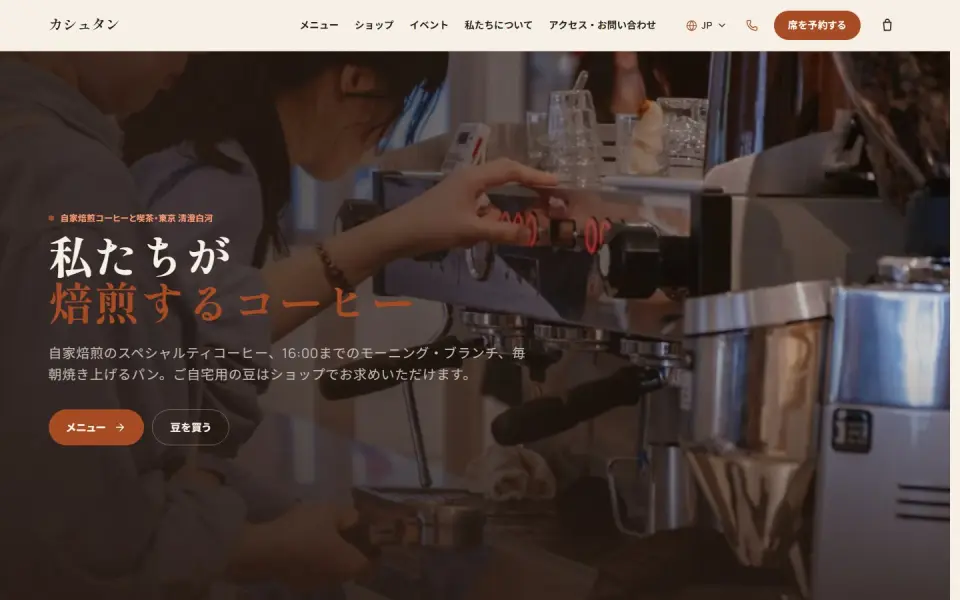 Café & roastery – KashtanMenu, events and an online bean shop
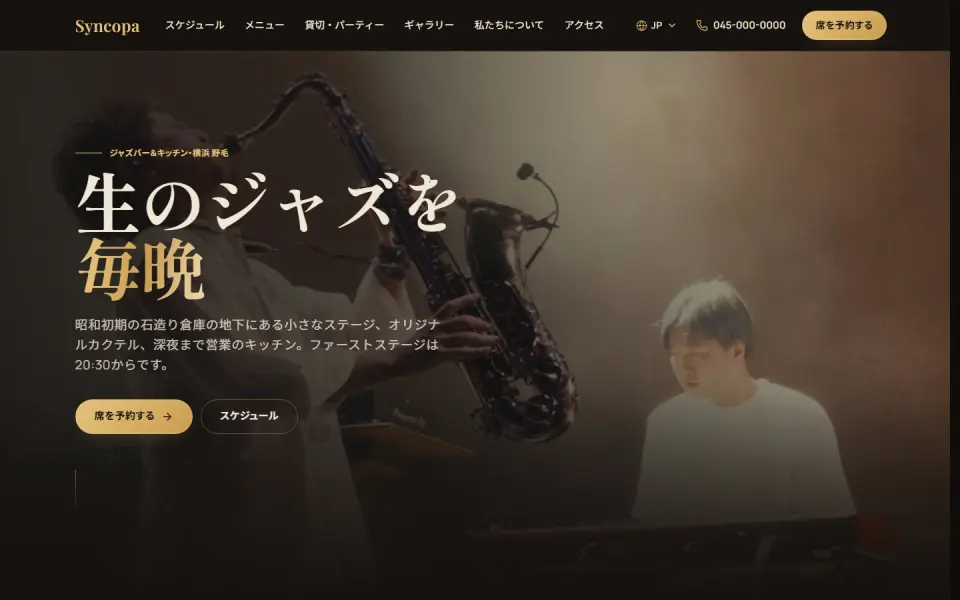 Jazz bar – SyncopaLive schedule, menu and table booking
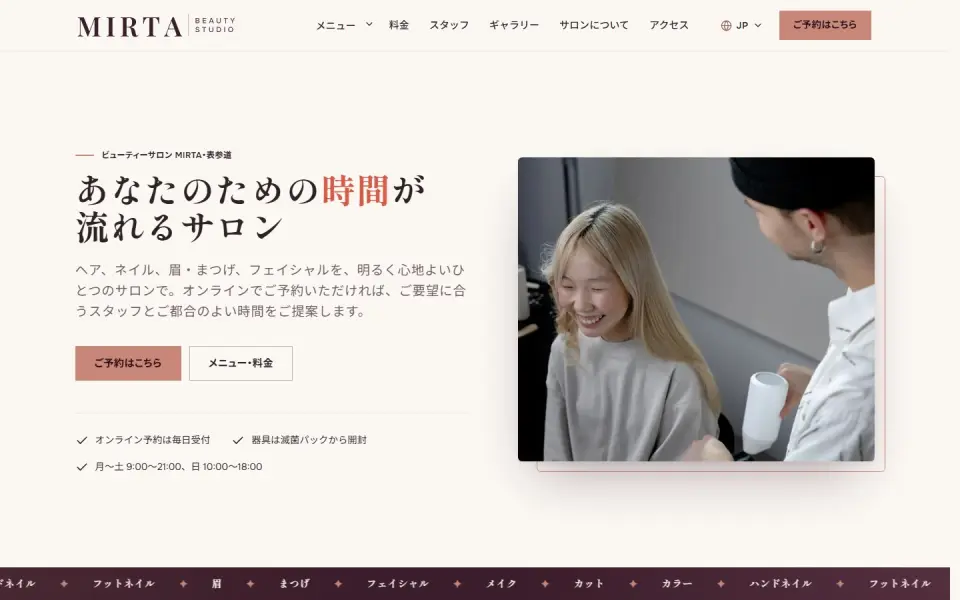 Beauty salon – MIRTABooking form, price list and team
Template demos with fictional brands. Yours is built with your own brand and content.
Building pages around local keywords
The biggest difference usually comes from localizing keywords and copy. Translating your Japanese keyword list tends to produce terms nobody searches for in the target market.
- Research local search terms: use Google Keyword Planner or a similar tool with the country and language set, and check volumes and related queries
- Look at the actual results: see whether the top results in that country are product pages, comparison articles or videos, and match the format
- Bridge the names: pair Japanese product or material names with the common local term (for example, Nanbu tekki with "cast iron teapot")
- Answer pre-purchase questions: sizes and units, currency, shipping cost, delivery time and return terms on the page itself
- Have a native speaker finish it: machine translation works as a first draft; headings and product copy should be polished by someone fluent in the local language
Write title tags and meta descriptions separately for each language, using the local search terms. If an English-speaking market comes first, English SEO goes deeper into keyword choice.
A free demo built around your target country's search terms shows the keyword direction in concrete form.
Common international SEO mistakes and post-launch checks
When foreign-language pages are live but overseas traffic stays flat, the cause is usually one of these.
- hreflang points one way only, or contains a typo in the URL, so it is ignored
- The canonical tag on foreign pages points to the Japanese page, so the foreign pages never appear in results
- Menus, footers or text inside images are still in Japanese, so the page mixes languages
- The server sits only in Japan and pages load slowly abroad – a CDN usually helps
- Only the Japanese pages get updated, and prices or news on the other versions go stale
After launch, check in Google Search Console that the foreign pages are indexed and watch impressions and clicks by country. Set up GA4 so visits and inquiries can be split by country and language, so you can see which market deserves more effort. Results typically take months, so review monthly.
How UNANOBO handles international SEO: a free demo first
Before you commit to anything, UNANOBO builds a free demo of your foreign-language pages, based on your current site and brand. You see how the language switcher works, how the URLs are structured and which direction the local headings and copy take – on your computer and phone – and then decide whether to go ahead.
The process is simple: free demo, feedback, launch, growth. The founder works in both Japanese and English and handles everything personally, from the demo to hreflang setup and keyword tuning after launch, so you never deal with separate contacts per language. Everything runs by message, and Search Console, GA4 and ad accounts are set up in your company's name.
How it works
- 01
Free demo
We start with a free demo built around your brand.
- 02
Feedback
Structure, tone and details are refined with you, on the demo itself.
- 03
Launch
The site goes live on a solid SEO foundation.
- 04
Growth
SEO and ads take it further, guided by the numbers.
FAQ
What does the free demo include?
A working foreign-language version of your site, centered on the home page and built from your current content, logo and colors. It also shows where the language switcher sits and how the URLs are organized. You decide whether to continue after seeing it.
Is there any cost if we decide not to go ahead?
No. The demo is there so you can judge the direction. If you continue, you get a plan and estimate based on your feedback, the languages and the number of pages.
How long does international SEO take to work?
It depends on competition and the state of your domain, but steady search traffic typically takes several months to half a year or more. Rankings are decided by search engines, so no specific position or traffic figure can be promised. After launch we watch Search Console by country and adjust wording and structure.
Can you work in languages other than English?
The founder works directly in Japanese and English. For Chinese, French or other languages, the technical setup – URL structure, hreflang – and the page structure follow the same approach. Final copy can be reviewed together with your own translator or local partner.
What should we prepare?
Your current site address, the countries you want to reach and the products or services you want to promote abroad are enough to start. Anything missing can be sorted out while the demo takes shape.
Can everything be done by message?
Yes, from the first contact to launch and beyond. Since we work in Japanese and English, your overseas colleagues can communicate directly in English as well. You get a reply within two business days.
Related pages
FREE DEMO
See your international pages first
Send us your site address and target countries, and we will build a free demo of your foreign-language pages. Decide after you have seen it.