
English SEO for Japanese websites – get found by buyers abroad
English SEO for Japanese websites means making the English version of your site show up when overseas buyers and visitors search in English. A translated copy of the Japanese pages rarely gets there on its own: the words people search for differ from the translated ones, and key technical settings are often missing. This page walks through keyword research, the technical setup and writing pages that read naturally to native speakers – and explains how UNANOBO starts with a free demo of your English pages.
- Free demo – decide after you see it
- By message, in Japanese or English
- One person from demo to launch
FREE DEMO
See your English pages – free
Send us your current Japanese site and the countries you want to reach. We build a free demo of English pages planned around real English searches, and you decide after seeing it.
- English pages written directly in English
- Proposed keywords and page structure
- Click through it on a computer and a phone
What English SEO for a Japanese website involves
The basics are the same as in Japanese SEO: publish pages that answer what people search for, in a form search engines can read correctly. What changes is the audience, the vocabulary and the competition. A Japanese pottery maker is found through searches such as "Japanese ceramic tableware" or "handmade Japanese mugs", which have little to do with its Japanese product names. A ryokan is found through searches that combine place and feature, like "ryokan with private onsen Hakone". In English results you also compete with large local retailers and review sites, so your Japanese strengths have to be spelled out clearly in English.
English SEO pays off most for these kinds of sites:
- Online shops selling abroad: product and category pages that should rank for cross-border buyers
- Shops, restaurants and inns hosting inbound visitors: found while travelers plan their trip
- Manufacturers and B2B companies: inquiries from searches for products, materials or processes
If you are targeting several countries and languages, our guide to overseas SEO covers how to plan by market. For English-speaking buyers, the fastest start is improving the quality and setup of your English pages.
Why English versions of Japanese sites stay invisible
"We launched an English version, but almost nobody from abroad visits" is a common story. The cause is usually one of the following, and each can be caught before launch.
- Keywords were translated from Japanese, so the terms people actually search for are missing
- Machine-translated text was published as is, with awkward or confusing sentences
- The language switch relies on a button and JavaScript, so English pages have no URLs of their own
- There is no hreflang setup, and page titles or descriptions are still in Japanese
- Shipping costs, payment methods, delivery times and returns are not explained in English
- Visitors are redirected automatically by country, so search engines cannot reach the English pages
If any of these apply, start there. Fixing these gaps one by one is the foundation everything else builds on. The next sections cover keywords, technical setup and content in turn.
Send us your site's URL and we will show the fixes in a free demo of your English pages.
Choose English keywords from English-language searches
English keyword research starts with the words English speakers really type. Your Japanese keyword list is still useful as a checklist for topics you might otherwise miss.
- Collect your buyers' words: look at inquiry emails, reviews and social comments from overseas customers
- Check search volume: use Google Keyword Planner with the target country selected
- Look at the results: see whether product pages, blog posts or comparison sites rank, and build that type of page
- Match the market's conventions: US or UK spelling (color / colour), inches or centimeters, place-name romanization
- One topic per page: group close variations on one page so your own pages do not compete
Japanese terms need a judgment call. Words that are already part of English, like "matcha" or "ramen", can be used as they are. Less familiar ones work better with a short explanation, such as "wagashi (Japanese sweets)", which helps both search engines and readers.
What the free demo gives you
- 01A working demoA demo site you can open and click through on a computer and a phone.
- 02A structure proposalWhich pages you need, what goes on each and where visitors get in touch.
- 03Plan and estimateAfter you have seen the demo you get the plan to launch and an estimate.
Why it is safe to ask
- The demo is free. If you decide not to go ahead, it costs you nothing.
- Everything happens by message, in Japanese or English.
- Your domain, hosting, ad and analytics accounts stay in your name.
- The founder handles your project from the first demo to growth after launch – one contact all the way.
Demo sites we built
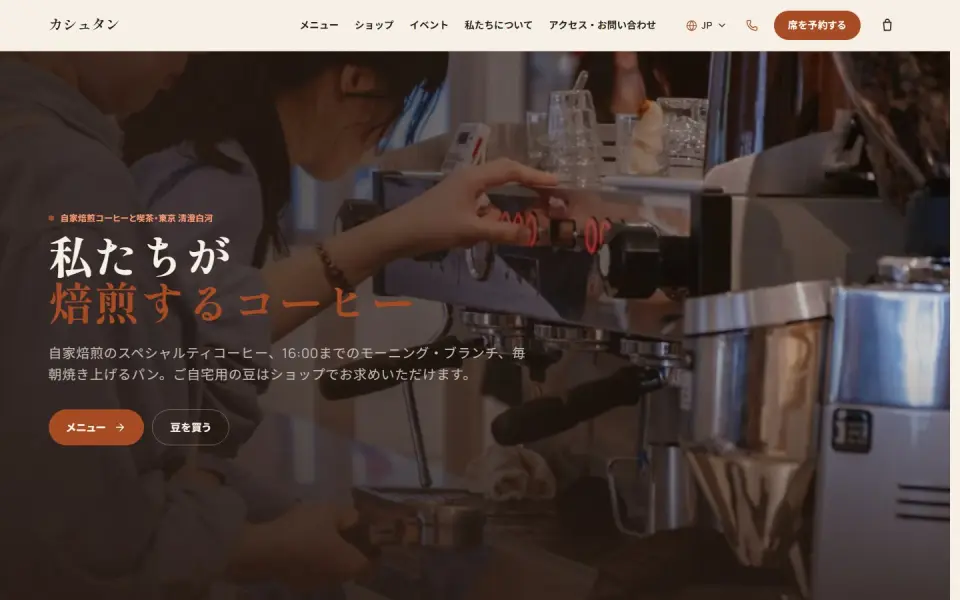 Café & roastery – KashtanMenu, events and an online bean shop
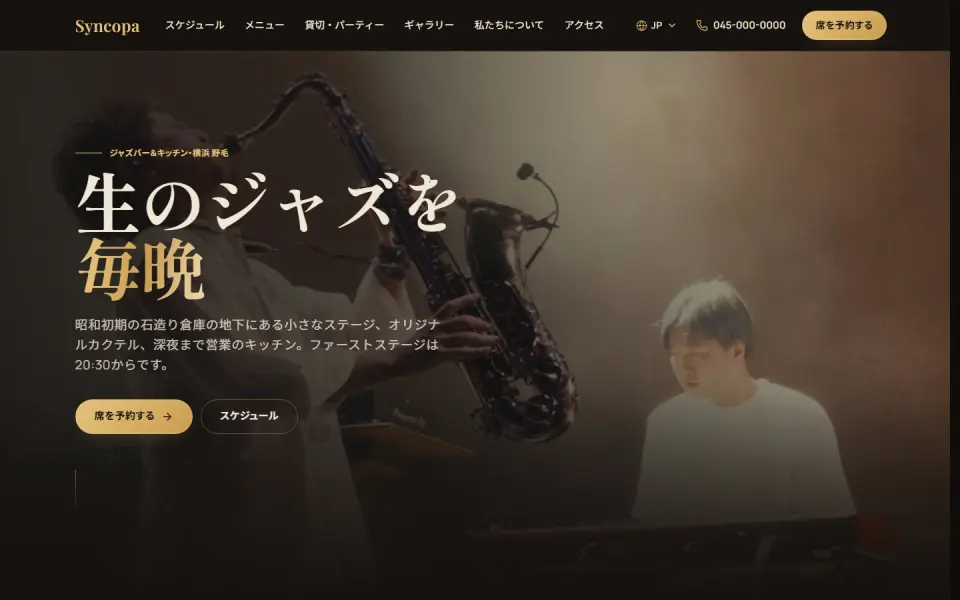 Jazz bar – SyncopaLive schedule, menu and table booking
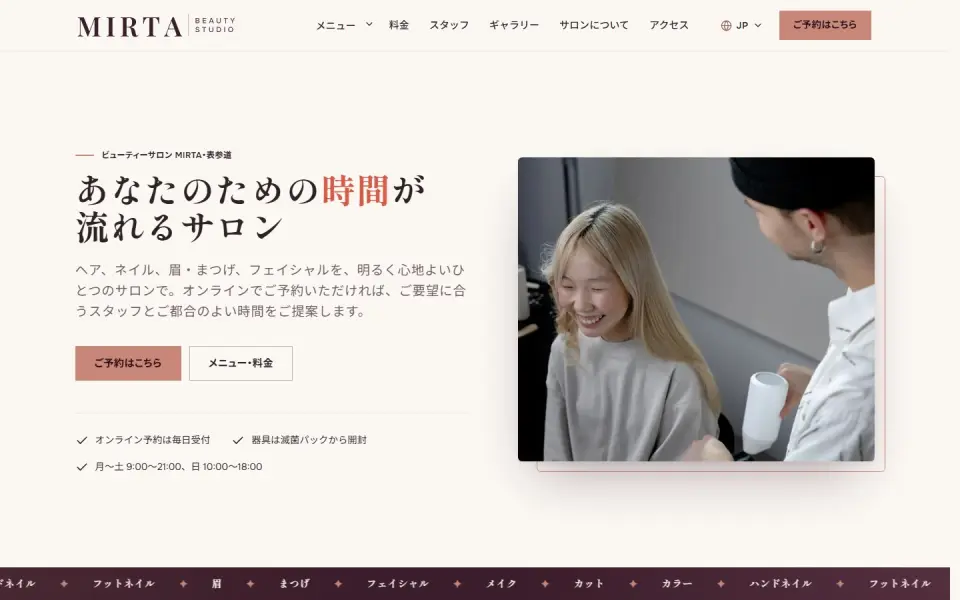 Beauty salon – MIRTABooking form, price list and team
Template demos with fictional brands. Yours is built with your own brand and content.
Technical SEO checklist for an English site
Even strong English content struggles if search engines cannot identify it as the English version. Check these points before launch:
- URL structure: give every English page a stable URL, for example in a /en/ subdirectory
- hreflang: link the Japanese and English versions to each other and add x-default for everyone else
- lang and canonical: set lang="en" in the HTML and point each page's canonical to itself
- Titles and descriptions: title tags, meta descriptions, image alt text and breadcrumbs all in English
- Sitemap and Search Console: include English pages in the XML sitemap and track impressions by country
- No forced redirects: do not redirect by IP or browser language; offer a visible language switch instead
- Speed: measure load times from abroad and consider image compression or a CDN
Shopify and WordPress offer multilingual features and plugins that can handle URLs and hreflang for you. It is still worth checking the page source and Search Console after launch to confirm the output is correct. If you are building the English site from scratch, see English website production for structure and planning.
We build a free demo from your current site, including URL structure and the language switch.
Natively written pages that convince overseas buyers
Ranking only helps if readers understand the page and trust it enough to buy or get in touch. A good English page gives overseas readers everything they need to decide, in plain, natural English.
- Lead with the essentials: what you offer, who it is for and where you can deliver
- Be specific: materials, sizes, origin, process and lead times in numbers and names
- Answer pre-purchase worries: shipping, duties, payment methods, delivery times and returns
- Show who you are: company details, address, contact options and the people behind the product
- Explain the context: add a line of background for customs and terms that are obvious only in Japan
Sentence-by-sentence translation tends to carry over the polite preambles of Japanese copy, which read as wordy in English. Our page on website translation explains what to watch for when translating. After launch, review the English search queries in Search Console and work them into headings and descriptions – the pages get sharper over time.
How UNANOBO handles English SEO: a free demo of your English pages
Before you commit to anything, UNANOBO builds a free demo of your English pages, based on your current Japanese site and brand. You see headings and structure planned around English keywords, copy written directly in English and the language switch, and you can click through it all on a computer and a phone.
The process is simple: free demo, feedback, launch, growth. The founder handles everything personally – English copy, technical setup and tracking search performance after launch – so you keep one contact throughout. We work by message, in Japanese or English. Search Console and ad accounts stay in your name.
How it works
- 01
Free demo
We start with a free demo built around your brand.
- 02
Feedback
Structure, tone and details are refined with you, on the demo itself.
- 03
Launch
The site goes live on a solid SEO foundation.
- 04
Growth
SEO and ads take it further, guided by the numbers.
FAQ
What does the free demo include?
A working English version centered on the home page, built from your current Japanese content, logo and colors. It comes with proposed English keywords and a page structure for the whole English site. The demo costs nothing.
What if I decide not to go ahead after seeing the demo?
That is completely fine. There is no charge if you stop after the demo. Feel free to tell us by message what did not fit.
How long does English SEO take to show results?
New English pages typically take several months to appear steadily in search. Rankings are decided by search engines, so no specific position or traffic level can be promised. After launch we track impressions and queries in Search Console and refine the copy and setup.
Can we work with you if English is not our strong point?
Yes. Everything can run by message in Japanese, and the English copy comes with a short Japanese summary so you can check the content. Telling us in Japanese what you want to say about your products or services is enough.
What do we need to prepare?
Your current site's URL and the countries or customers you want to reach are enough to start. Examples of overseas inquiries, shipping and payment terms, and the strengths you want to highlight make the demo more specific. Anything missing, we ask for in one clear list.
Can we add English pages without changing the Japanese site?
In most cases, yes – for example under /en/. We set up hreflang and canonical tags so the Japanese version keeps its standing. During the demo stage we also suggest the easiest approach for the CMS you use now.
Related pages
FREE DEMO
See your English pages first
Send us your Japanese site's URL and we will build a free demo of your English pages, written directly in English. Decide after you have seen it.