
Multilingual website development in Japan – the right structure and copy for every language
Your customers, partners or visitors read English, Chinese or Korean, yet your site is only in Japanese – or relies on a translate button. A multilingual website that works needs more than translation: a clear URL structure, correct hreflang, a CMS you can update yourself, and copy that sounds natural to each reader. This page walks through the decisions, the setup and what to prepare, and shows how UNANOBO starts with a free demo of your multilingual site.
- Free demo – decide after you see it
- By message, in Japanese or English
- One person from demo to launch
FREE DEMO
See your multilingual site – free
Send us your current site address and the languages you want. We build a free demo of the English or other language version, and you decide after you have seen it.
- A foreign-language version built from your content
- Try the language switcher on a computer and phone
- A proposal for URL structure and CMS
When a multilingual website makes sense – and where it goes wrong
Companies in Japan usually start multilingual website development for one of a few reasons: more bookings from inbound visitors, presenting products to overseas buyers, selling online abroad, or recruiting people from abroad. Each goal points to different languages and a different set of pages.
Starting with "let's just add English" tends to cause the same problems:
- A translation widget is the only solution, so search engines never see real foreign-language pages
- Only the home page is translated; menus, prices, booking and contact pages stay in Japanese
- Switching language always sends visitors back to the home page
- Text inside images, PDF menus, form fields and auto-reply emails remain untranslated
- The Japanese pages get updated while the English ones quietly go out of date
All of these are avoidable with planning. Start by writing down who you want to reach, in which language, and what you want them to do. If English alone covers your audience, see our guide to English website development.
Five signs of a multilingual site that works
What matters most is that each language version works on its own. Strong multilingual sites share these traits:
- A dedicated URL per language: each version can appear in search results and be shared or linked
- Page-to-page switching: switching from the Japanese price page opens the English price page
- The full journey is translated: booking, inquiry, checkout and payment instructions included
- Information for that reader: how to get there, accepted payments, tax-inclusive prices explained, opening hours in a familiar format
- A clear update routine: when the Japanese page changes, everyone knows who updates which language and when
Check your current site against this list to see what is missing. For shops, restaurants and venues serving tourists, our page on websites for inbound tourists covers industry-specific points.
A demo makes the languages and pages you need obvious. Send us your current site address to start.
The technical setup: URL structure and hreflang
The first technical decision is how to separate languages in your URLs. There are three common options:
- Subdirectories (example.jp/en/): share the authority of one domain and are easy to manage – the default choice for most sites
- Subdomains (en.example.jp): useful when a language version runs on a separate system
- Country domains (example.com.tw and so on): an option when business and pricing differ a lot by country, with more registration and upkeep
Once URLs are set, each page gets hreflang annotations that tell search engines "this page also exists in English and Chinese". The basics: every version references all the others, each page includes itself, and an x-default points users with no matching language to a sensible page.
Avoid automatic redirects based on visitor location or browser language. A visible language switcher lets people choose, and lets search engines crawl every version. To get found in searches abroad, see our guide to overseas SEO.
What the free demo gives you
- 01A working demoA demo site you can open and click through on a computer and a phone.
- 02A structure proposalWhich pages you need, what goes on each and where visitors get in touch.
- 03Plan and estimateAfter you have seen the demo you get the plan to launch and an estimate.
Why it is safe to ask
- The demo is free. If you decide not to go ahead, it costs you nothing.
- Everything happens by message, in Japanese or English.
- Your domain, hosting, ad and analytics accounts stay in your name.
- The founder handles your project from the first demo to growth after launch – one contact all the way.
Demo sites we built
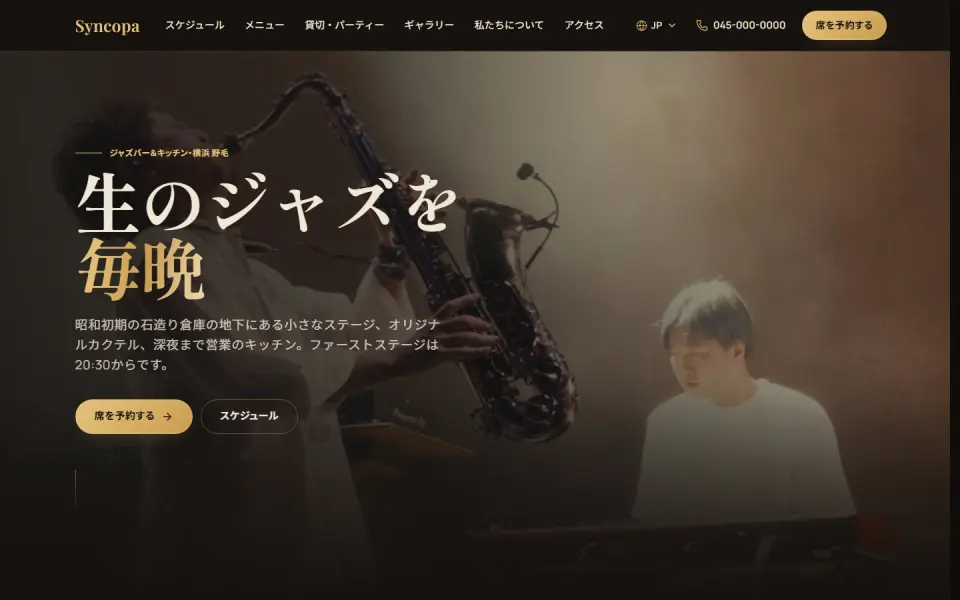 Jazz bar – SyncopaLive schedule, menu and table booking
 Café & roastery – KashtanMenu, events and an online bean shop
 Beauty salon – MIRTABooking form, price list and team
Template demos with fictional brands. Yours is built with your own brand and content.
Choosing a multilingual CMS: WordPress, Shopify or BASE
The right platform depends on who will update which language after launch. The usual options:
- WordPress: plugins such as WPML, Polylang or TranslatePress add languages, with each language managed as its own pages. A good fit for sites with regular news or articles
- Shopify: multiple languages and currencies are built in, with translations managed through an app. Strong for selling online abroad
- BASE: quick to start, but more limited for detailed multilingual setups, so confirm the languages and features you need first
- Small sites: if updates happen a few times a year, a simple build with separate pages per language is perfectly workable
WordPress translation plugins differ in price, URL format and how translations are stored, and switching later is costly. Settle the number of languages and how often you update before choosing.
We build the multilingual demo on a structure that suits your site and explain the proposal with it.
Writing the copy: from translation to natural reading
In the end, the copy decides how your site feels. A literal translation of Japanese text rarely moves readers to act. This process produces copy that reads naturally in each language:
- Choose the pages: home, services or products, prices, access, booking and contact first; local-only news can stay in Japanese
- Build a glossary: fix romanized spellings of your company, products and place names, plus key phrases
- Rewrite for the reader: add context a foreign reader lacks, shorten long introductions, put the point in the heading
- Native review: machine translation can be a draft, but a person checks tone and facts before publishing
- Cover everything around the page: text in photos, menus, form auto-replies and map directions
It helps to have ready: your target languages and countries, a list of pages to translate, any existing English brochures, and official spellings of product names. For choosing a translation provider and budgeting, see website translation.
How UNANOBO builds multilingual sites: a free demo first
Before you commit, UNANOBO builds a free demo of your multilingual site, based on your current content and brand. Usually centered on the English version, it lets you test the language switcher, the URL structure and the headings and paths in each language on a real screen. You decide whether to go ahead after seeing it.
The process is simple: free demo, feedback, launch, growth. The founder handles every project personally – from the first demo through hreflang and CMS setup to marketing abroad after launch. Everything runs by message, in Japanese or English, so you can discuss direction in Japanese while colleagues overseas review the English copy.
How it works
- 01
Free demo
We start with a free demo built around your brand.
- 02
Feedback
Structure, tone and details are refined with you, on the demo itself.
- 03
Launch
The site goes live on a solid SEO foundation.
- 04
Growth
SEO and ads take it further, guided by the numbers.
FAQ
What does the free demo include?
A working multilingual version centered on the home page, built from your current content, logo and colors. You can try the language switcher and check it on mobile. You decide whether to continue after seeing it.
Is there any cost if I decide not to go ahead?
No. The free demo exists so you can judge the direction. If you decide to stop, just tell us – there is nothing to pay.
How many languages can you support?
The site is set up so you can add English, Chinese (simplified and traditional), Korean or any other language you need. Each language adds upkeep, so we usually suggest starting with the language most of your visitors use and adding more based on results.
Can you add languages to my existing Japanese site?
Yes. Your Japanese site stays live while the new language pages are built and reviewed in a separate environment, then published when ready. During the demo stage we also advise whether your current CMS can handle it or a rebuild makes more sense.
How long does it take?
For a small site in two languages, one to two months is a typical timeframe. It depends on the number of languages and pages and how ready the copy is, so you get a concrete schedule and estimate after the demo.
Can we work entirely by message, with people in different countries?
Yes. All communication runs by message, in Japanese or English. Colleagues in Japan and abroad can join the same conversation, and questions get a reply within two business days.
Related pages
FREE DEMO
See your multilingual site first
Send us your current site address and the languages you need. We will build a free demo that reads naturally in each language.