
Best Shopify themes for Japanese stores – how to choose one that fits
Shopify theme demos look great with English headlines and studio photos. Then you add Japanese product names and descriptions, and the text feels cramped, menus wrap onto two lines and the store no longer looks like the preview. This guide covers how to choose a theme for a store selling in Japan: typography, payments, free vs paid themes, and when it makes more sense to improve the theme you already have.
- Free demo – decide after you see it
- By message, in Japanese or English
- One person from demo to launch
FREE DEMO
See a Shopify theme with your own products
Send your store URL, or photos and descriptions of a few products. We build a free demo of a theme adjusted for Japanese text.
- Your real product names in Japanese
- A theme shortlist with clear reasons
- Compare with improving your current theme
Start with how the theme handles Japanese text
Most Shopify themes are built and showcased in English. Uppercase headings and wide letter spacing look elegant in Latin type, but the same settings can make Japanese headings feel stretched and body text feel tight. Before comparing styles, check how each theme looks with your own product information.
- Line height and font size: read three or four lines of a product description on a phone – is it comfortable?
- Long product names: Japanese names like "Organic blend 200g, set of 2" can run to three lines in a product grid
- Menu labels: check that labels such as FAQ, shipping and returns fit on one line in Japanese
- Fonts: theme font settings are mostly for Latin type; Japanese text usually falls back to the device's system font, so plan the design around that
- Decorative English: themes built on large uppercase titles need a careful look when paired with Japanese headings
The Theme Store's "Try theme" option lets you preview any theme in your own store for free. Add a few real products first, then review everything on a phone.
Payments and Japanese buying habits: what the theme does and does not control
Changing your theme does not change which payment methods you offer. Cards, Apple Pay, Google Pay and Shop Pay are switched on in Shopify Payments; convenience store payment, pay-later services and PayPay usually come from your payment provider or an app. The checkout layout itself is standardized by Shopify.
Where themes differ is everything before checkout – the details Japanese shoppers look for before they buy.
- Around the buy button: dynamic checkout buttons such as Shop Pay and Apple Pay should sit cleanly on the product page
- Cart page: delivery date and time selection, gift wrapping or noshi apps need a place as app blocks
- Shipping messages: an announcement bar for free shipping thresholds and clear delivery notes on product pages
- Footer: links to the Specified Commercial Transactions Act notice, privacy policy and returns page
If you already know which payment provider and apps you will use, choose an Online Store 2.0 theme. Apps can then be added and removed as blocks, which keeps you out of the theme code in many cases.
Tell us which payment provider and apps you plan to use, and the free demo will show how the cart looks with them.
Free themes like Dawn vs paid themes
Shopify offers free official themes, and the Theme Store sells paid themes from independent developers. Paid themes are a one-time purchase, typically a few hundred US dollars. Which is better depends on your products and the size of your catalog.
- Free themes such as Dawn: maintained by Shopify, light and fast, and simple enough to adapt for Japanese typography
- Paid themes: more built-in features such as mega menus, comparison tables, lookbooks and advanced filtering – useful for large catalogs or a strongly visual brand
- Support: paid themes include developer support and updates, usually in English
- Speed: more features often means more files to load, so check that unused features do not slow the store
A practical order is to lay out your products in Dawn first. Once you can name the features it lacks, look at paid themes that cover exactly those. Paid themes can be tried before purchase, so buy only after you have seen them with Japanese content.
What the free demo gives you
- 01A working demoA demo site you can open and click through on a computer and a phone.
- 02A structure proposalWhich pages you need, what goes on each and where visitors get in touch.
- 03Plan and estimateAfter you have seen the demo you get the plan to launch and an estimate.
Why it is safe to ask
- The demo is free. If you decide not to go ahead, it costs you nothing.
- Everything happens by message, in Japanese or English.
- Your domain, hosting, ad and analytics accounts stay in your name.
- The founder handles your project from the first demo to growth after launch – one contact all the way.
Demo sites we built
 Café & roastery – KashtanMenu, events and an online bean shop
 Beauty salon – MIRTABooking form, price list and team
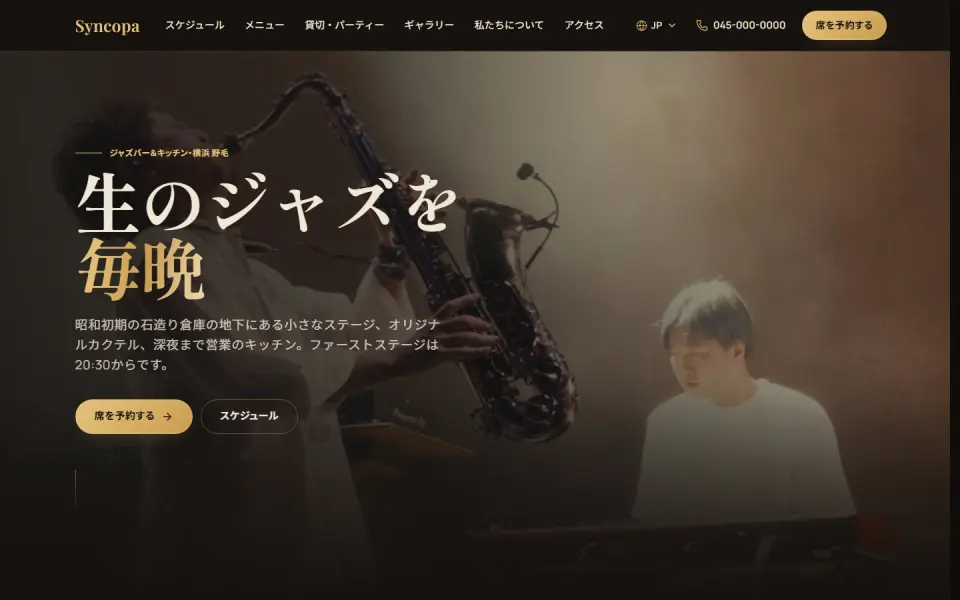 Jazz bar – SyncopaLive schedule, menu and table booking
Template demos with fictional brands. Yours is built with your own brand and content.
A step-by-step way to choose your theme
Setting criteria first and then narrowing the list is much faster than browsing the catalog.
- Describe your products: catalog size, variants such as color, size or volume, subscriptions or gift demand
- List must-have features: filters, mega menu, product video, reviews, pre-orders
- Shortlist two or three themes: use the Theme Store's industry and feature filters, and look at Japanese stores that use them
- Test with your own products: real names, photos and descriptions, checked on a phone
- Check app compatibility: payment, delivery and review apps should display cleanly
- Work on a duplicate: customize a copy of the theme and publish only after review
For layout and visual decisions after the theme is chosen, see our guide to e-commerce site design.
Send photos and descriptions of a few products and we will build a free demo adjusted for Japanese text.
Switch themes or customize the one you have?
If your store is already running, refining the current theme is often faster and safer than moving to a new one. Use these signs to decide.
- Keep and customize: your theme supports Online Store 2.0, and what bothers you is typography, colors or the home page layout
- Keep and customize: you know the theme well and apps display reliably
- Consider switching: an older theme where sections can only be added to the home page
- Consider switching: years of app leftovers and code edits make pages slow or break the layout
- Consider switching: the developer has stopped releasing updates
When you switch, theme settings and section content do not carry over, so the home page and banners are rebuilt. Products, customers and orders stay as they are. What can be done within your current theme is covered in Shopify customization.
How UNANOBO helps: compare in a free demo first
Before you commit to a theme, UNANOBO builds a free demo of your store with your own products and brand. You see real Japanese product names and descriptions on a computer and a phone, so the gap between a theme's showcase and your actual store is visible from day one.
The process is free demo, feedback, launch, growth. The founder handles every project personally, from choosing the theme to improvements after launch, and everything runs by message in Japanese or English. If you are launching a new store, see also Shopify store development.
How it works
- 01
Free demo
We start with a free demo built around your brand.
- 02
Feedback
Structure, tone and details are refined with you, on the demo itself.
- 03
Launch
The site goes live on a solid SEO foundation.
- 04
Growth
SEO and ads take it further, guided by the numbers.
FAQ
Which theme do you use for the free demo?
We pick a theme that fits your catalog and the features you need. Often we start with an official theme such as Dawn and suggest a paid theme if something important is missing. The demo is free, and you do not need to buy a theme for it.
Do I need a paid theme?
No. For a smaller catalog or a brand that wants a clean look, a well-adjusted free theme is often enough. Paid themes make sense when you need features like mega menus or detailed filtering.
What if I decide not to go ahead after the demo?
There is no cost. If the direction does not feel right, you can stop there. If you want to continue, you receive a plan and an estimate after the demo.
Will switching themes delete my products or orders?
No. The theme only controls the storefront, so products, customers and orders remain. Theme-specific settings such as the home page layout and banners are rebuilt in the new theme, prepared on a duplicate before the switch.
How long does the demo take, and what should I prepare?
Your store URL (or sites you like if you have no store yet), your logo, and photos and descriptions for a few key products are enough to start. We reply within two business days with the next steps.
Does working fully by message work in practice?
Yes. All communication is by message, in Japanese or English. We share screenshots and the demo URL as we go, so even small adjustments are easy to review without meeting in person.
Related pages
FREE DEMO
See your store in a theme before you choose
Send your store URL or a few product details, and we will build a free demo of your Shopify store set up for Japanese shoppers.