
Ryokan website design – tell your inn's story and win direct bookings
A ryokan website is where guests feel the history, the hot spring, the food and the hospitality that a booking site listing cannot show. Many inns still find that most reservations come through OTAs and that English inquiries are hard to handle. This page covers what a ryokan website should include, how to bring in more direct bookings, how to write English pages for overseas guests and what to check in a renewal – and how UNANOBO starts with a free demo built around your inn.
- Free demo – decide after you see it
- By message, in Japanese or English
- One person from demo to launch
FREE DEMO
A free demo of your ryokan's new site
Send us your inn's name and current site address (a booking site listing is fine too). We build a free demo that tells your inn's story, and you decide after seeing it.
- A design built from your photos and words
- Check the booking path on a phone
- A proposed structure for English pages
Ryokan website design starts with your inn's story
Booking sites list price, room type and review scores. That makes comparison easy, and it also makes every inn look the same. Good ryokan website design shows the things a comparison table leaves out, through photos and your own words.
- Your history: how the inn began, the story of the building and garden, what has been passed down
- The bath: spring type, whether it is free-flowing, the main bath, open-air bath and private baths, and their hours
- The food: local ingredients, seasonal kaiseki menus, in-room or dining-room meals, allergy handling
- The rooms: size, view, private open-air bath, Japanese-style or beds
- The area: walks through the onsen town, seasonal events, pick-up from the station
Write it in the voice of the okami or the owner. Explaining why you serve a certain dish, or what guests see from a particular room, carries a warmth photos alone cannot. A good first step: list the five things guests praise most often.
How a ryokan website brings more direct bookings
OTAs are an essential source of guests, and their commission is typically around 10% or more of the room rate. A booking on your own site lets you put that margin back into service or price and builds a direct relationship with the guest. The goal is a site where someone who found you on a booking platform decides to book with you directly.
- Keep the booking button in view: fixed at the bottom of the screen on phones, one tap to availability from any page
- Official-site perks: a welcome drink, late check-out or priority for the private bath – something worth it for the inn, stated clearly
- Clear prices: show tax-inclusive totals, and explain bathing tax, child rates and seasonal differences
- Answer worries early: cancellation policy, parking, check-in time and meal times in an FAQ
- Connected booking engine: use an engine linked to your channel manager so room stock is never managed twice
For choosing an engine and syncing inventory, see hotel booking systems. A quick win you can do today: make sure your Google Business Profile matches your website, so people who search your inn's name land on the official site.
See booking buttons and official-site perks in place on a working free demo.
English pages that overseas guests actually use
Many visitors want to stay at a ryokan and feel unsure about the customs. An English page works best when it answers a first-timer's questions, with the Japanese text as a starting point.
- How a stay works: where to take off shoes, how to wear a yukata, when futons are laid out, how dinner and breakfast run
- How to use the onsen: wash before entering, keep towels out of the water – explained kindly
- Tattoo policy: whether the shared bath is open to guests with tattoos, and options like private baths or cover stickers
- Dietary needs: what you can offer for vegetarian, allergy or religious requirements
- Getting here: directions from the nearest station, pick-up service, a map link that works in English
Be honest about what the inn can really handle. Deciding up front how English inquiries come in – by email or message, for example – keeps it manageable day to day. For how hotel sites approach this, see hotel website design.
What the free demo gives you
- 01A working demoA demo site you can open and click through on a computer and a phone.
- 02A structure proposalWhich pages you need, what goes on each and where visitors get in touch.
- 03Plan and estimateAfter you have seen the demo you get the plan to launch and an estimate.
Why it is safe to ask
- The demo is free. If you decide not to go ahead, it costs you nothing.
- Everything happens by message, in Japanese or English.
- Your domain, hosting, ad and analytics accounts stay in your name.
- The founder handles your project from the first demo to growth after launch – one contact all the way.
Demo sites we built
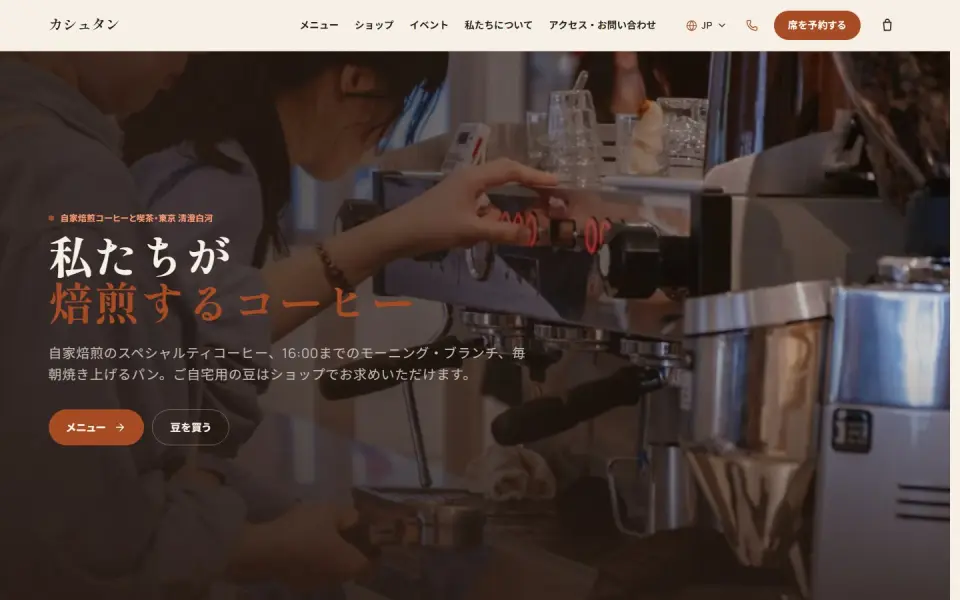 Café & roastery – KashtanMenu, events and an online bean shop
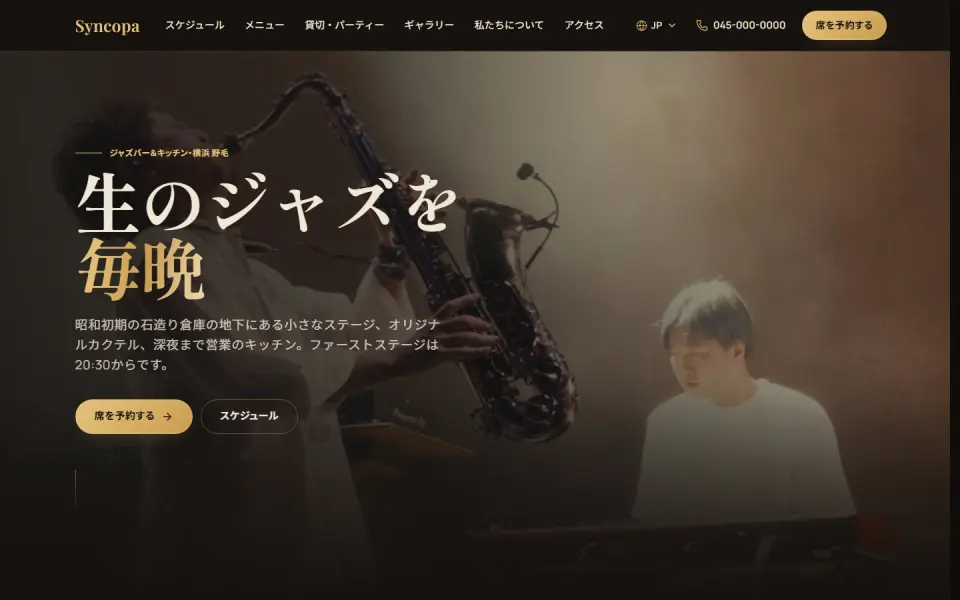 Jazz bar – SyncopaLive schedule, menu and table booking
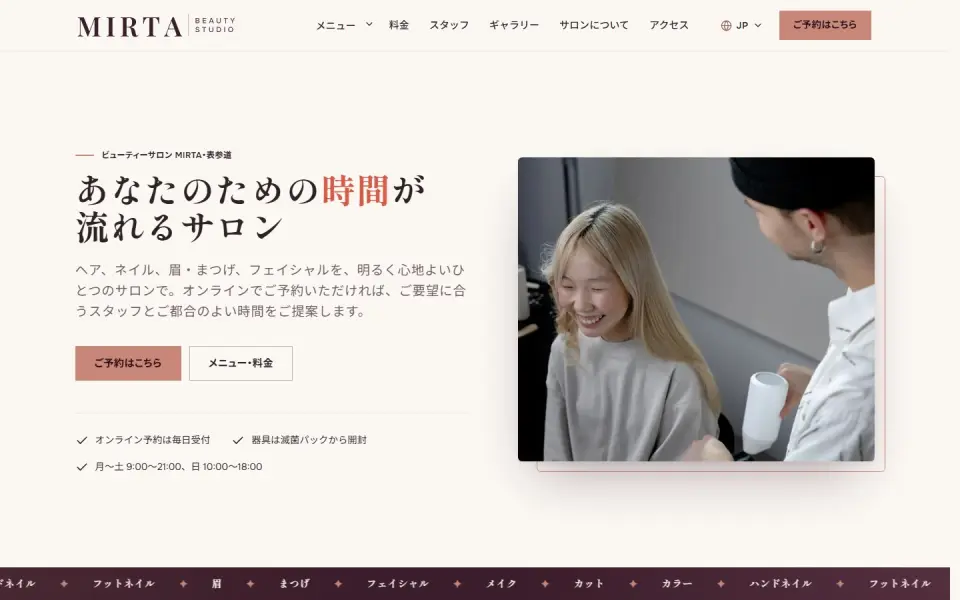 Beauty salon – MIRTABooking form, price list and team
Template demos with fictional brands. Yours is built with your own brand and content.
What to check in a ryokan website renewal
Even an older ryokan site is often an important entry point for search and bookings. Check these points before the new site goes live.
- Photos: decide which need a reshoot by season or room, and which current photos can stay
- Booking path: keep the current booking engine or switch, and where the booking buttons sit
- URLs: set 301 redirects for well-visited room, food and plan pages
- Updates: if you edit plans and news yourselves, choose an easy admin panel
- Tracking: measure booking-button clicks and completed bookings in GA4
- Speed: photo-heavy sites slow down easily, so optimize image sizes
Plan photo shoots around seasonal highlights such as autumn leaves or snow, and swap images in over time. Try this now: on your phone, count how many taps it takes to reach the booking button on your current site.
We build a free demo of the new design from your current content and photos.
Pages a ryokan website usually needs
The exact set depends on your size, but most inns build on this structure. Start with the pages closest to a booking and add the rest over time.
- Home: photos that set the mood, a one-line concept, availability search
- Rooms: photos, size, capacity, amenities and view for each room type
- Onsen and baths: spring type, general benefits, hours, how to reserve the private bath
- Cuisine: sample seasonal menus, where meals are served, allergy and kids' options
- Plans: a plan list linked to the booking engine, plus official-site perks
- Inn and area: facilities, the onsen town, access and pick-up
- FAQ: cancellation, parking, pets, children, payment methods
A small inn or a whole-house rental can work with a simpler structure. See websites for small lodgings for that case.
How UNANOBO builds ryokan websites: a free demo first
Before you commit to anything, UNANOBO builds a free demo of your new site from your logo, photos and current content. You open it on a computer and a phone, check that it feels like your inn, and then decide whether to go ahead.
The process is simple: free demo, feedback, launch, growth. The founder handles every project personally, so you keep one contact from the first demo to marketing after launch. Everything runs by message, in Japanese or English. English page structure, MEO and Google Ads after launch go through the same contact.
How it works
- 01
Free demo
We start with a free demo built around your brand.
- 02
Feedback
Structure, tone and details are refined with you, on the demo itself.
- 03
Launch
The site goes live on a solid SEO foundation.
- 04
Growth
SEO and ads take it further, guided by the numbers.
FAQ
Does the free demo cost anything?
No. The demo is free. We build a working design, centered on the home page, from your logo, photos and current site. If you decide not to continue, there is no charge.
Can we start without good photos?
Yes. We can shape the layout with the photos you have, including those on booking sites, and use placeholders where needed. You get a list of photos worth reshooting, organized by season and room.
Can we keep our current booking engine?
In most cases, yes. The new site's booking buttons and plan list link to the engine you already use. If you are thinking of switching, we review the options and inventory sync together during the demo stage.
Can you write the English pages?
Yes. We prepare English copy based on your Japanese content, adding what overseas guests need to know. We confirm what the inn can actually offer first, so the page matches how you operate.
Can we work only by message, without meetings?
Yes. Everything from planning to post-launch updates runs by message, so you can reply when it suits you, even in peak season. We answer inquiries within two business days.
How long does it take?
It depends on the number of pages and how ready photos and copy are, but two to three months is typical for a ryokan site. If you want to launch before peak season or during a quiet period, tell us at the demo stage and we plan around it.
Related pages
FREE DEMO
See your inn's new website first
Send us your inn's name and current site address, and we will build a free demo that shows its character. Decide after you have seen it.